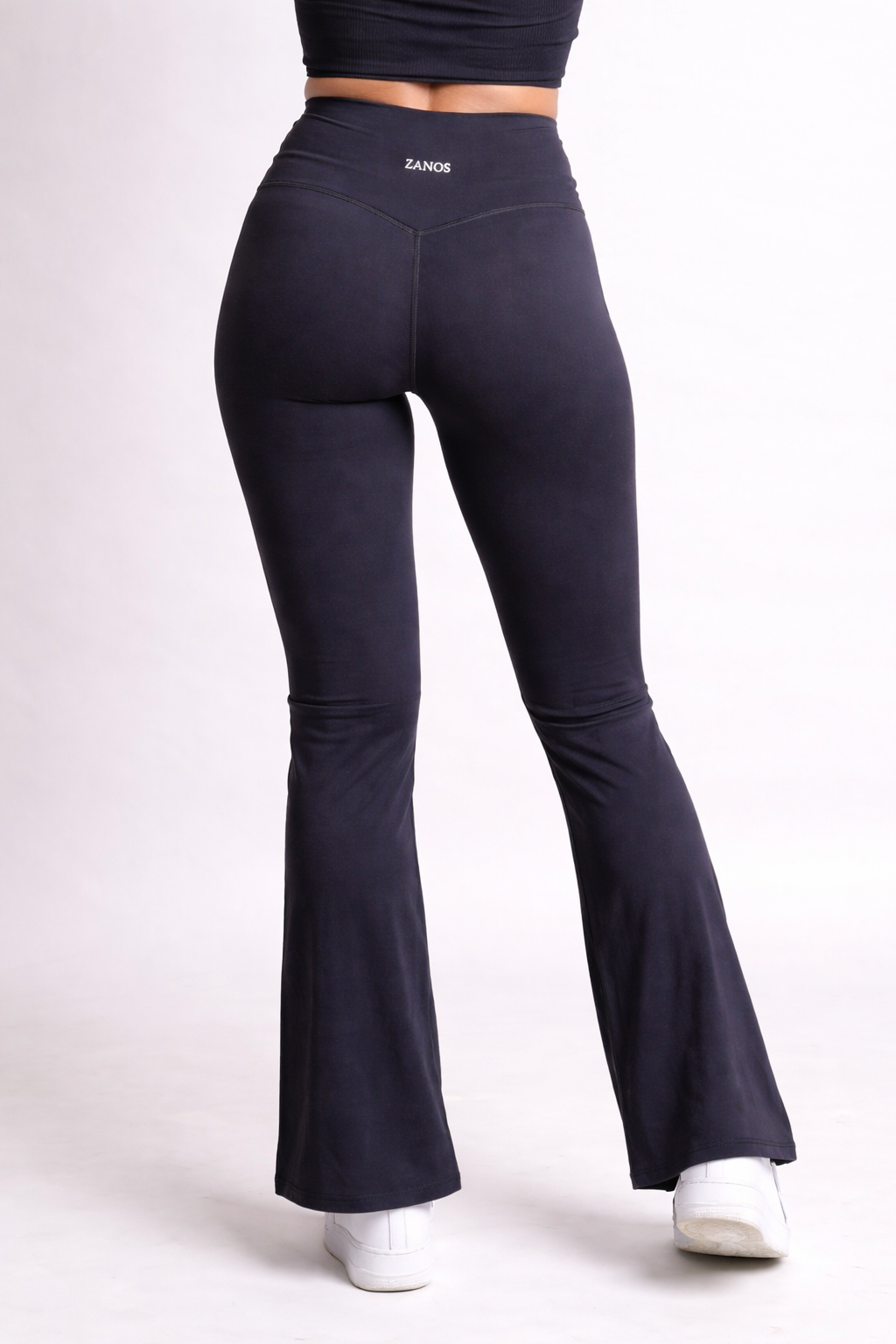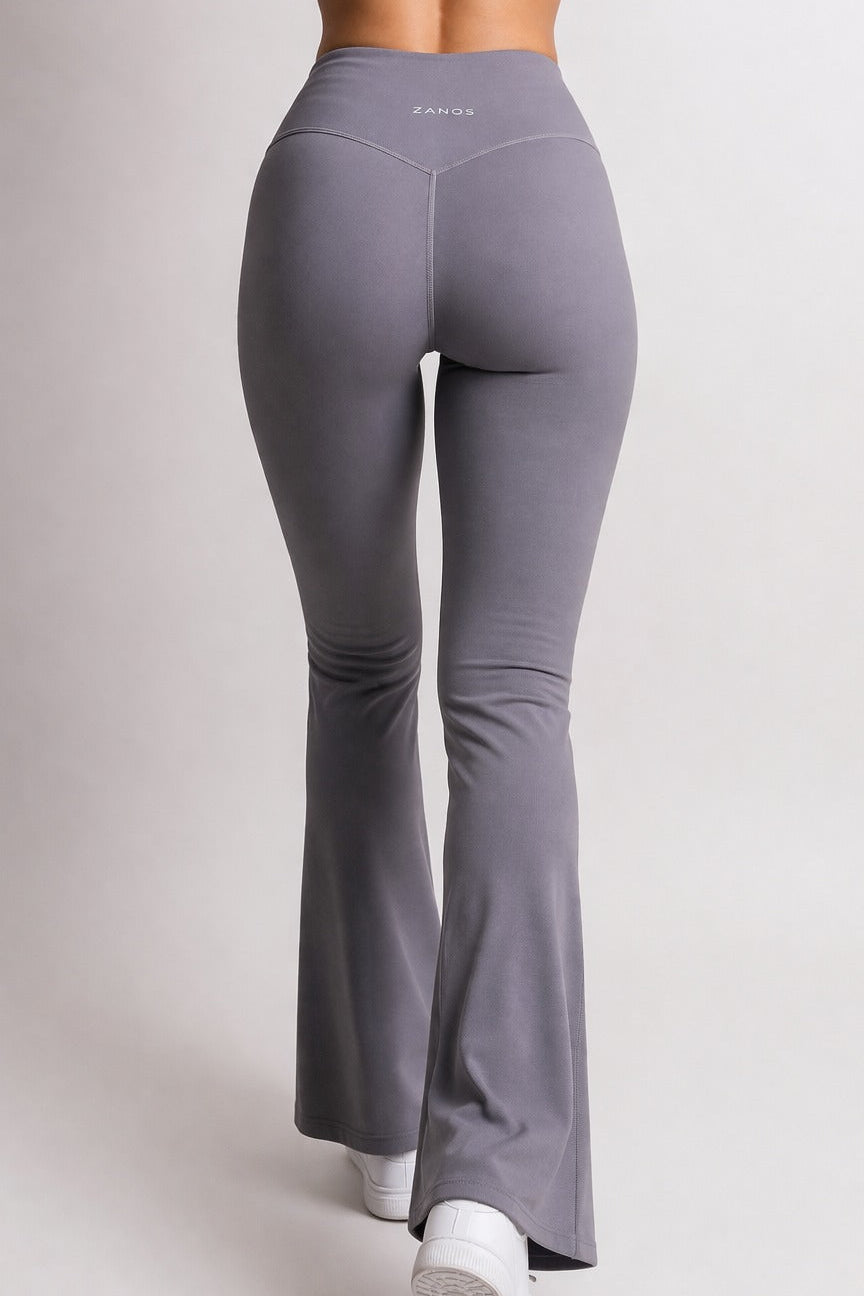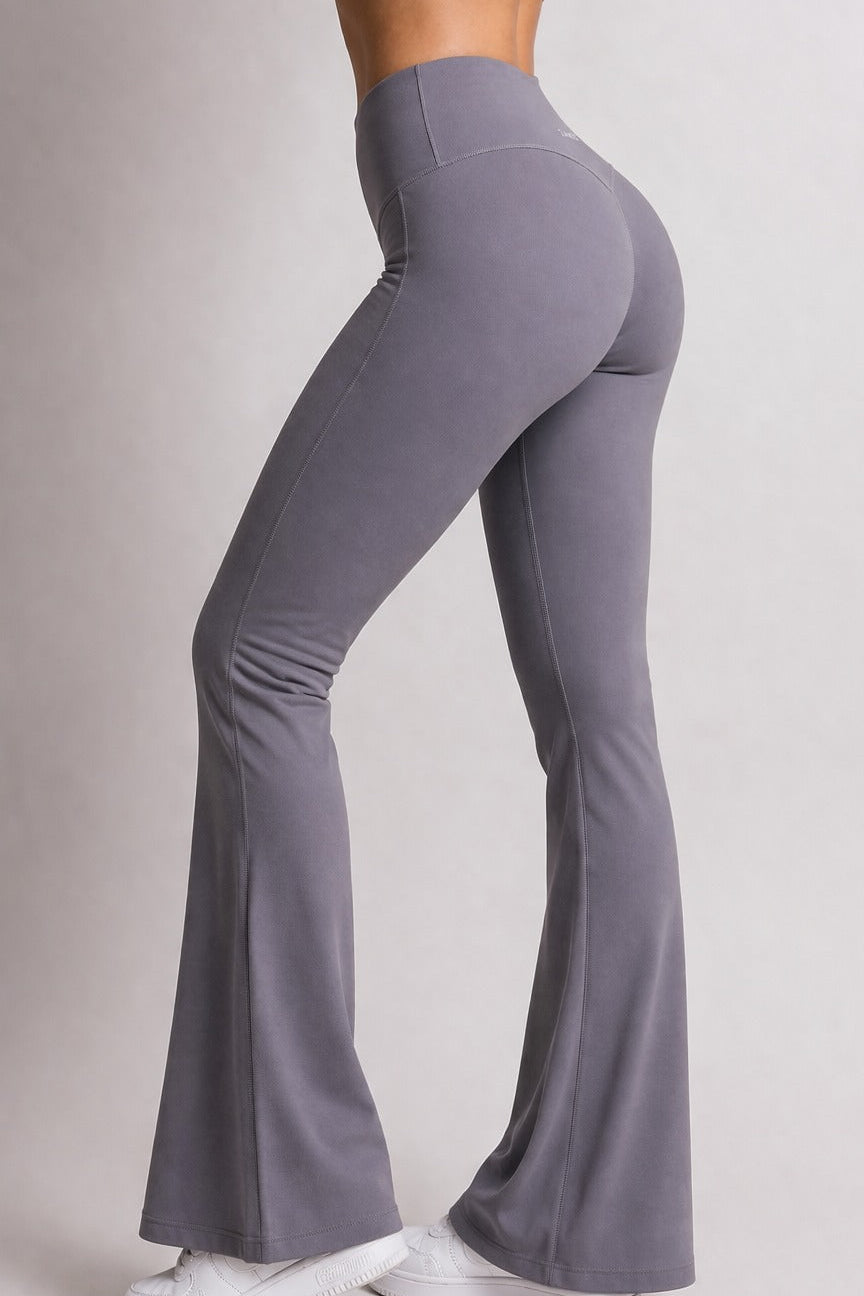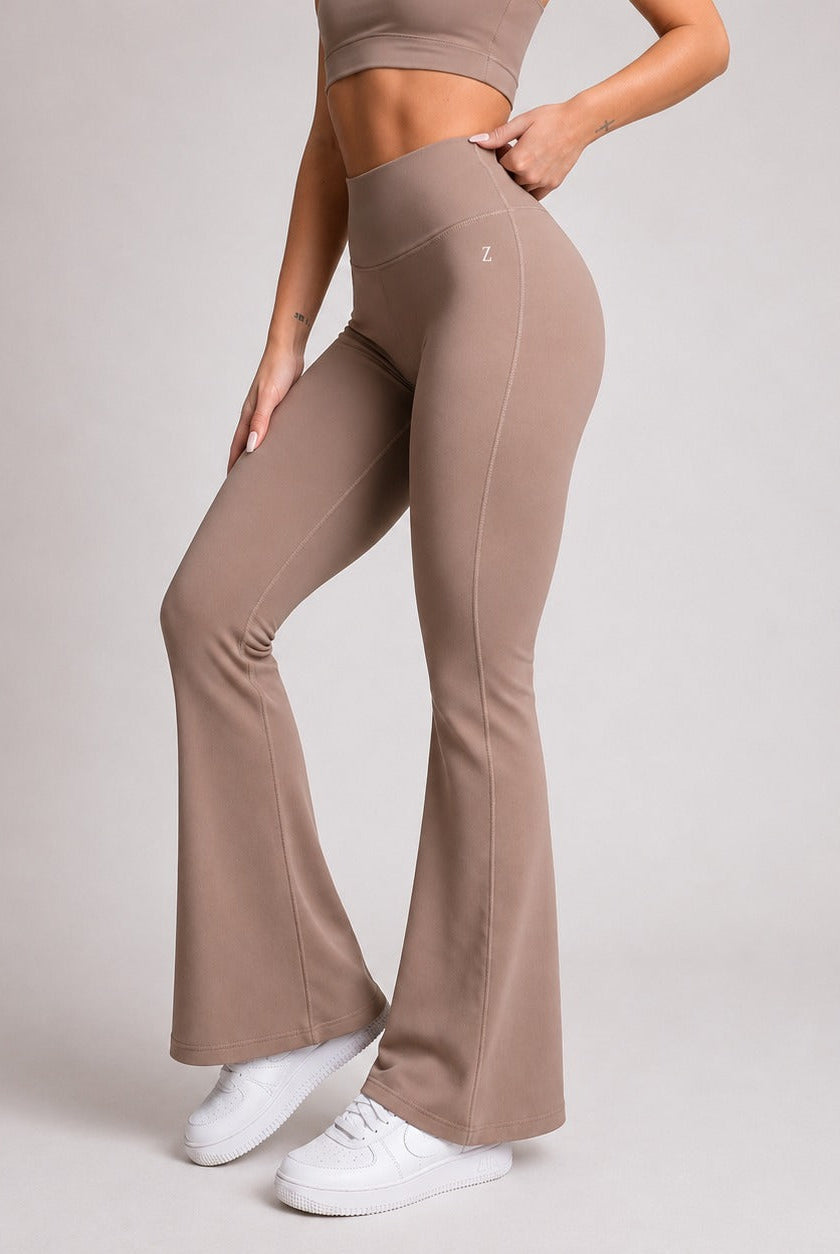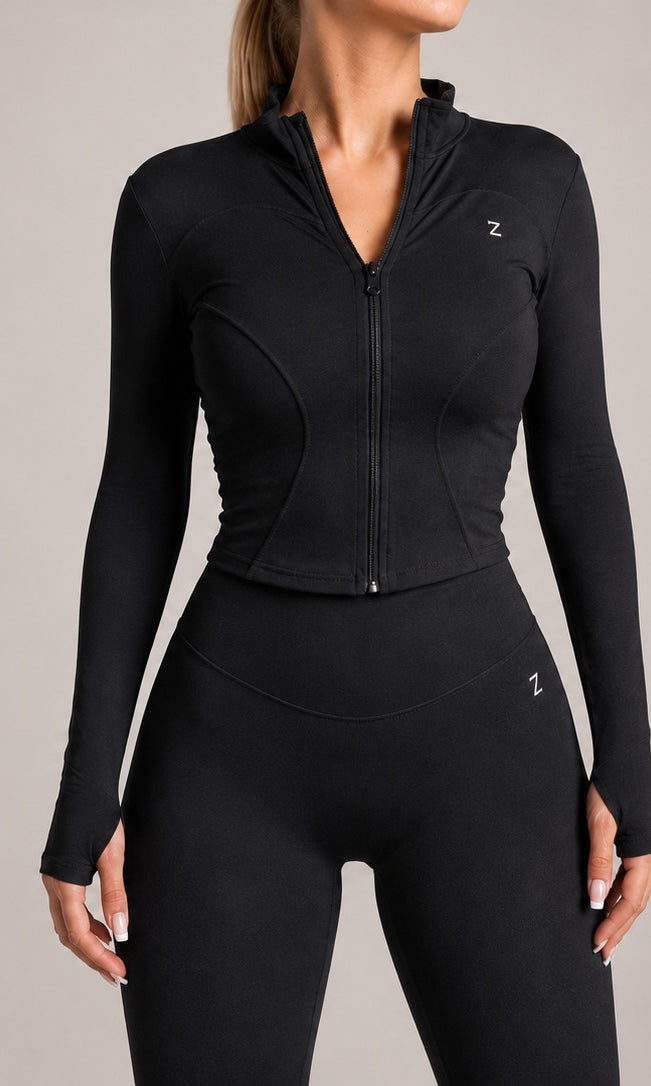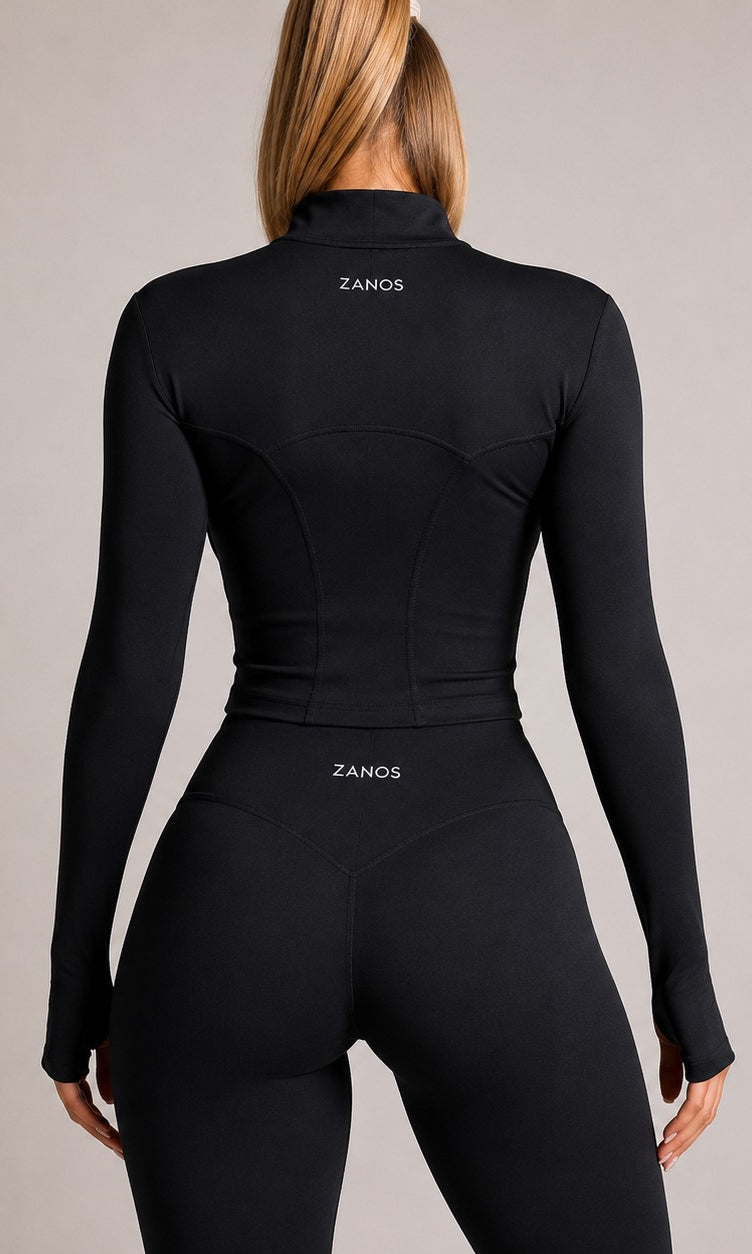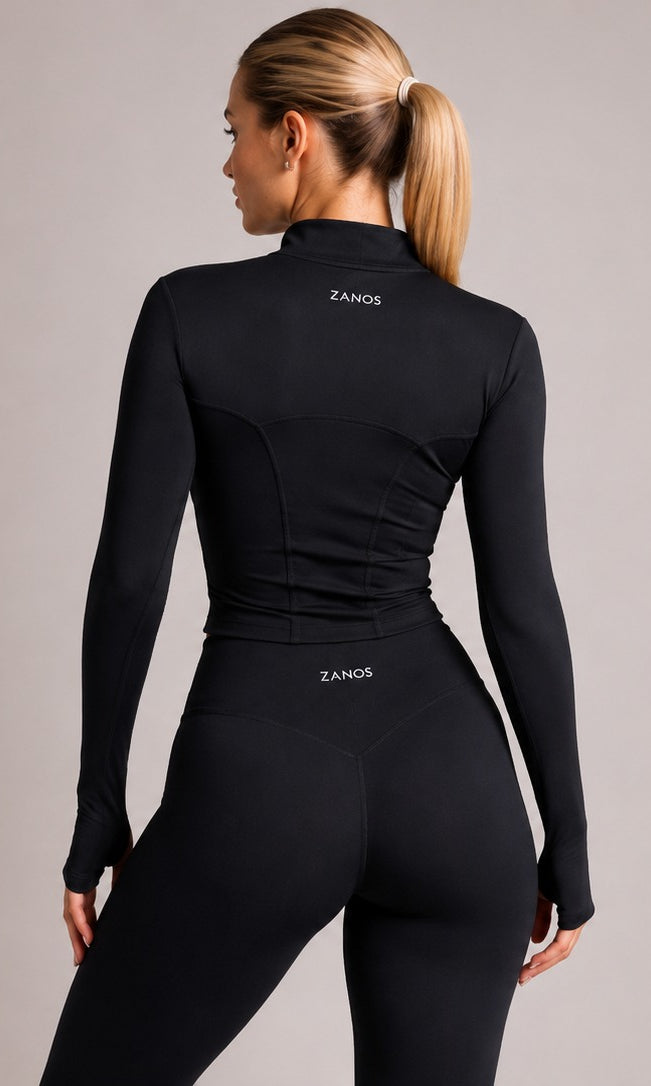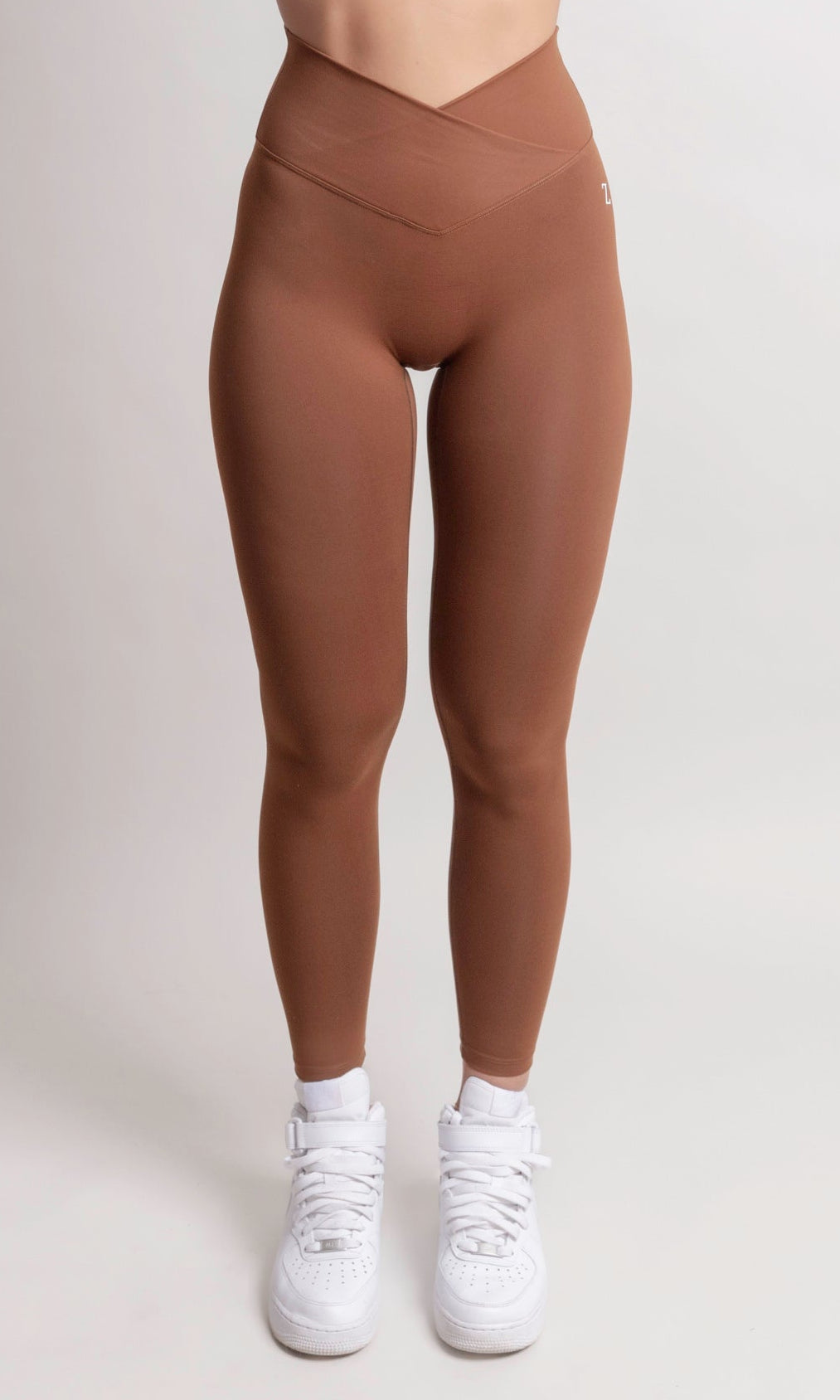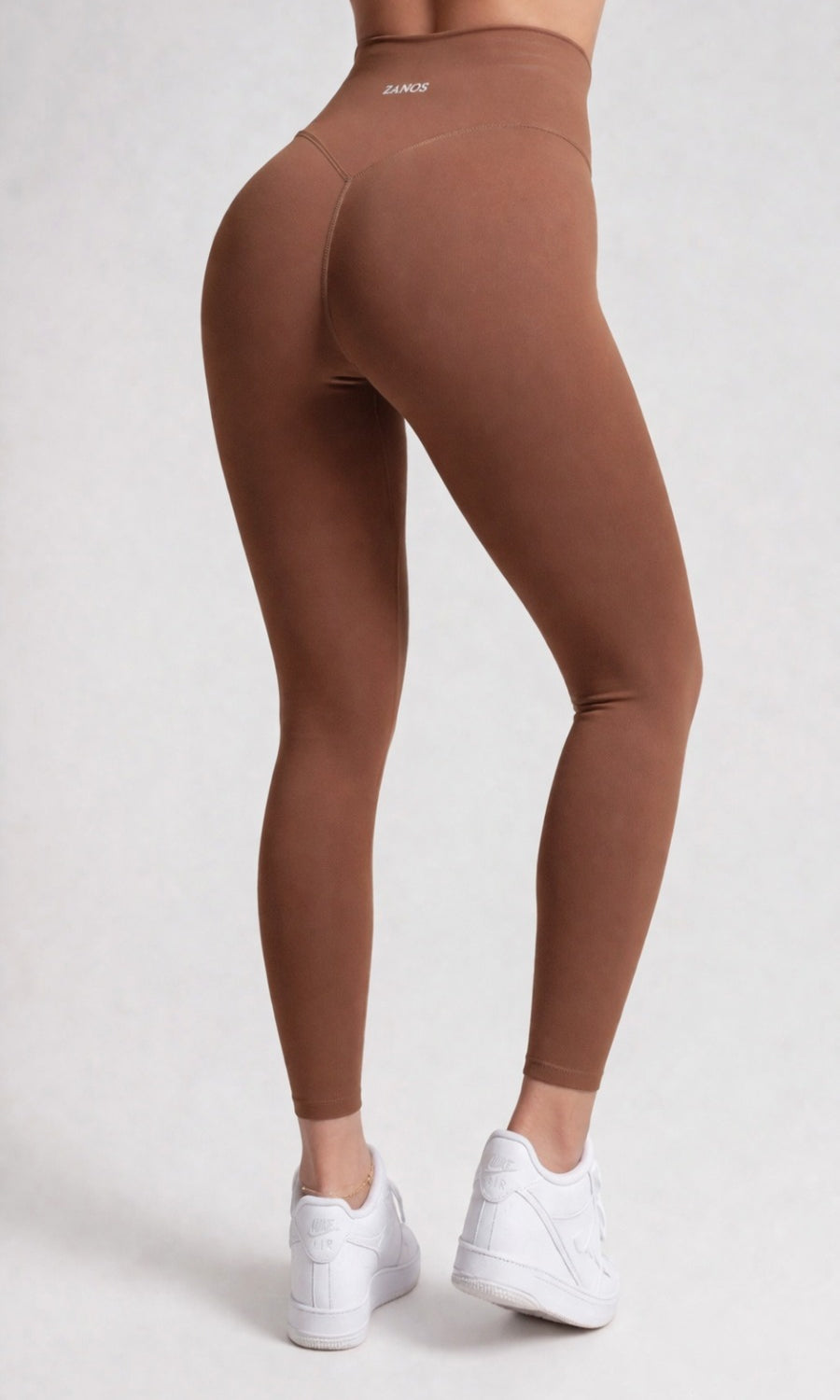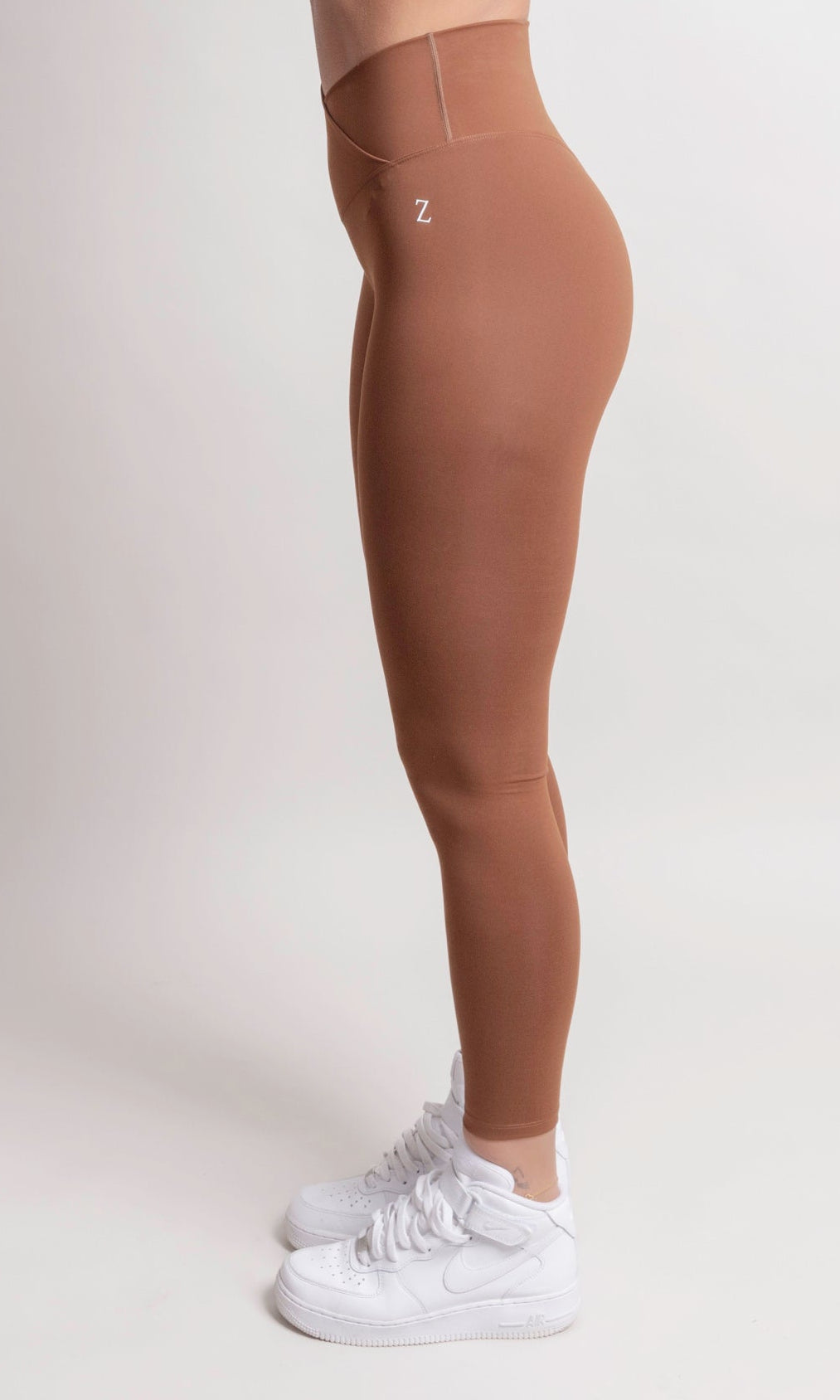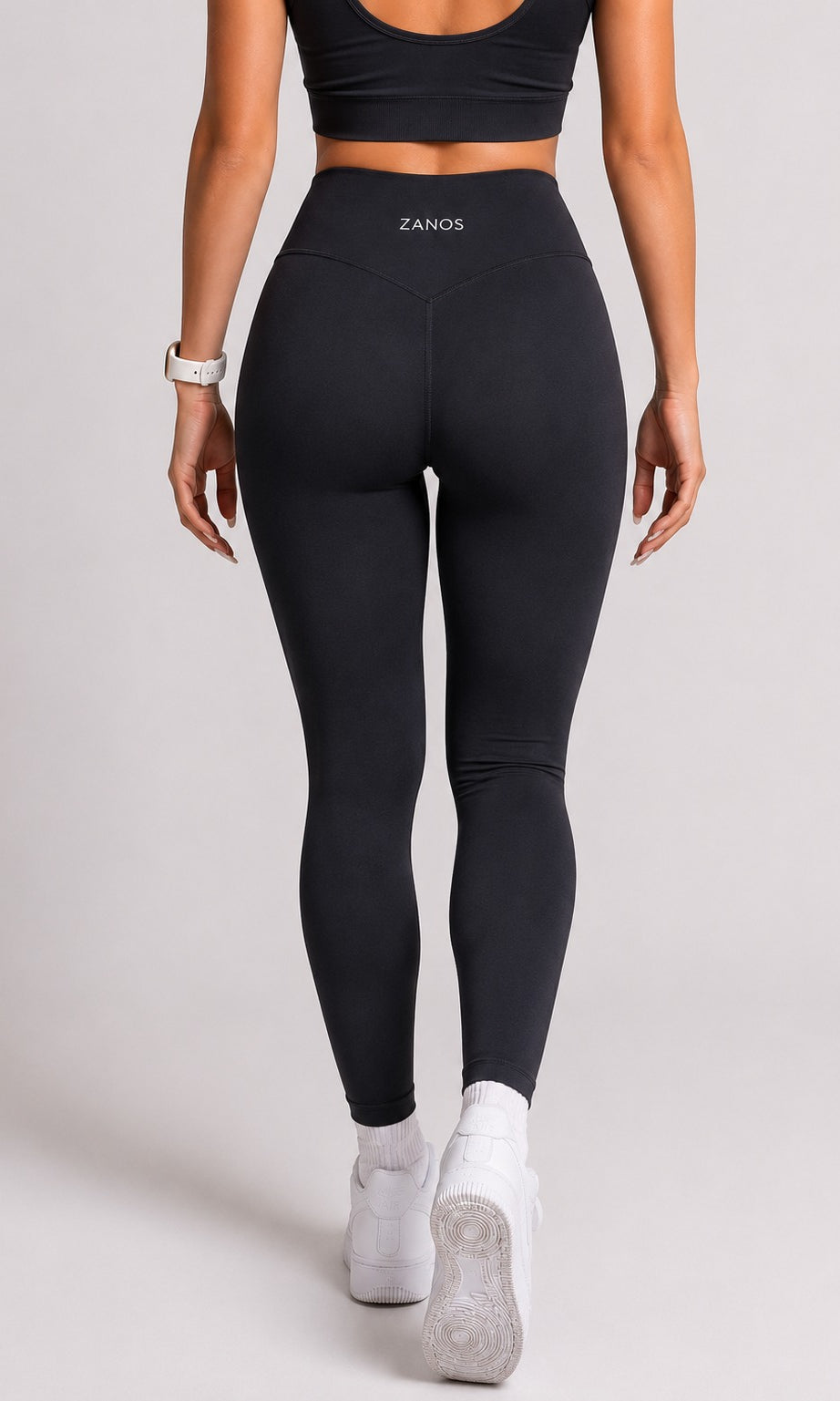
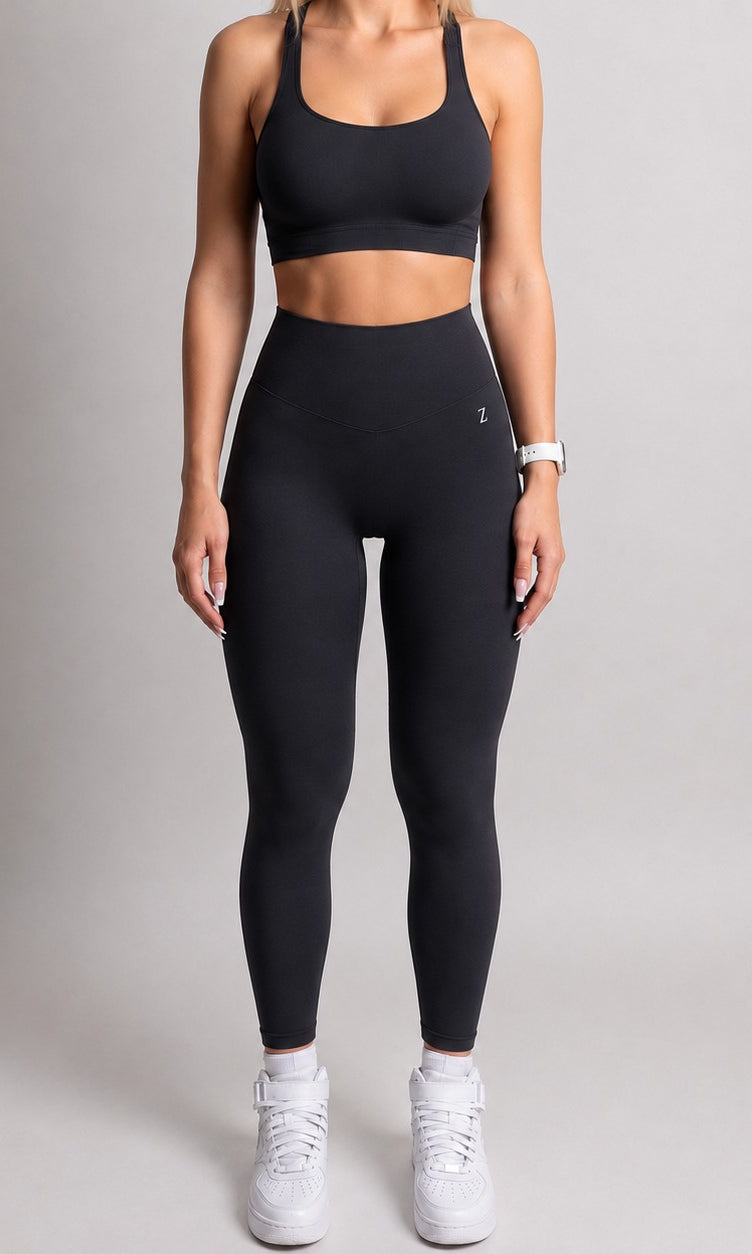
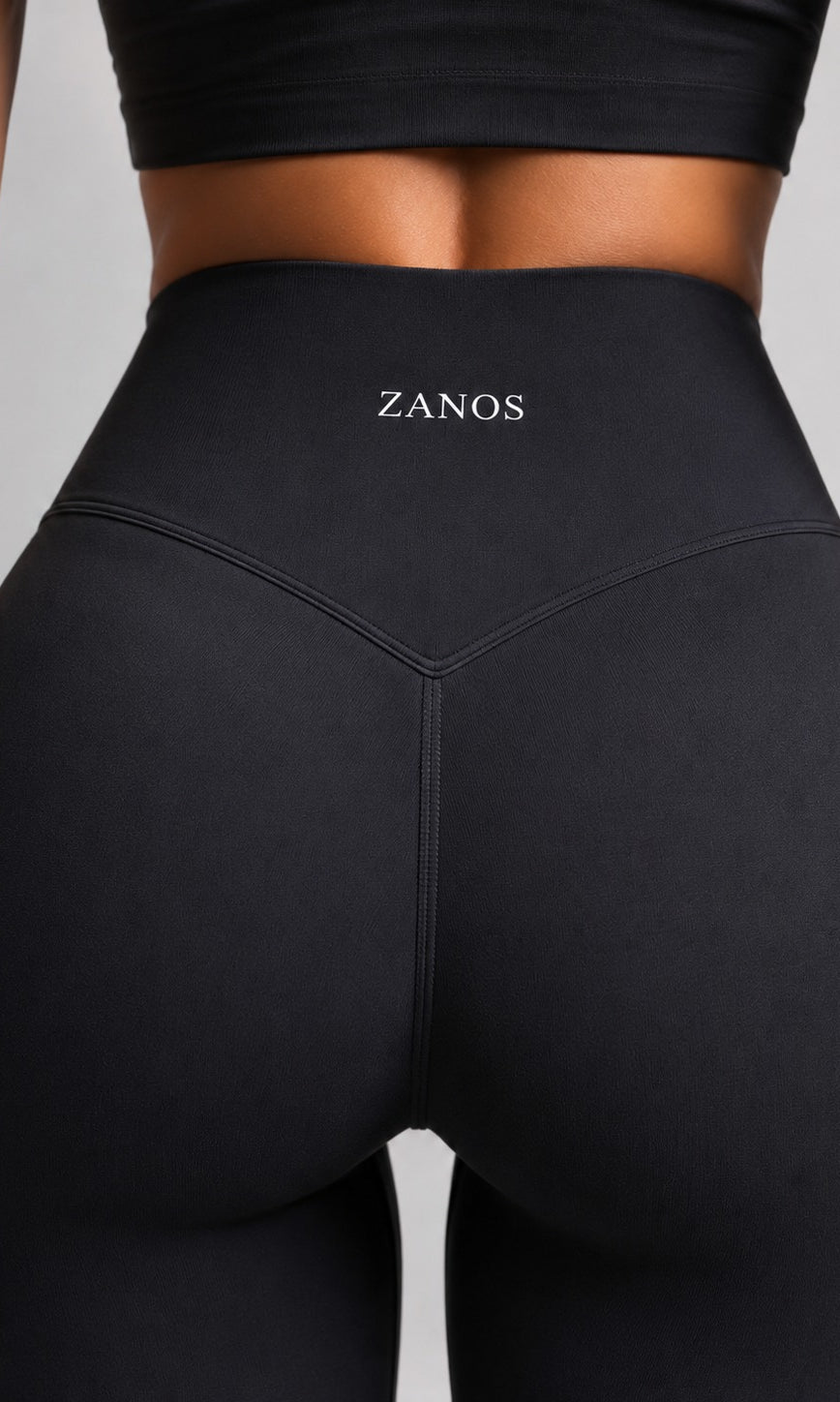
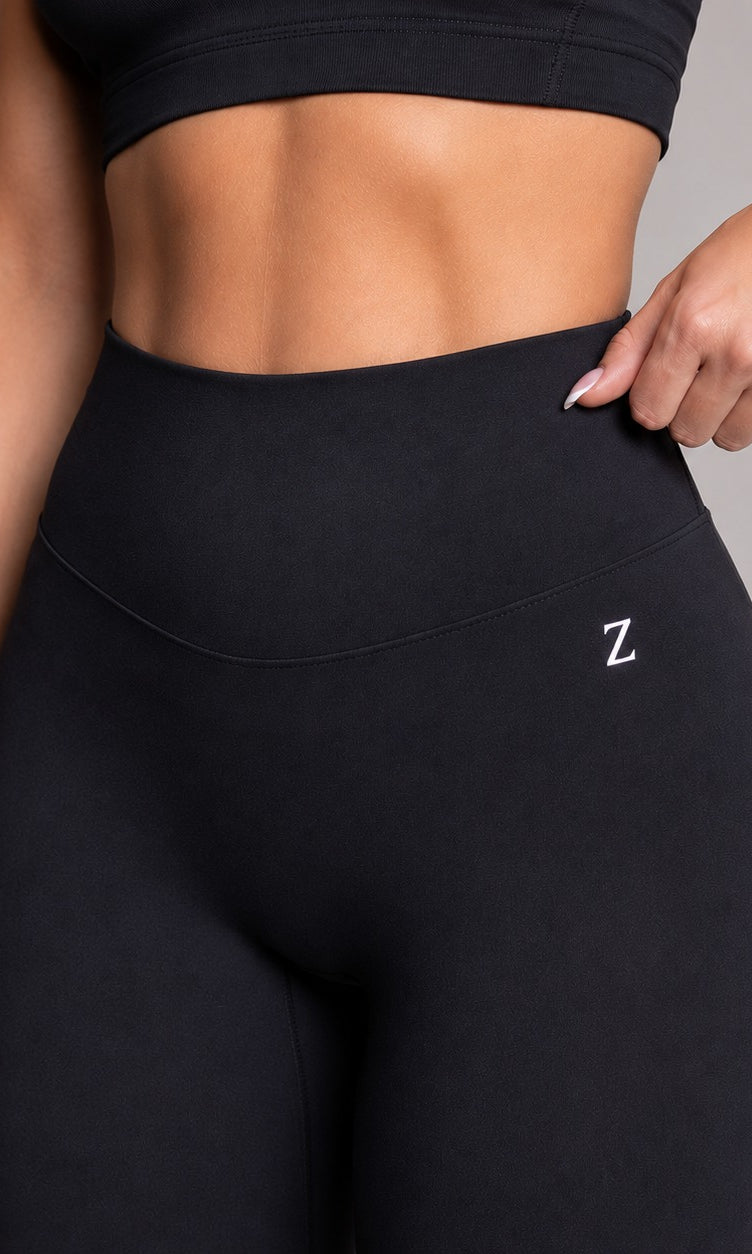
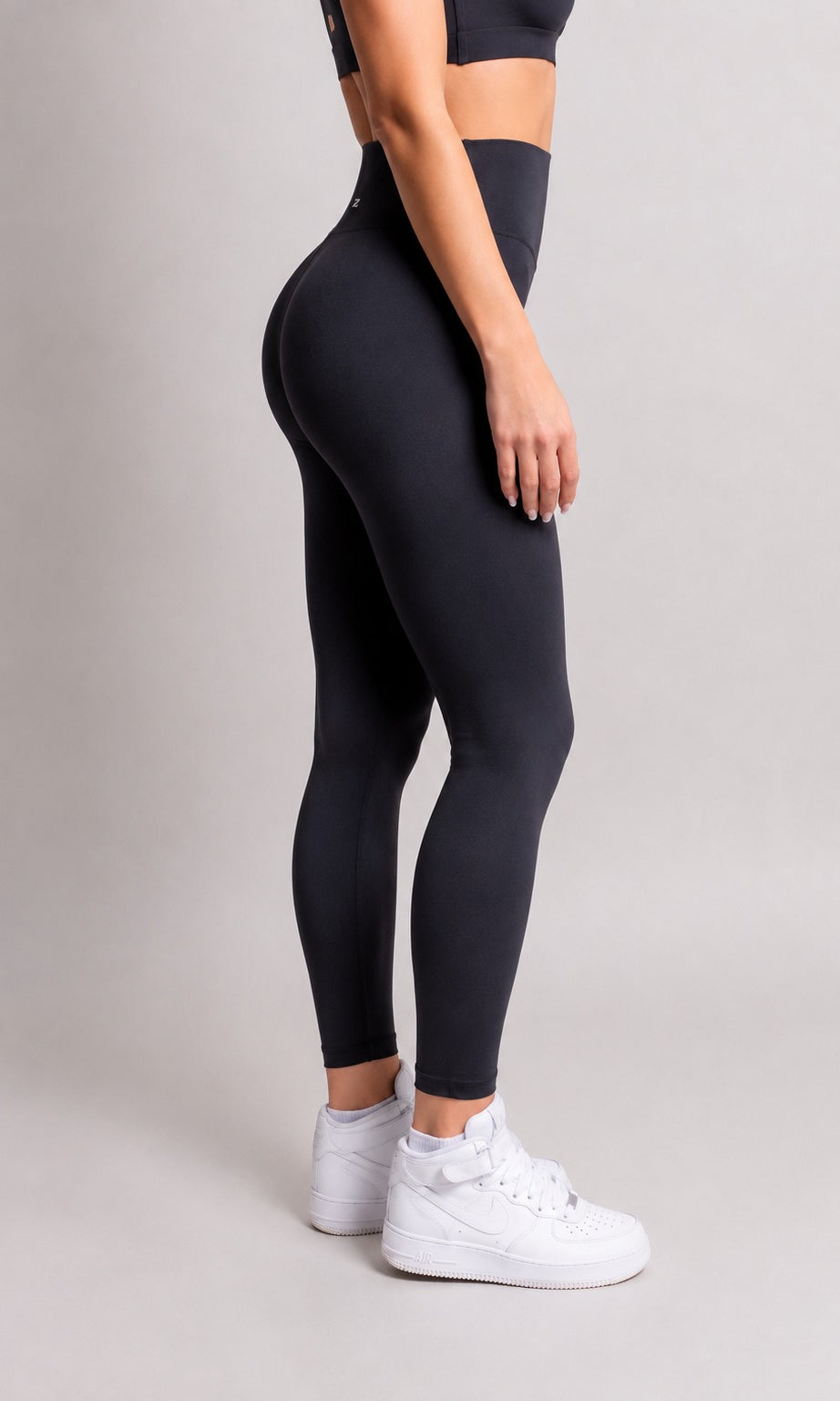
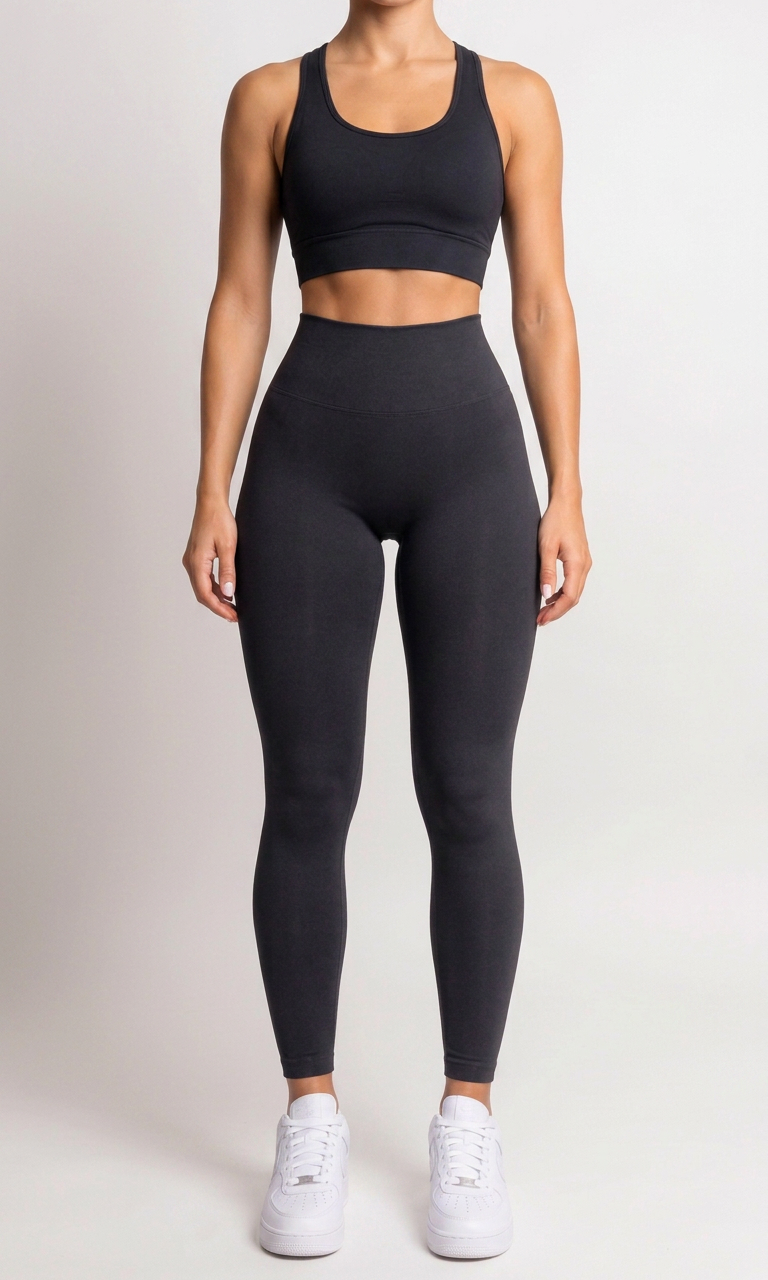
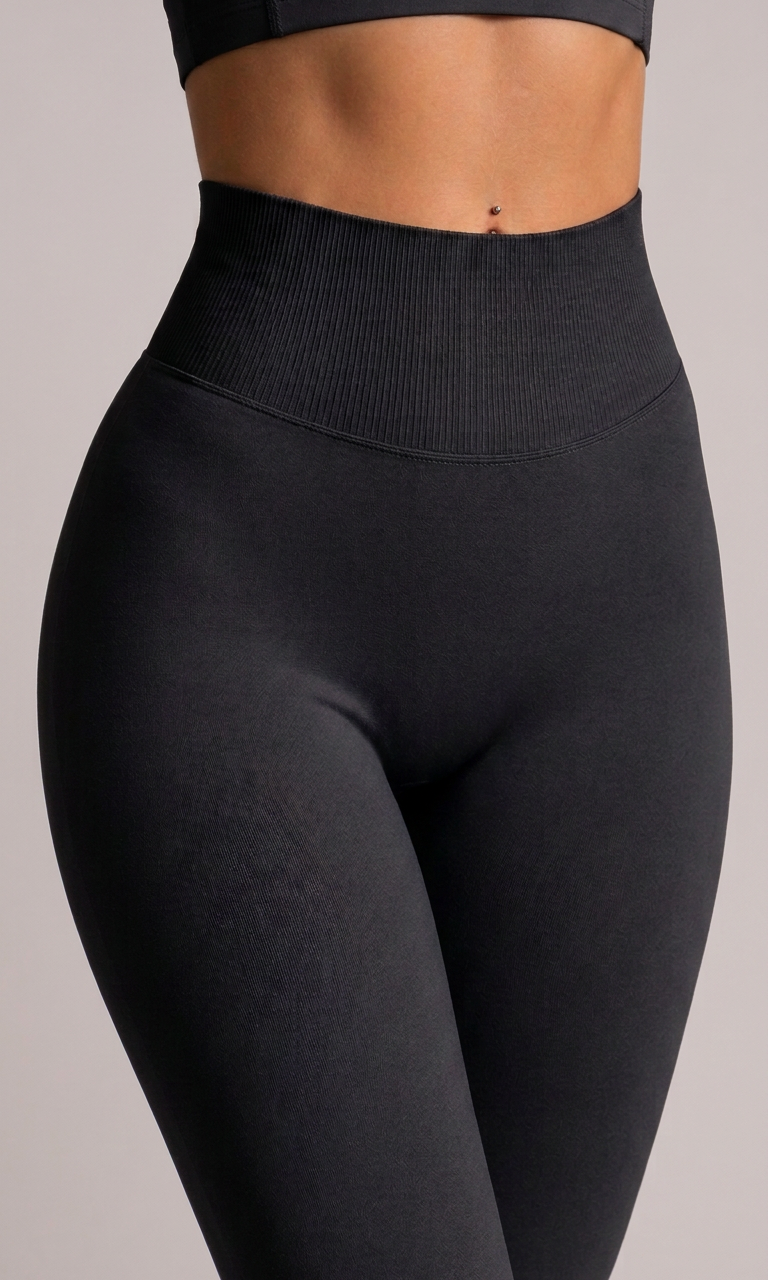
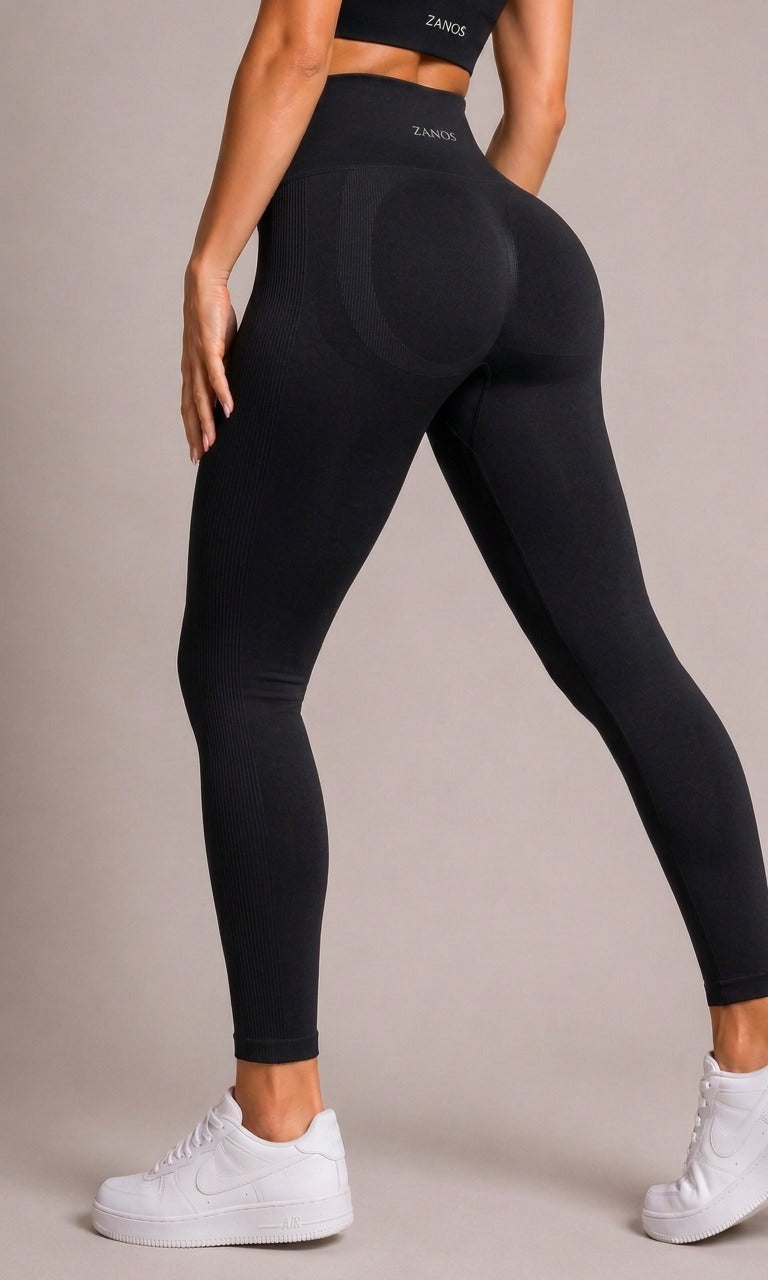
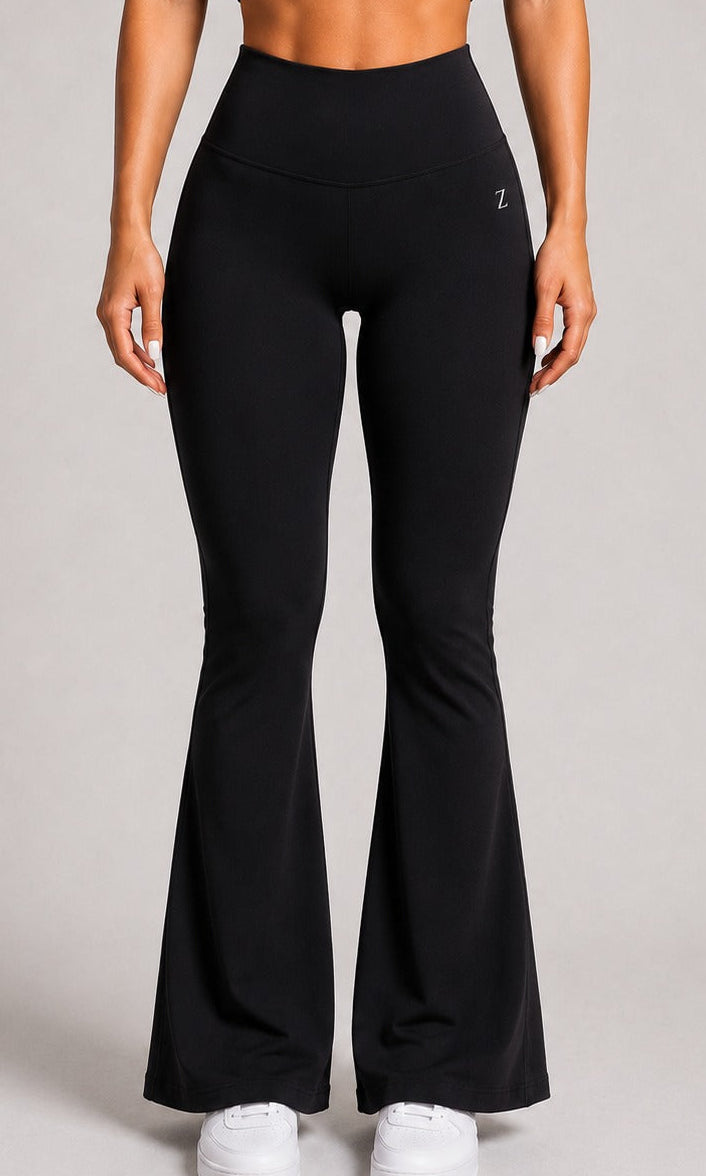
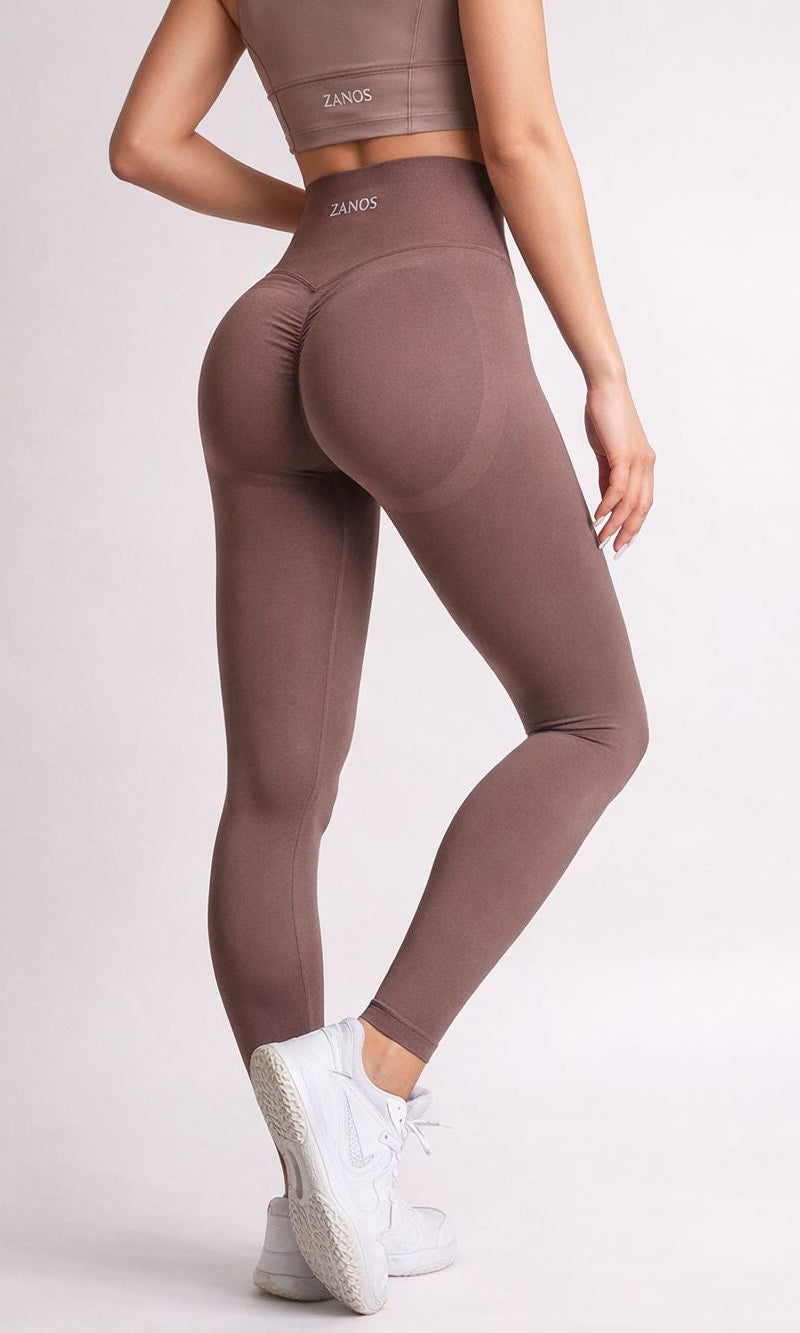
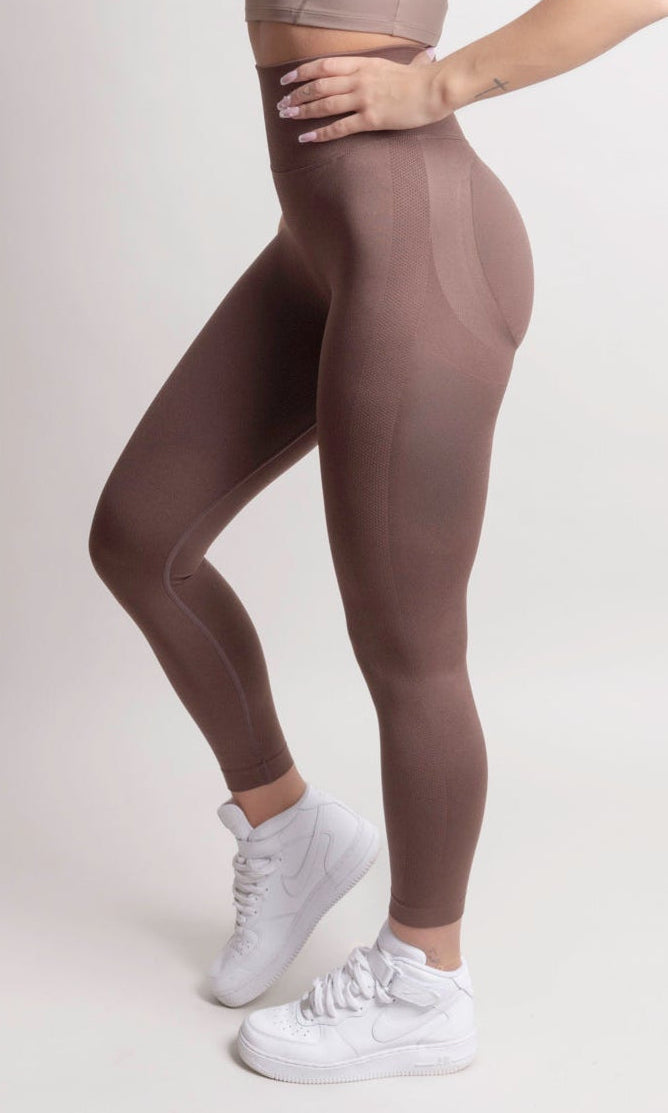
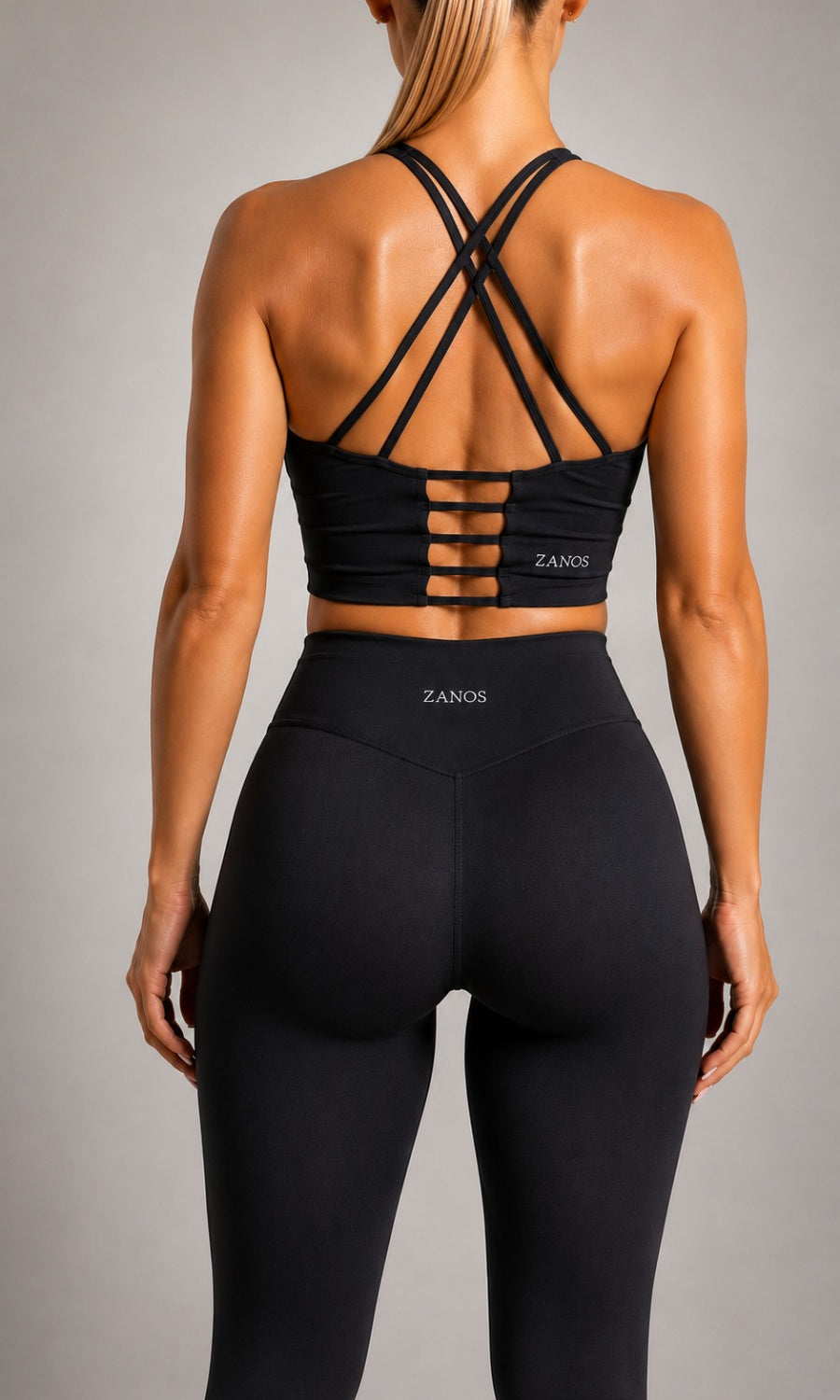
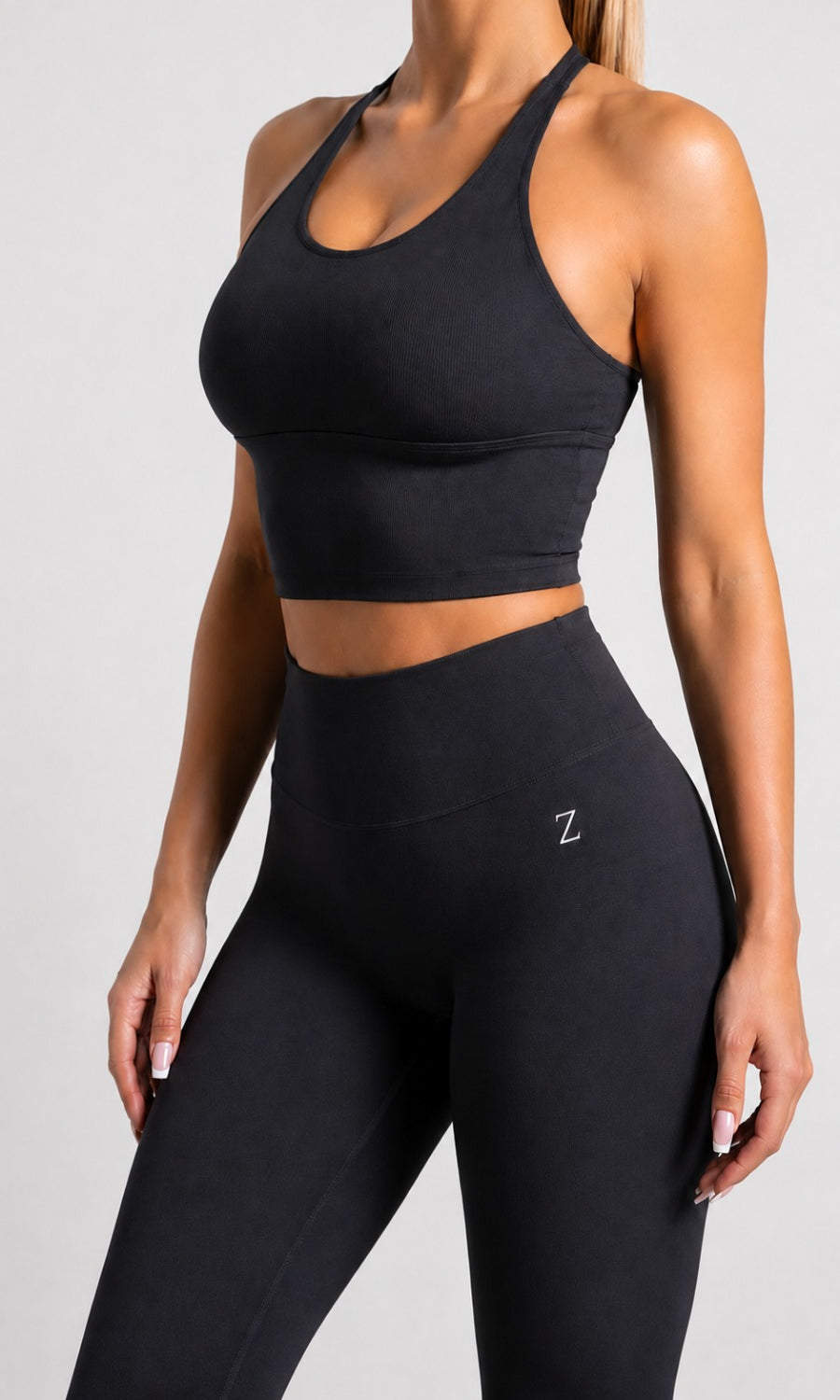
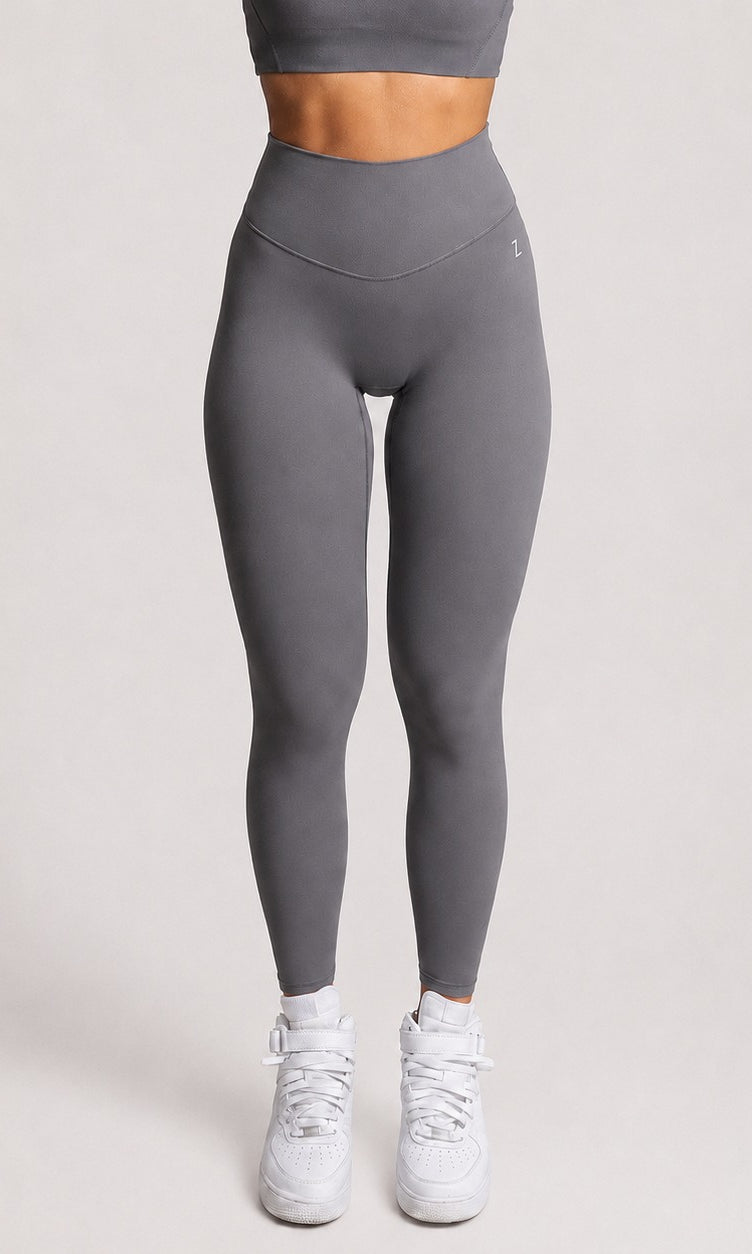
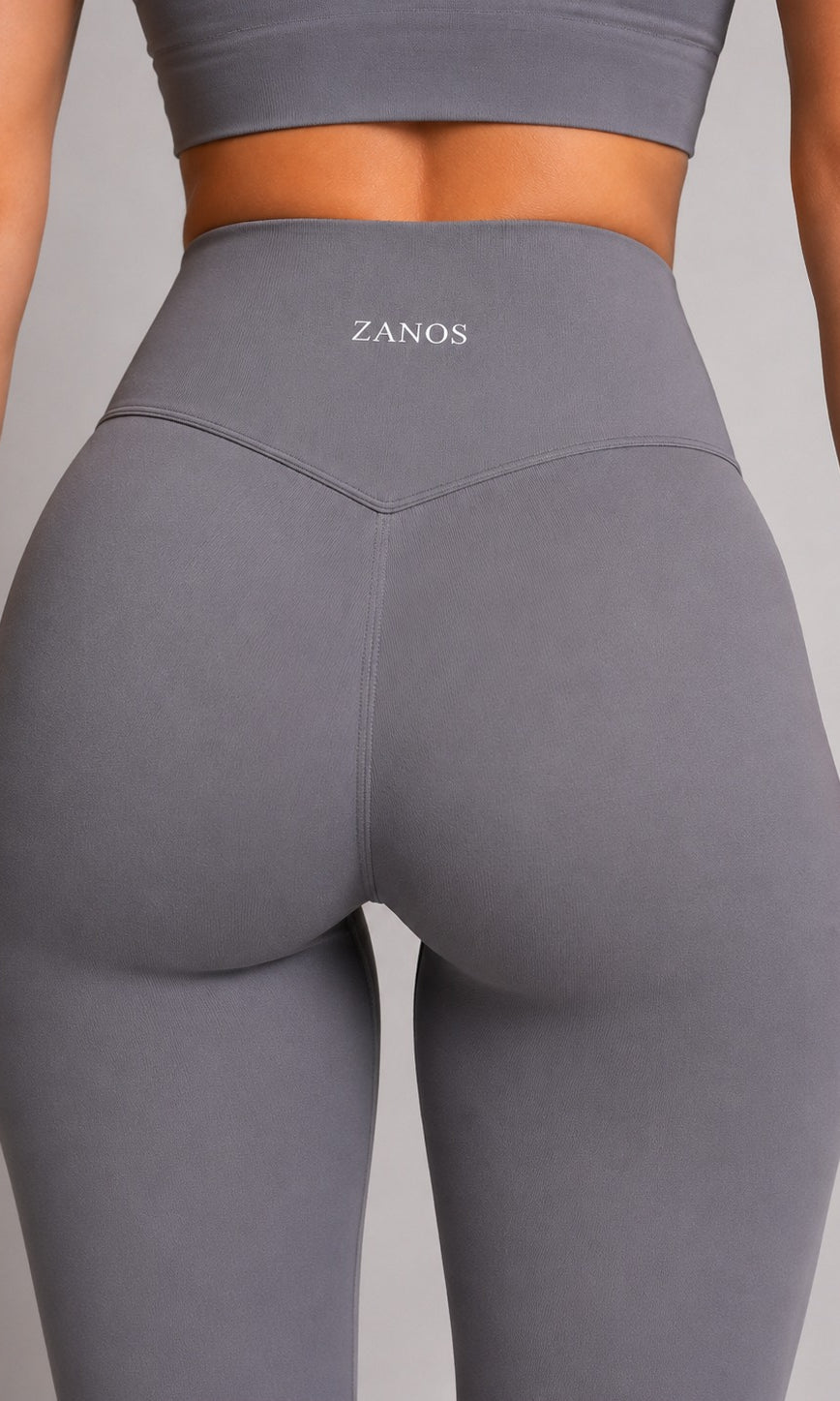
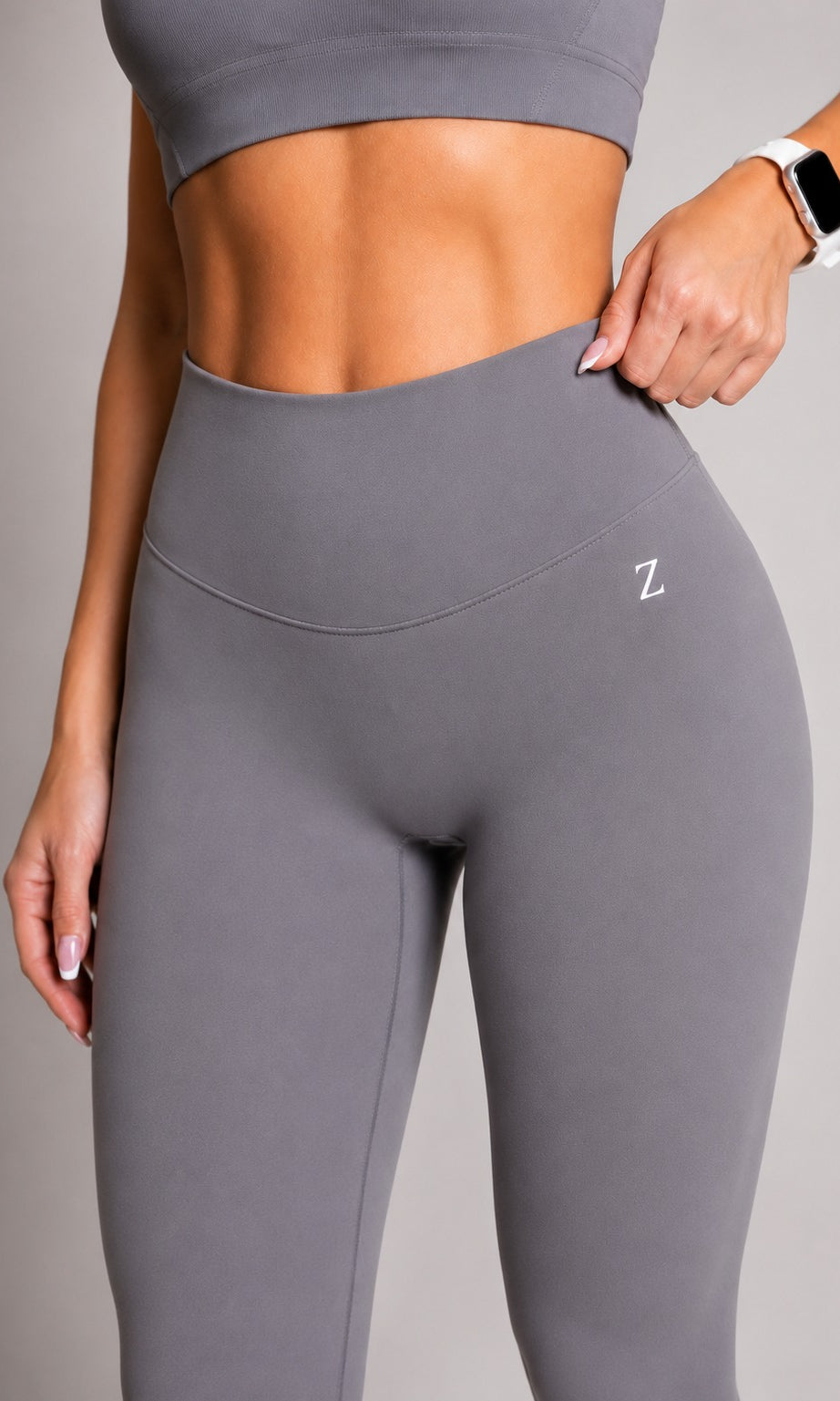
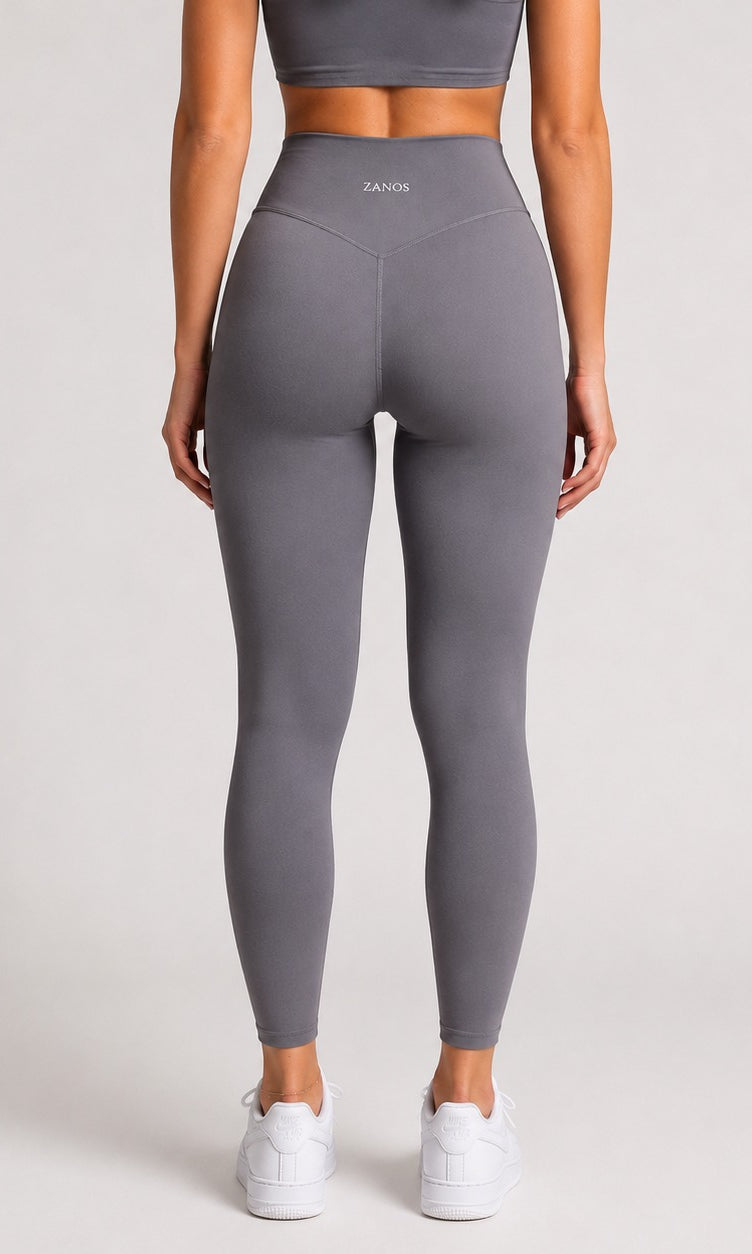
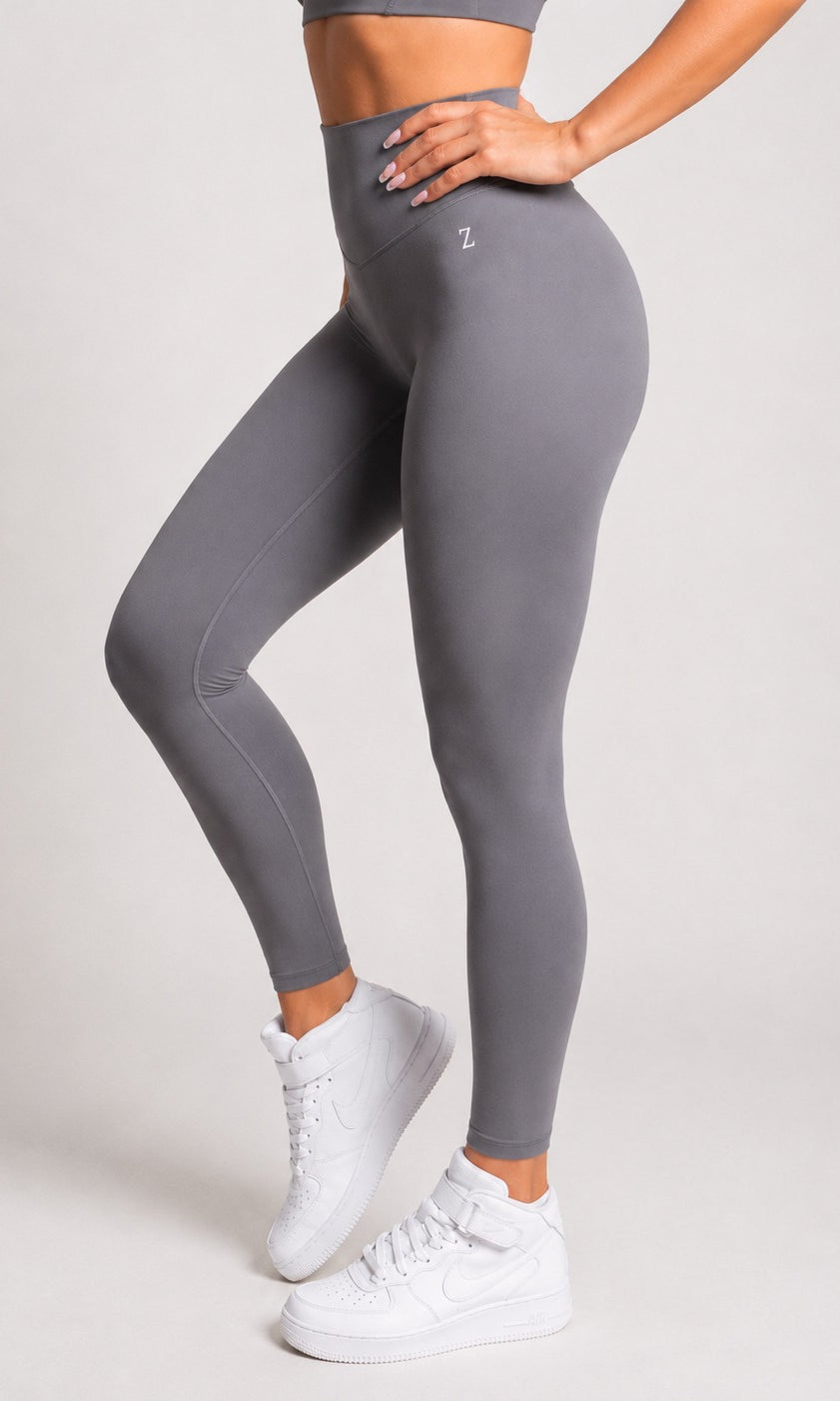
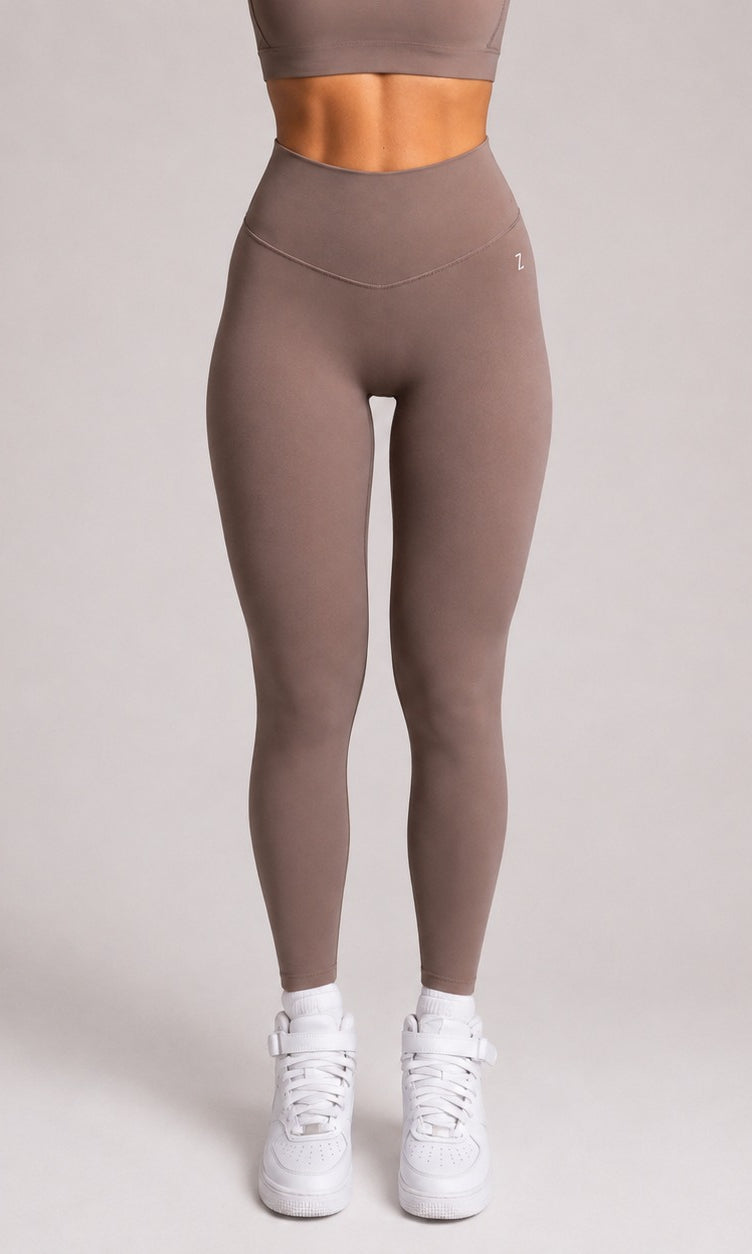
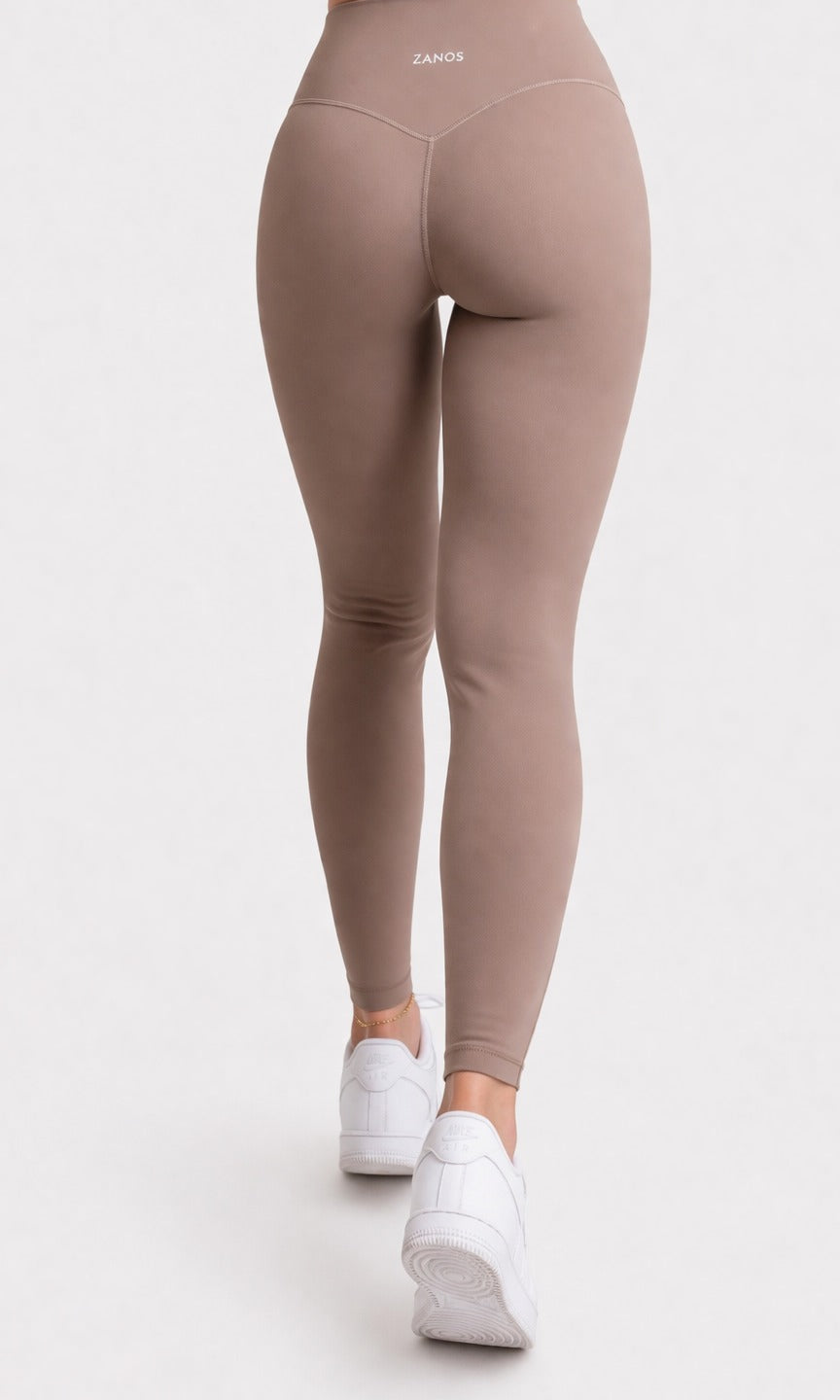
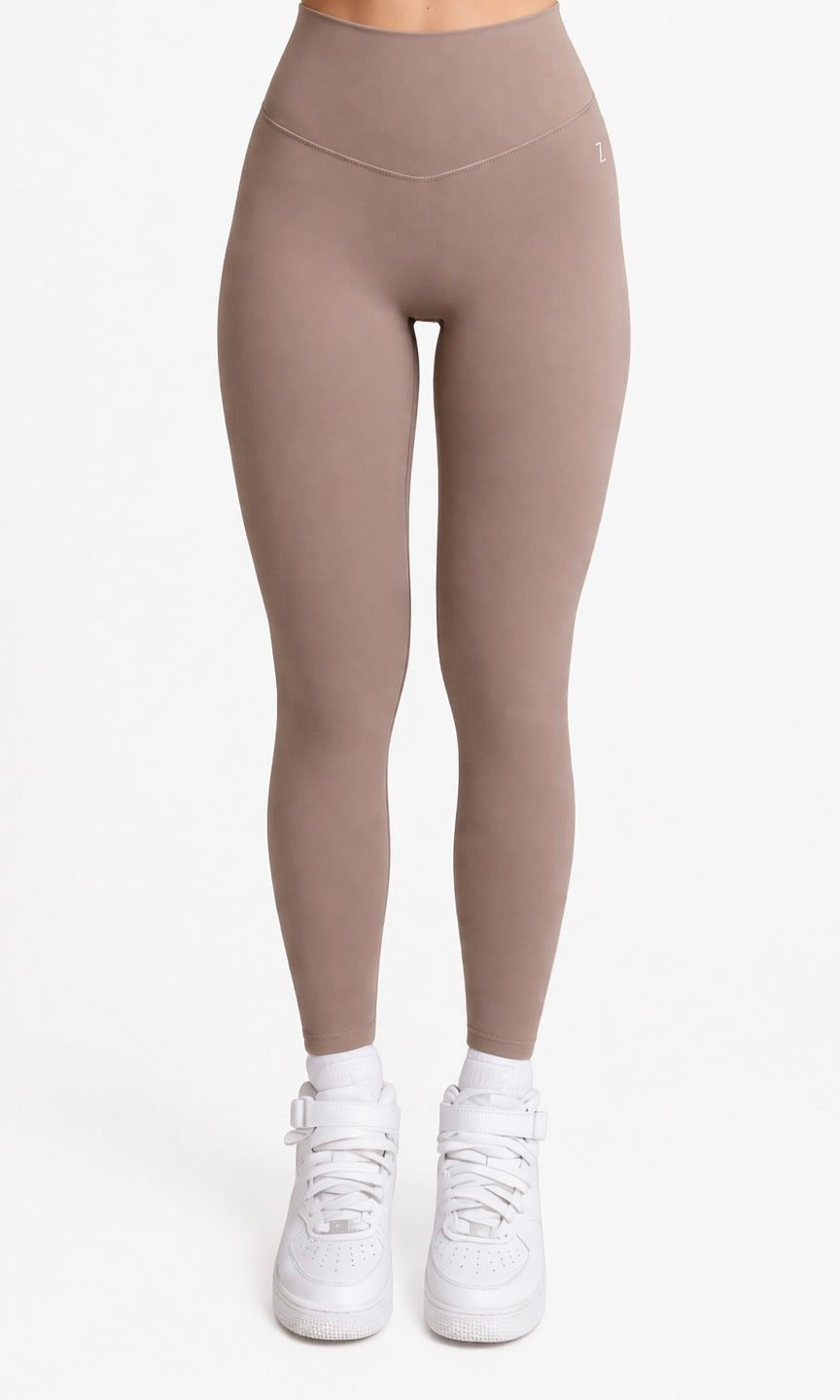
Flare Tights Women: What Really Defines Fit, Comfort and Quality
Flare tights look simple at first.
A high waist.
A soft look.
A fitted upper shape.
A subtle flare at the bottom.
A clean activewear look.
But a truly well made pair of flare tights is much more technical than it seems.
Small details change everything. The way the waistband sits. The way the fabric recovers after stretching. The way the seams feel when the body moves. The way the flare falls when you walk. The way the tights feel after washing, wearing and using them again.
This is where the difference begins.
Some flare tights are designed to look good in a photo. Others are developed to feel good in real life.
At ZANOS, we believe activewear should not only look refined online. It should feel refined in movement, after washing and over time. That belief is central to the ZANOS Standard: better fabrics, better fit, more testing, more transparency and long term quality instead of short term hype.
This guide is not only about what flare tights are.
It is about what makes them truly work.
Why flare tights are more technical than they look
Flare tights have become popular because they combine two different worlds.
They offer the comfort of leggings.
They create the silhouette of a more elegant pant.
They work for yoga, pilates, walking and everyday wear.
They feel softer and more styled than classic gym leggings.
But that also means they need to do more.
A classic pair of leggings mainly needs to stay fitted from waist to ankle. Flare tights have a more complex job. They need to feel stable around the waist, hips and thighs while creating a softer, more natural fall from the lower leg.
That balance is not automatic.
If the fabric is too thin, the tights lose structure.
If the fabric is too heavy, they can feel stiff.
If the waistband is too soft, it may roll.
If the waistband is too rigid, it may restrict movement.
If the fabric recovery is weak, the fit changes over time.
If the seams are placed incorrectly, the whole experience can feel off.
That is why flare tights are not just about shape.
They are about construction.
What are flare tights?
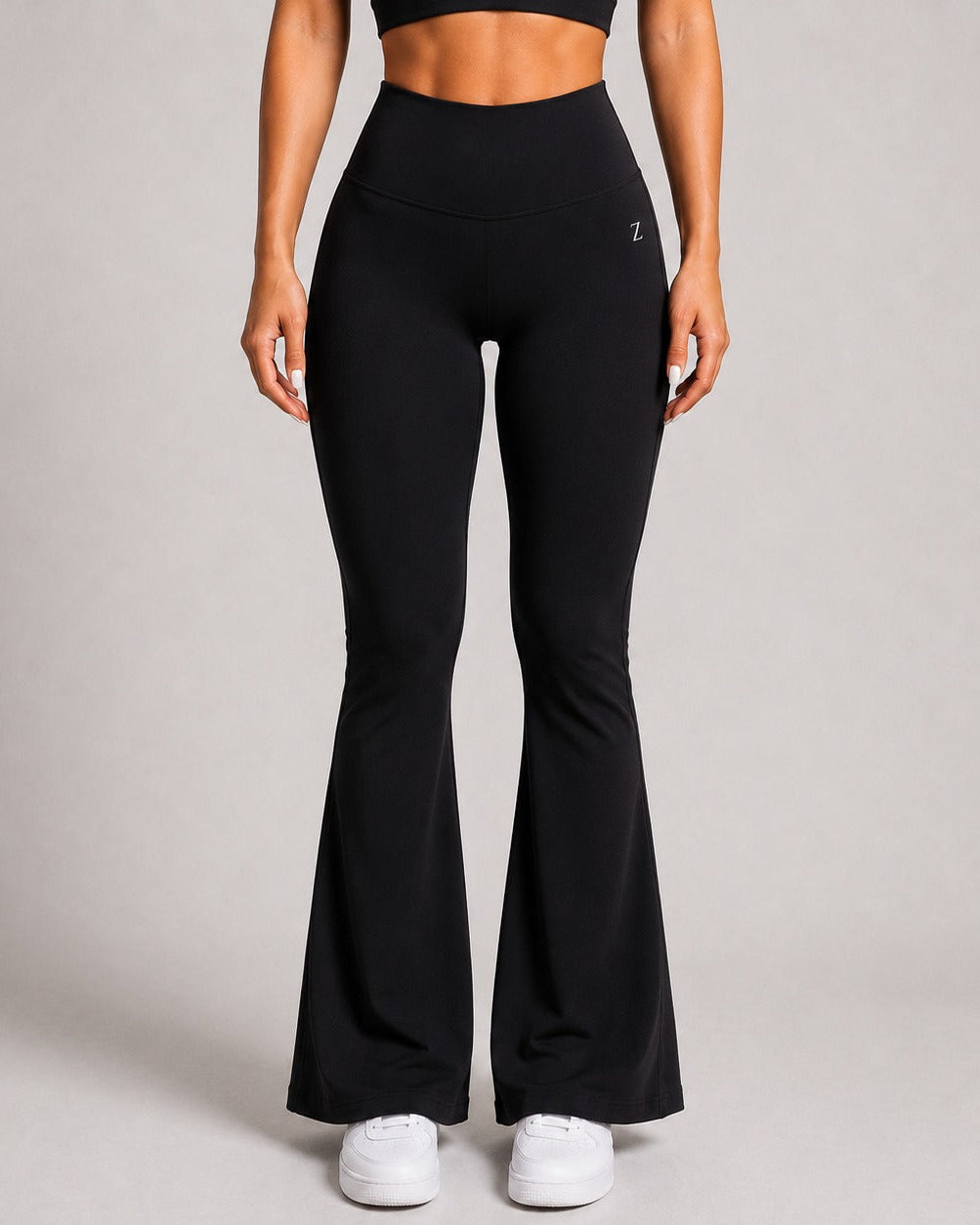
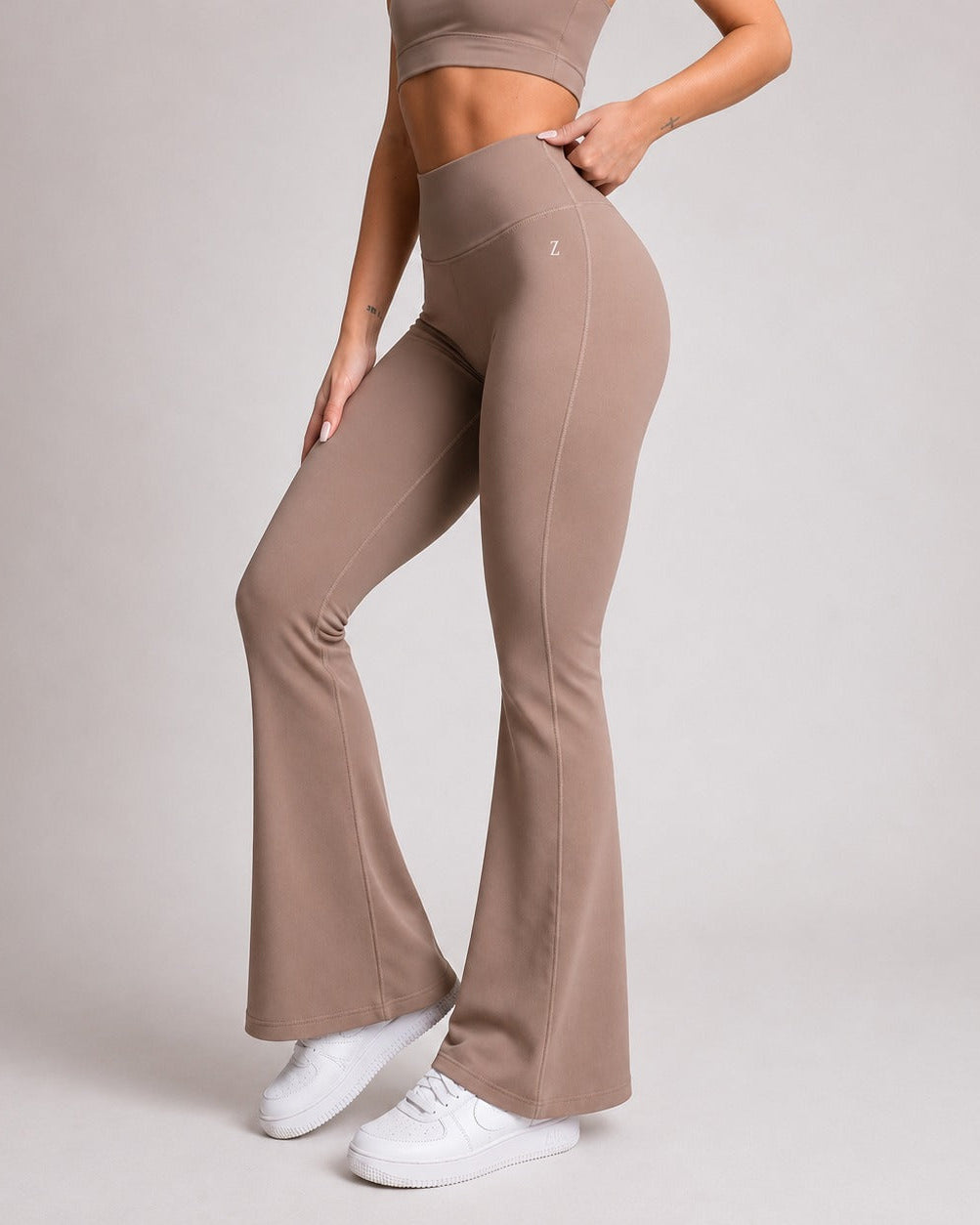
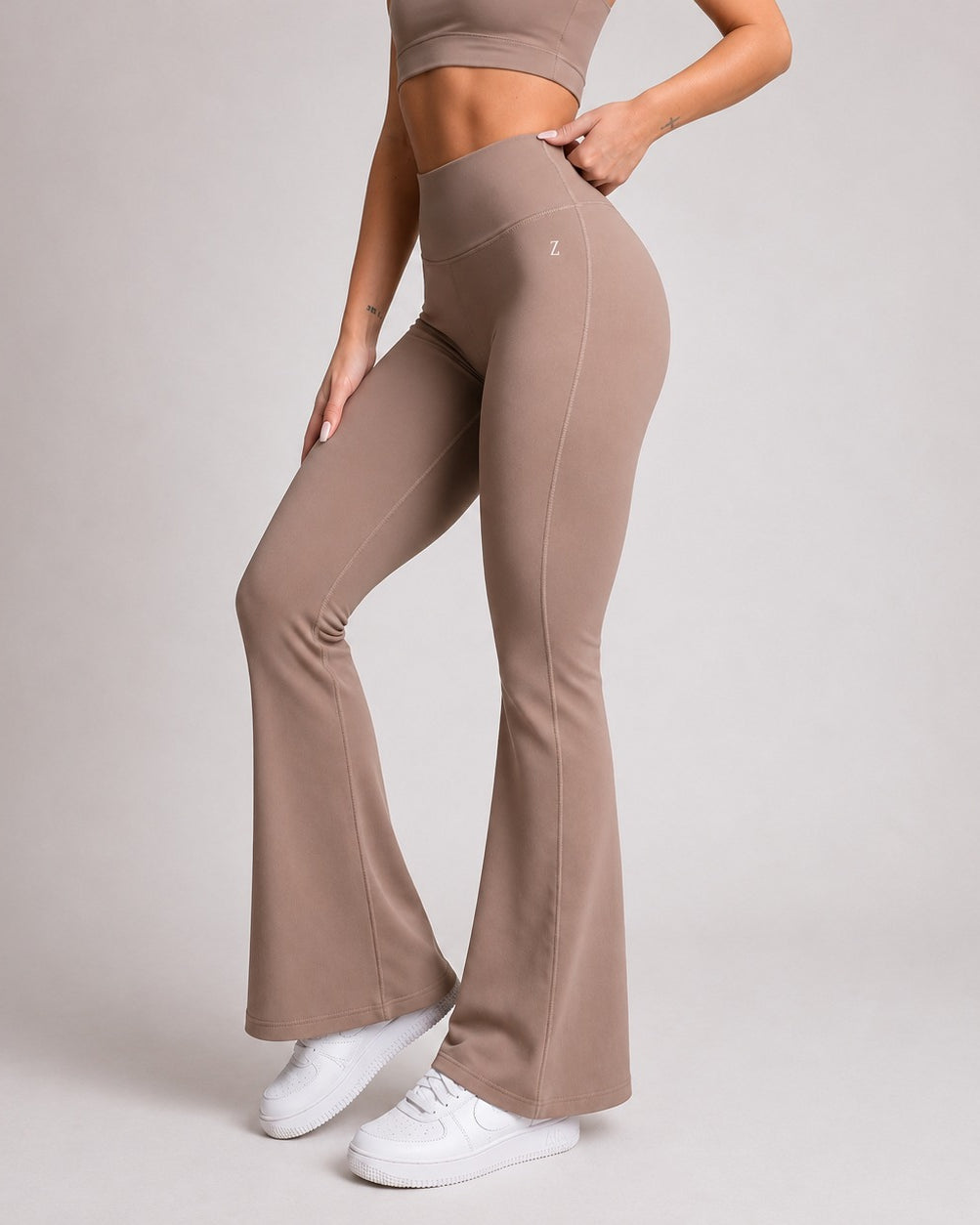
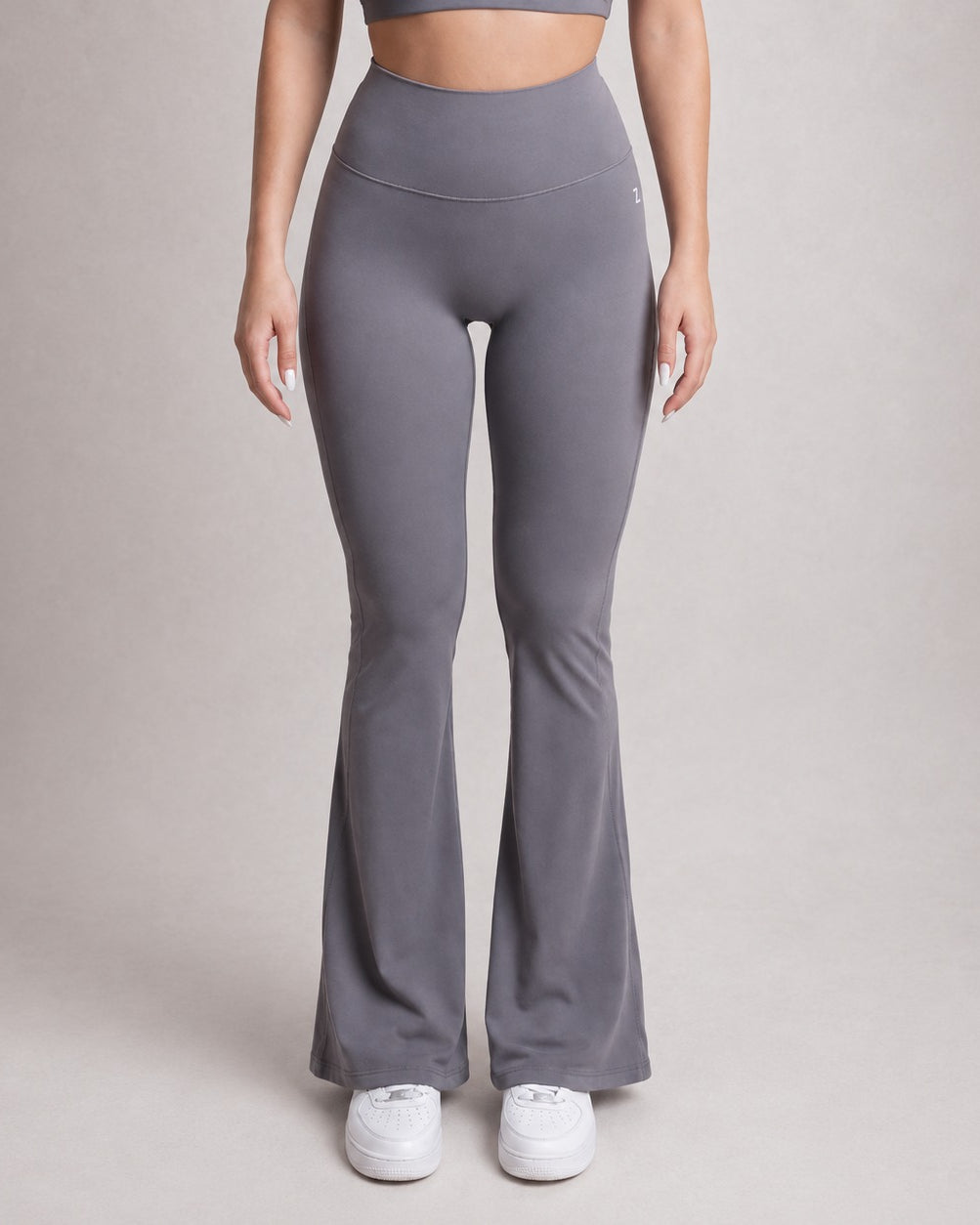
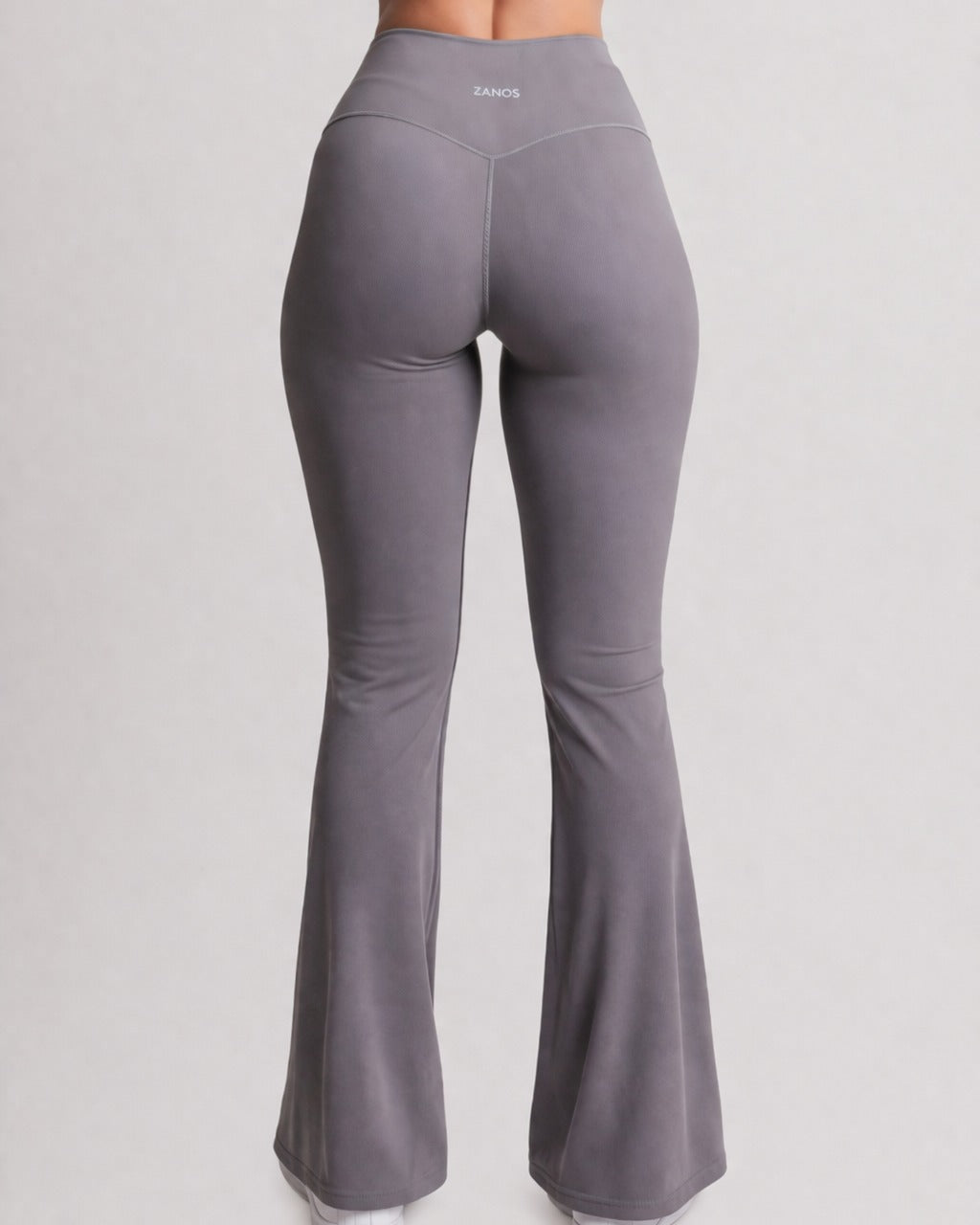
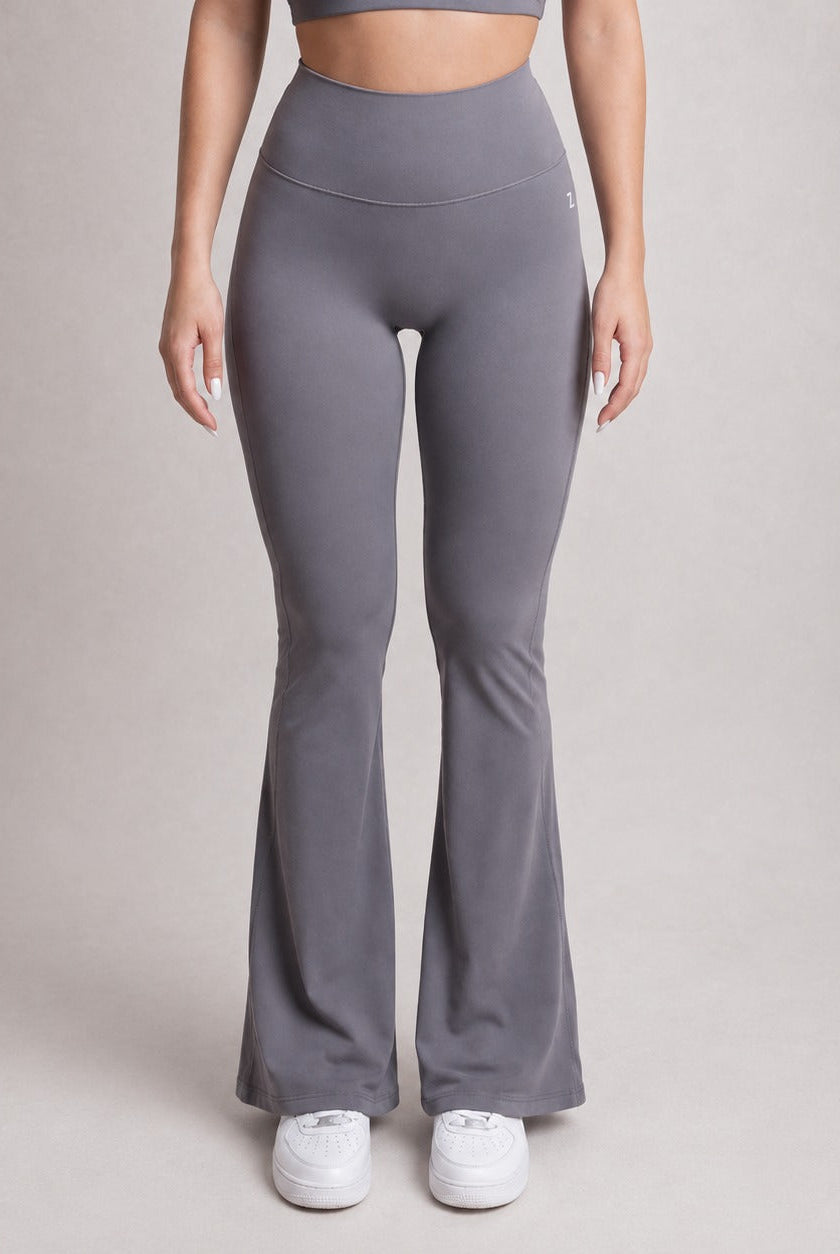
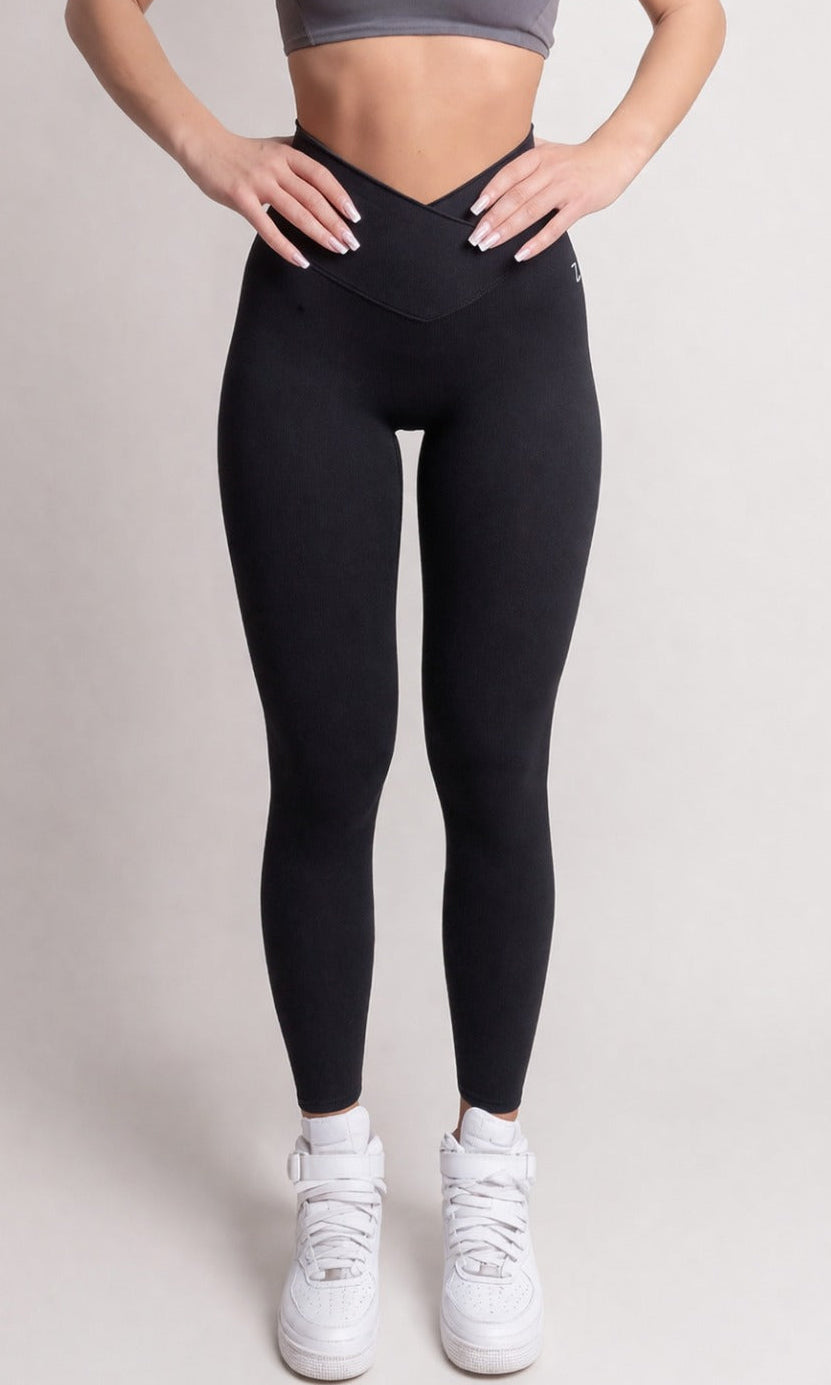
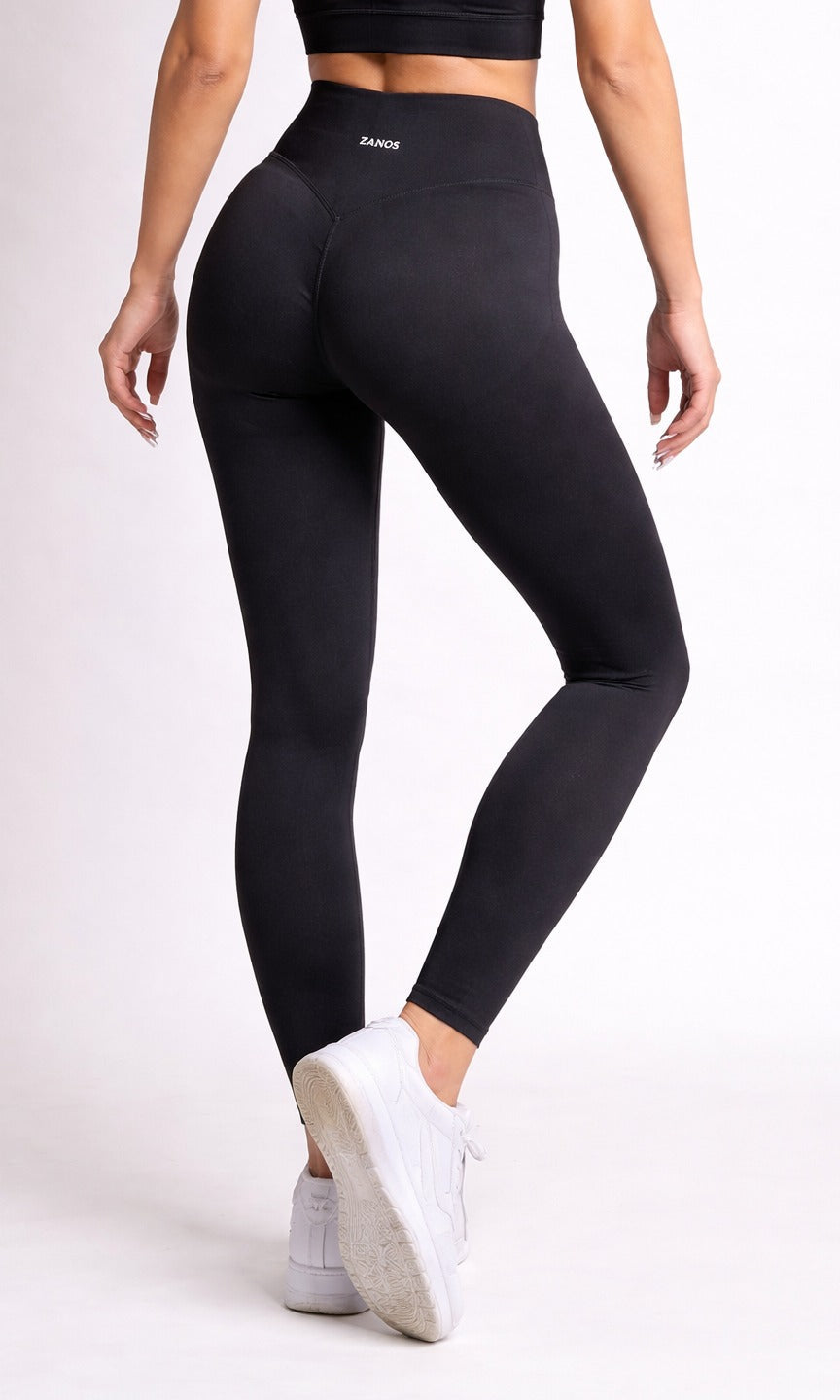
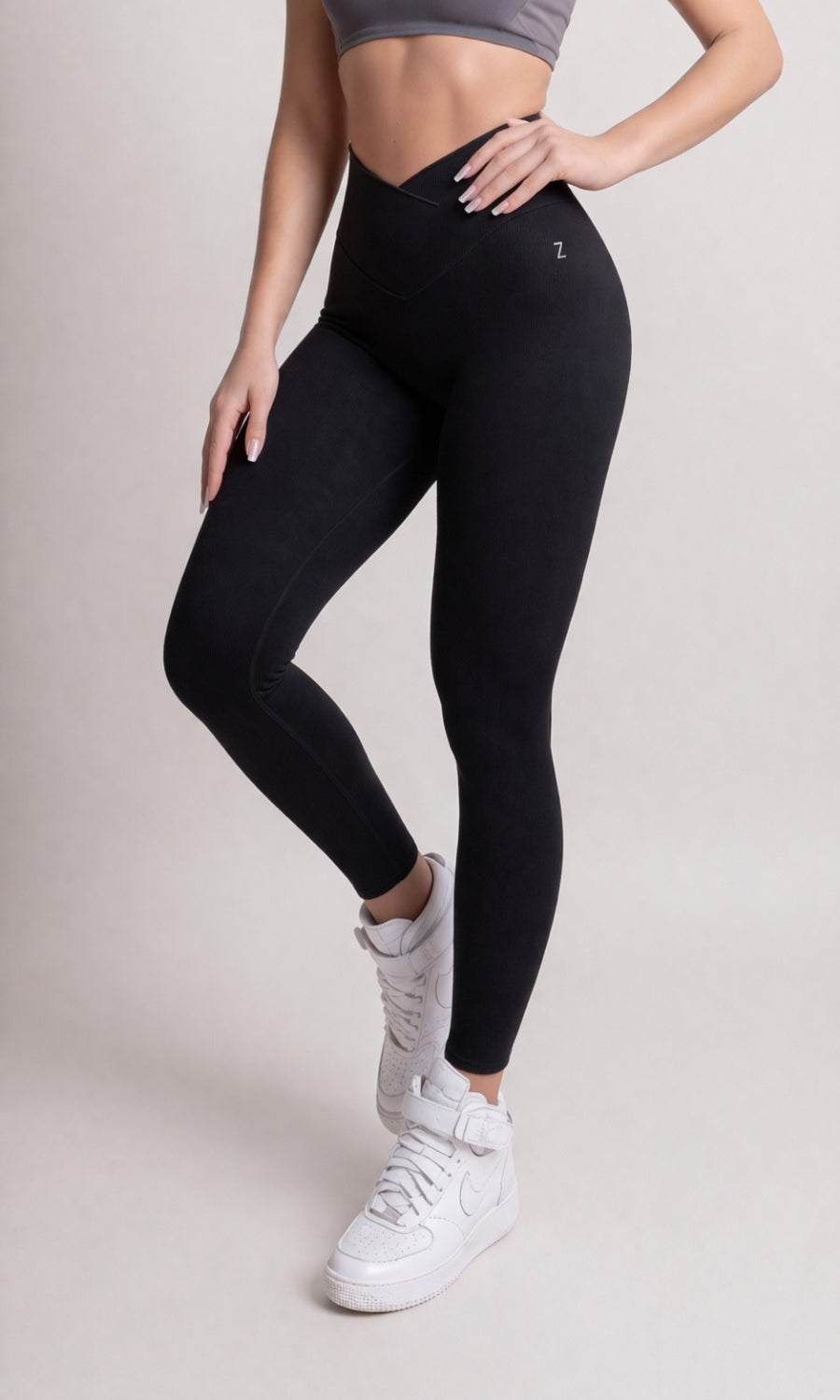
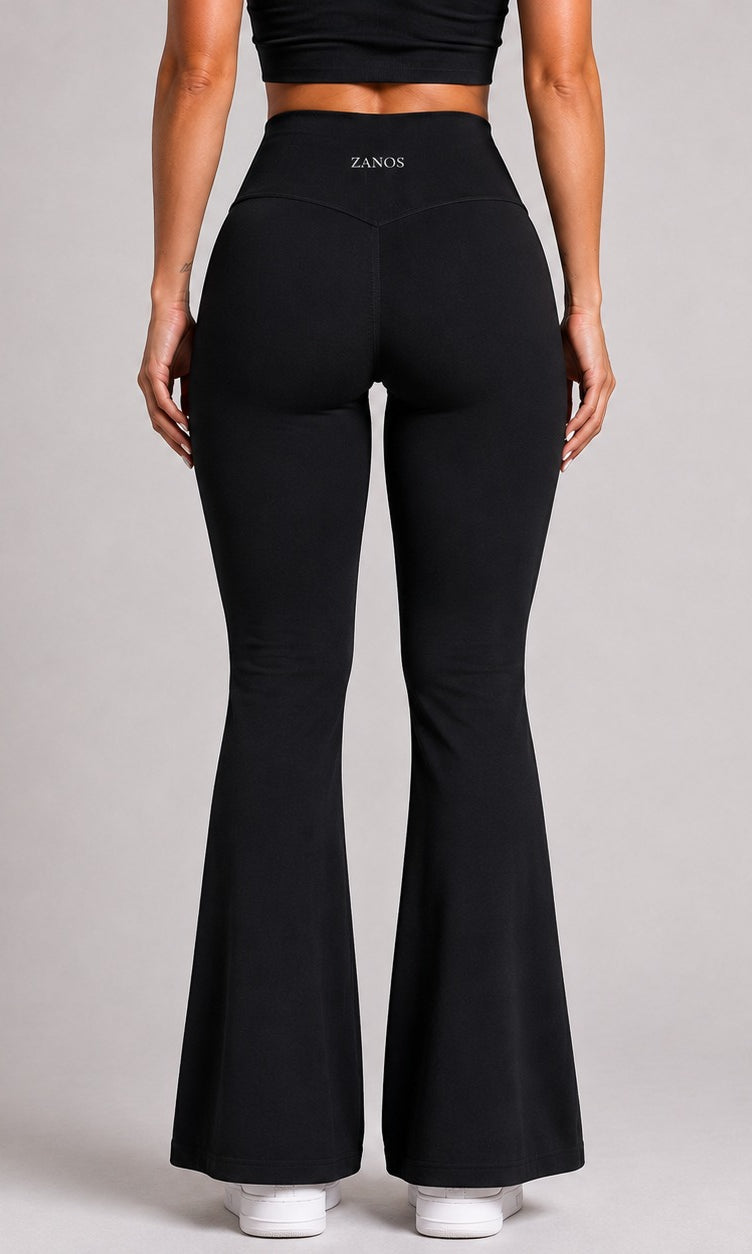
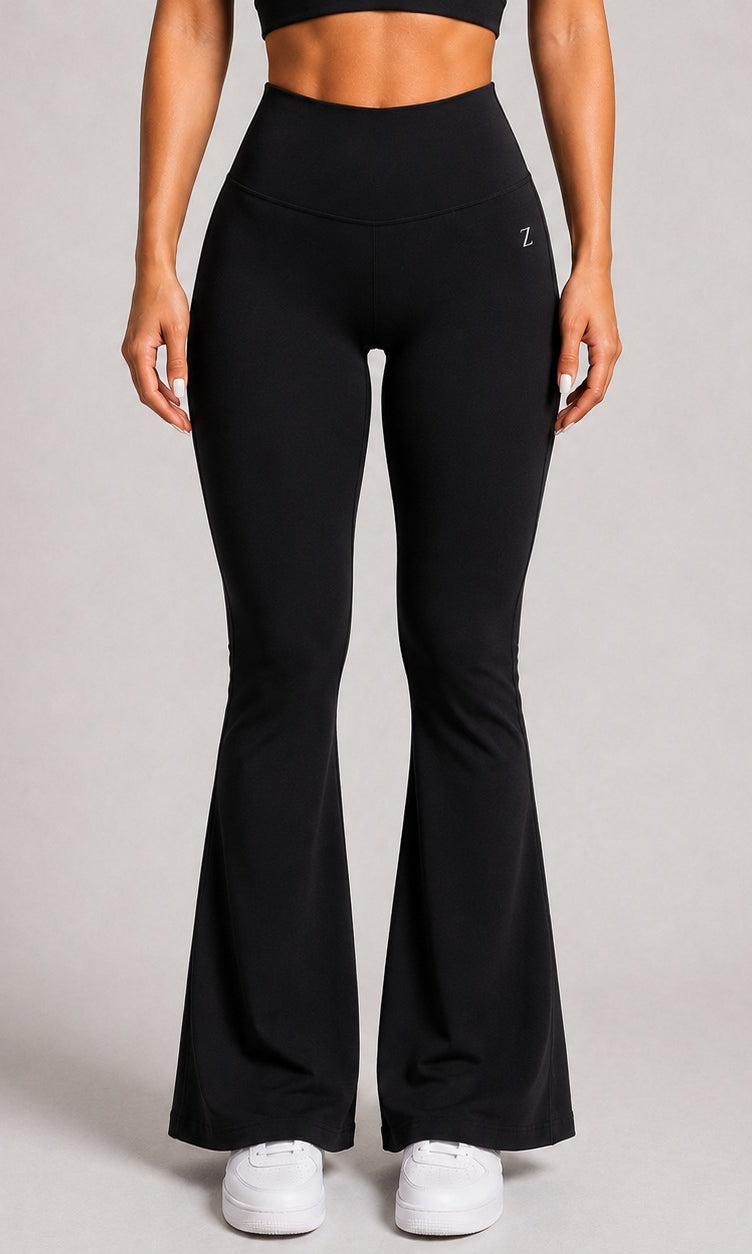
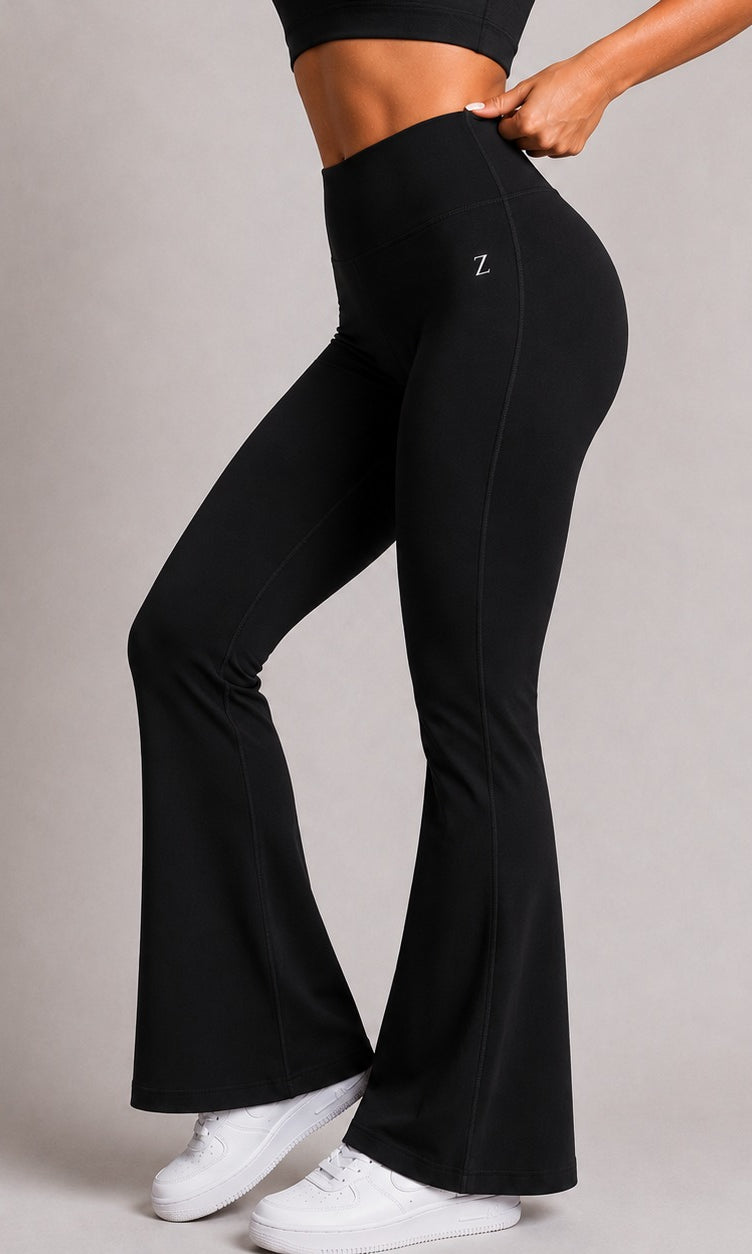
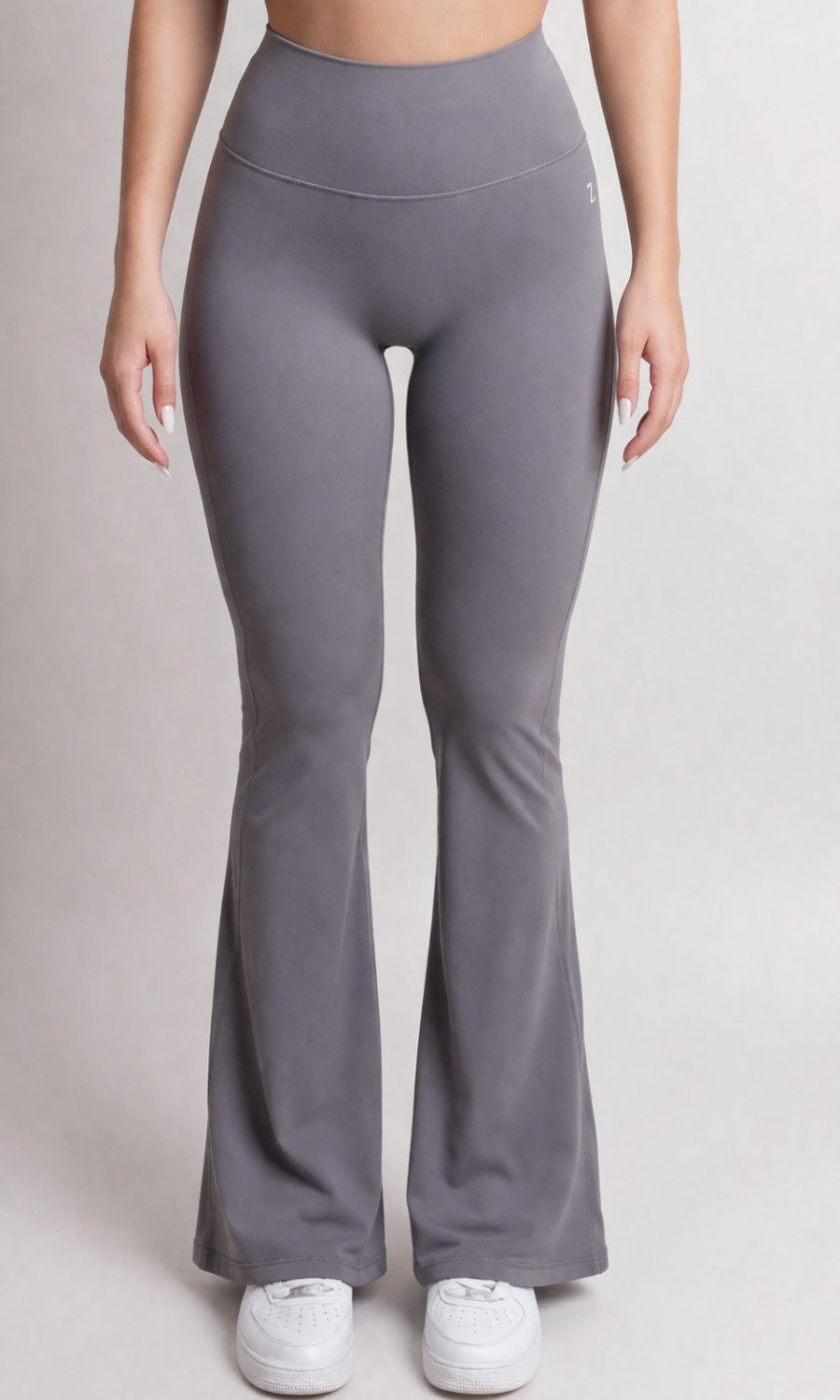
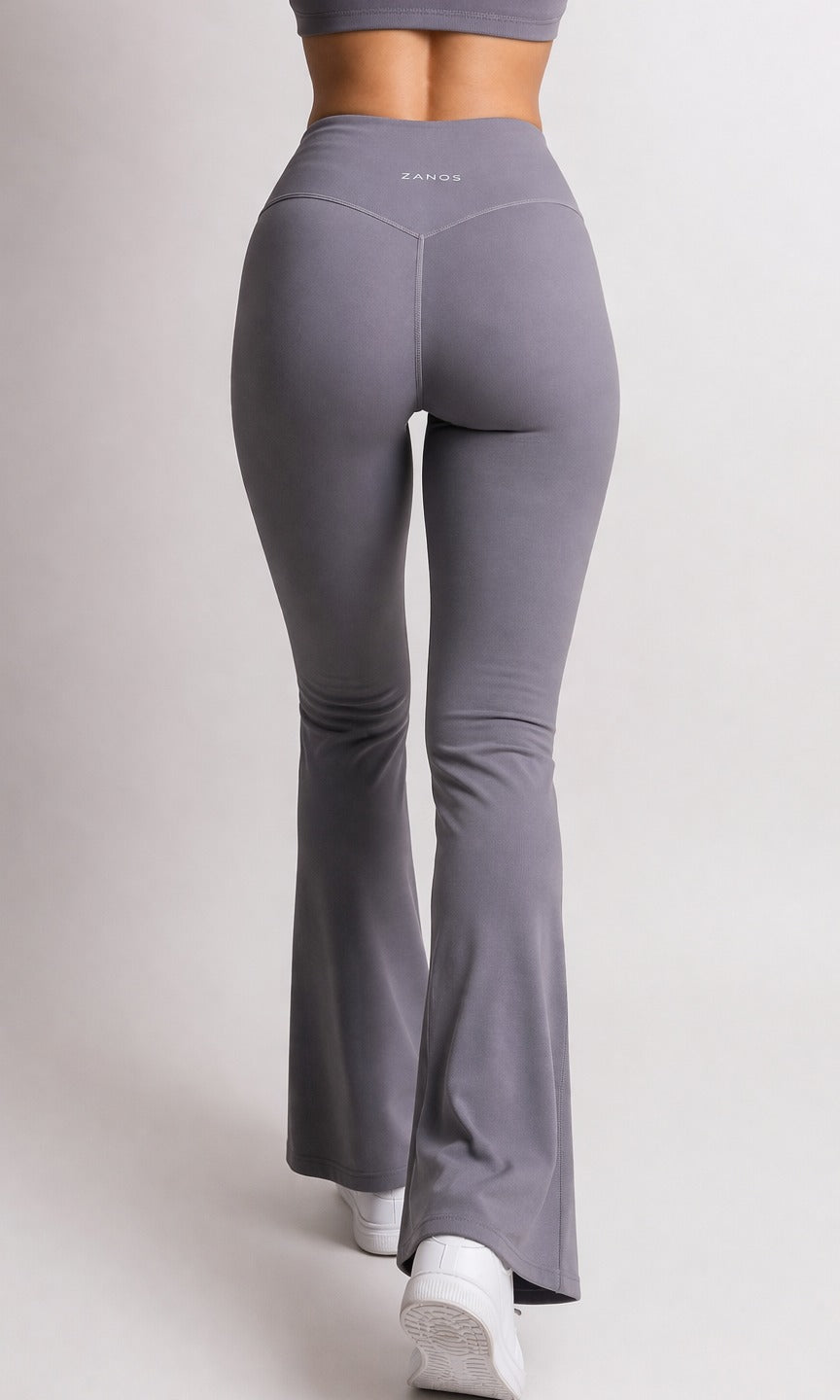
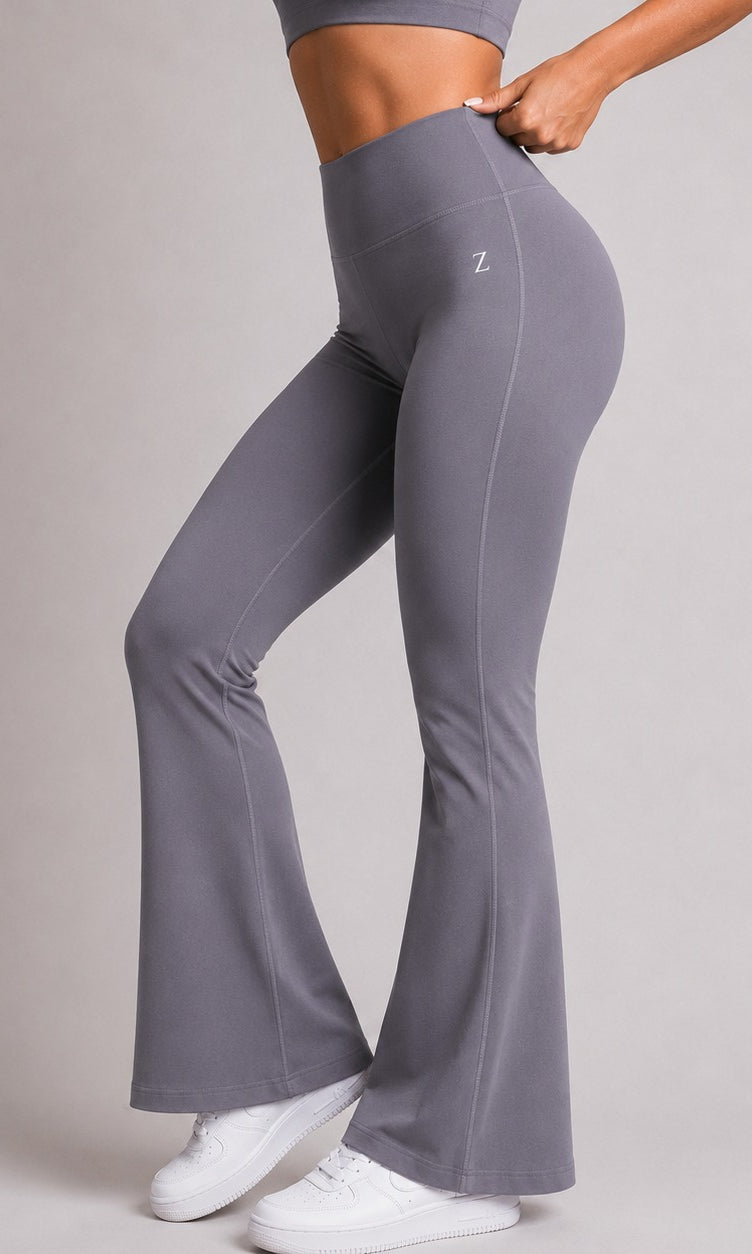
Flare tights are leggings with a fitted shape through the waist, hips, glutes and thighs, combined with a flared lower leg. Instead of staying tight all the way down to the ankle, the fabric opens slightly from the knee or calf area to create a softer and more elongated silhouette.
They flare pants are also often called:
flare leggings
flare pants
yoga flare pants
flared activewear pants
high waisted flare leggings
The main difference between classic leggings and flare tights is the lower leg shape. Traditional leggings follow the leg closely all the way down. Flare tights create a more relaxed and elegant line, which makes them easier to wear outside the gym or studio.
But even if flare tights look more lifestyle focused, they still need activewear function.
They should stretch.
They should support.
They should stay in place.
They should feel comfortable.
They should hold their shape.
They should move naturally with the body.
A good pair of flare tights should not only look clean.
They should perform quietly in the background.
Why many flare tights fail in real life
The most common mistake with flare tights is focusing only on the silhouette.
A brand adds a flared lower leg, a high waist and a soft fabric, and the product looks finished. But the shape is only one part of the garment. The real quality is revealed when the tights are worn.
Many flare tights fail in the same areas:
The waistband rolls down.
The fabric feels soft at first but loses shape.
The material becomes thin when stretched.
The seams create pressure or discomfort.
The fit works when standing still but not during movement.
The flare loses its shape after wearing.
The tights feel good at first but worse after washing.
These are not small issues.
They are the exact details that decide whether a product becomes something a woman reaches for again or something that stays in the drawer.
The ZANOS brand manual describes this as one of the biggest problems in modern activewear: too many products are designed for marketing images, not real life. It highlights issues such as leggings losing shape, waistbands rolling down, weak compression, transparency during training and fast deterioration after washing.
That is why flare tights should be evaluated beyond appearance.
Not just how they look.
How they behave.
Fit is more than size
Fit is often the first thing a customer feels, but it is often the last thing many brands truly develop properly.
A size chart can say XS, S, M or L.
But real fit is not only about size.
It is about how the garment behaves on the body.
How does the waistband sit when standing?
What happens when you sit down?
Does the fabric follow the hips naturally?
Does it pull across the thighs?
Does the garment move when you walk?
Do the seams feel natural?
Does the flare fall cleanly?
Does the shape hold after use?
These questions define whether the fit actually works.
At ZANOS, fit is treated as an engineering process. A waistband placed only a few millimeters too high or too low can completely change comfort. A seam in the wrong position can affect movement. Too much compression can create discomfort. Too little compression can create instability. This is why fit engineering is a central part of the ZANOS product philosophy.
For flare tights, this is especially important because the garment needs to balance two feelings at once:
Stability at the top.
Softness and flow at the bottom.
When that balance is right, the product feels effortless.
It simply works.
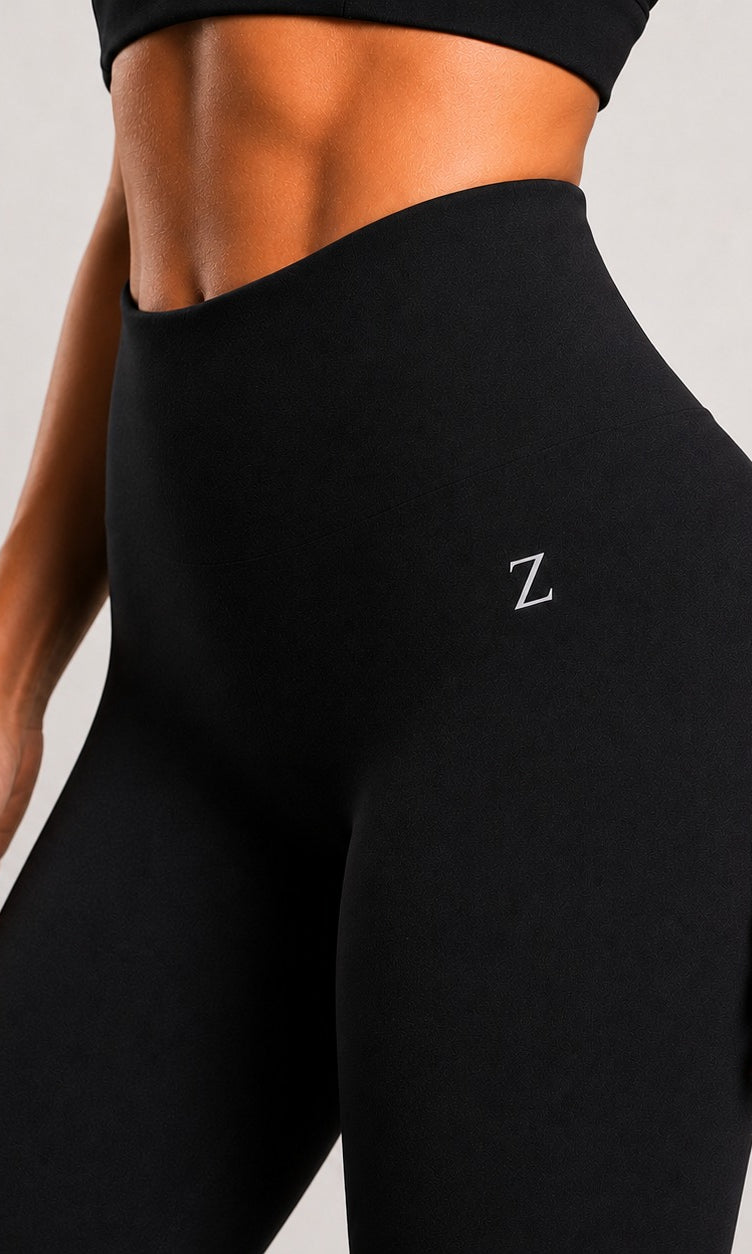
The waistband: the detail that controls the whole experience
If the waistband does not work, almost nothing else matters.
A pair of flare tights can have a beautiful fabric, a clean silhouette and the perfect color. But if the waistband rolls down, cuts in or feels unstable, the customer will notice immediately.
A waistband in flare tights needs to do several things at the same time.
It needs to hold the garment in place.
It needs to support without creating pressure.
It needs to follow the body during movement.
It needs to stay comfortable when sitting.
It should not fold forward.
It should not lose shape after washing.
It should feel comfortable during longer wear.
The problem is that many waistbands are designed to look good when standing still.
But activewear is not worn while standing still all day.
You sit.
You walk.
You bend.
You stretch.
You breathe.
You live.
That is why the waistband needs to be tested in real situations.
A good waistband should not demand attention. It should do its job quietly. When it works, you barely think about it. When it does not work, you think about it all the time.
This is one of the most important differences between ordinary flare leggings and flare tights developed with intention.
Why some leggings roll down
Leggings that roll down are one of the most common problems in activewear. It can happen for several reasons, and it is not always caused by choosing the wrong size.
Leggings may roll down because:
The waistband is too thin.
The material lacks structure.
The fabric has weak recovery.
The waist height is placed incorrectly.
The compression balance is wrong.
The product has not been tested while sitting.
The size grading does not work across different body types.
The fabric stretches out after wear.
This is why “high waisted” does not automatically mean the tights will stay in place.
A high waist can still roll.
A soft waistband can still lose stability.
A tight waistband can still feel uncomfortable.
A good waistband requires the right balance between height, structure, stretch, compression and fabric recovery.
For flare tights, this matters even more because the garment is often used for yoga, pilates and everyday wear, where the movements may be slower but the wear time is longer.
It is not only intense training that tests a garment.
Daily use tests it too.
Fabric: softness is not enough
Many people touch a garment and immediately think:
“This feels soft, so it must be good.”
But in activewear, softness is not enough.
A fabric can feel soft at first and still lose shape quickly. It can feel comfortable in the hand but become transparent under stretch. It can look elevated online but lack stability when the body moves.
A flare tights fabric needs to handle several demands at once:
Softness against the skin.
Stretch without becoming loose.
Recovery after movement.
Coverage under stretch.
Stability around the waist and hips.
A natural fall through the flare.
Comfort during longer wear.
Shape retention after washing.
This is why ZANOS treats fabric research as a foundation of product development. We do not choose fabrics only because they look good. We study how they behave after movement, sweat, washing and repeated wear. Some fabrics feel soft initially but lose compression quickly. Some feel supportive but become uncomfortable during longer sessions. Some look refined online but become transparent when stretched. Those fabrics are rejected.
A good fabric should not only sell the product on day one.
It should make you want to wear it again.
Stretch and recovery: why the fabric must come back
Stretch is one of the most common words in activewear.
But stretch only tells half the story.
The more important quality is recovery.
Recovery means the fabric can stretch with the body and then return to its original shape. It is one of the most important properties in performance based activewear.
Without good recovery, a garment can start to feel loose. It can lose structure around the knees, hips or waistband. It can feel good at the beginning of the day but worse after hours of wear. It can look fine after one wash but change after repeated use.
For flare tights, recovery is especially important because the garment has different responsibilities in different areas.
Around the waist and hips, it needs stability.
Around the thighs, it needs flexibility.
At the flare, it needs a soft fall.
Across the whole garment, it needs shape retention.
When recovery works, the garment feels more reliable.
It follows the body without losing itself.
That is one of the qualities that separates ordinary leggings from tights that have been developed with real consideration.
Coverage during movement: why opacity still matters
Flare tights are often used for yoga, pilates and everyday wear, but that does not make coverage less important.
In many ways, it makes coverage more important.
Yoga and pilates involve positions where the fabric stretches. You bend forward, sit low, lift your legs, twist, extend and move slowly through positions that test the fabric from different angles.
A pair of flare tights should feel secure during movement. You should not have to think about whether the fabric becomes transparent when stretched.
Coverage is not only about thickness.
A thick fabric can still feel wrong if it lacks stretch or breathability. A lighter fabric can work well if the construction is strong, but if it loses opacity under stretch, it is not enough.
Good coverage depends on:
Fabric density.
Stretch direction.
Color.
Knit structure.
Recovery.
Compression balance.
How the fabric reacts to body movement.
This is why coverage needs to be tested in real positions, not only judged while the garment is hanging on a rack.
Seams, front comfort and freedom of movement
Seams are the type of detail many people do not notice until they feel wrong.
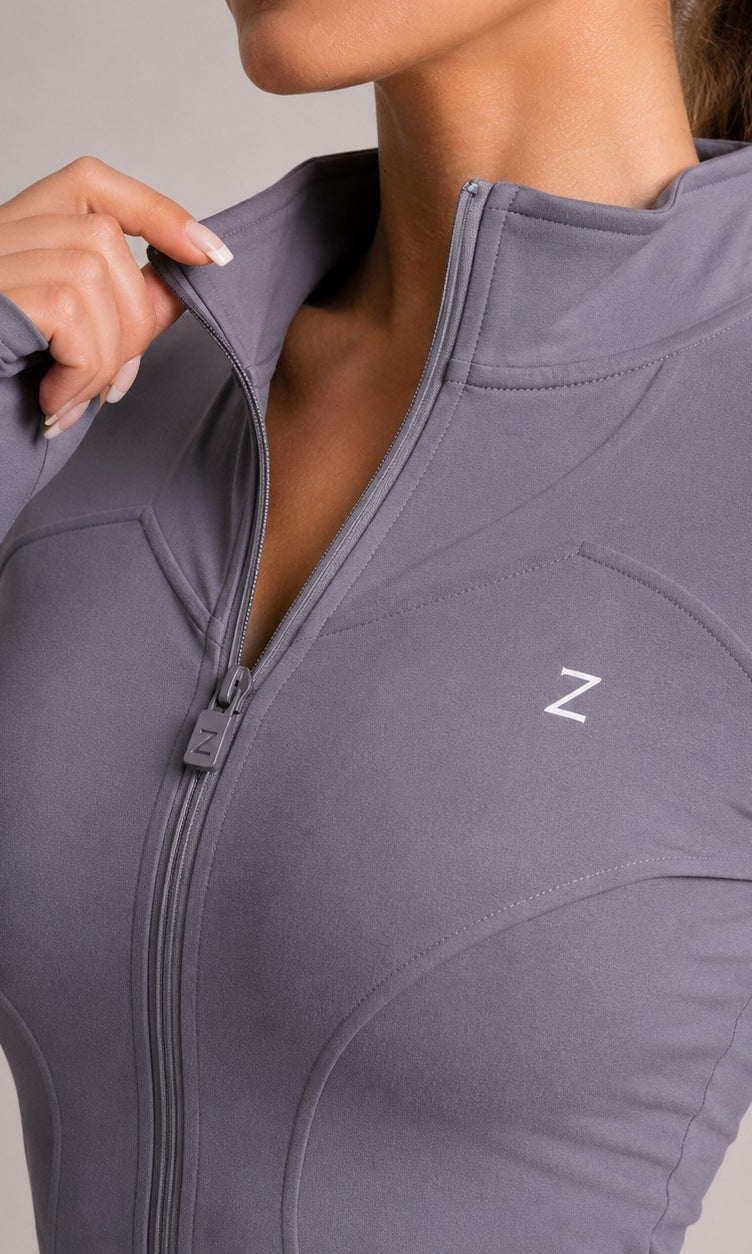
A seam can affect how the garment moves. It can create pressure. It can disturb the fit. It can make the tights feel less natural on the body.
In flare tights, seam placement matters because the garment needs to follow the body without creating uncomfortable points of tension. This is especially important around the waist, hips, inner leg and front area.
Front comfort is a major part of how tights feel.
Many women are tired of leggings that dig in, create pressure, form uncomfortable lines or require constant adjustment. That is why ZANOS pays attention to how the garment feels from the front, not only how it shapes the body from the back.
Freedom of movement does not mean the garment should be loose.
It means the garment should follow the body without fighting against it.
A good pair of flare tights should feel natural when you:
Sit.
Stretch.
Walk.
Twist.
Bend.
Wear them for hours.
The garment should not control your movement.
It should move with you.
The flare silhouette: balance between shape, flow and function
The flare is what visually separates this garment from classic leggings. But even the flare itself needs careful development.
A flare can be too wide.
Too narrow.
Too heavy.
Too loose.
Too stiff.
Too short.
Too long.
Poorly balanced against the rest of the garment.
The goal is not only to create a wider lower leg.
The goal is to create a fall that feels natural, clean and elegant.
The flare silhouette should soften the leg line without feeling exaggerated. It should work with sneakers, barefoot yoga, everyday outfits and studio environments. It should move nicely when walking while still feeling like activewear.
That requires fabric weight, length and shape to work together.
This is why flare tights need to be tested both still and in motion. A flare can look good in a product image but fall differently when walking. It can look elegant from the front but feel heavy from the side. It can work on one height but not another.
The small details matter.
How we test flare tights in real life
A garment should not be approved only because it looks good.
It needs to be tested.
For flare tights, testing is not only about training. It is also about everyday movement. Often, that is where a garment reveals itself.
We look at how the tights behave when you:
Walk.
Sit for longer periods.
Bend forward.
Stretch.
Move through yoga positions.
Transition between positions.
Wear them for several hours.
Wash them.
Wear them again.
We evaluate waistband stability, fabric recovery, coverage under stretch, seam comfort, flare movement and how the fit holds over time.
The ZANOS brand manual describes this as real world testing. Products are evaluated through movement, everyday wear, longer sessions and different body shapes. The evaluation includes transparency, compression consistency, fabric recovery, waistband stability, seam durability, comfort during movement and shape retention after washing.
That kind of testing changes everything.
Not just:
“Does it look good?”
But:
“Does it work when life happens?”
Why rejected samples are part of quality
Not every sample moves forward.
That is not a problem.
That is part of the process.
A sample can look promising and still fail during testing. A fabric can feel soft at first but lose compression. A waistband can look clean but roll during movement. A seam can feel acceptable for a few minutes but become uncomfortable during longer wear.
When that happens, the product should not be released.
It is easier to launch quickly.
It is harder to wait, improve and start over.
But that is where quality is built.
In the ZANOS brand manual, rejected samples are described as one of the most important parts of product development. Every rejected sample teaches something. Some fabrics were too thin. Some lost compression after washing. Some waistbands rolled down during movement. Some seams did not feel good enough. So the process started again.
We believe that should be visible.
Good products do not always come from the first attempt.
They come from improvement.
Quality control before a product moves forward
Quality is not only about the fabric.
It is also about consistency.
A garment can feel good as a sample but still require careful inspection before release. That is why quality control is an essential part of activewear development.
We look at details such as:
Seam symmetry.
Stitch density.
Fabric flaws.
Color consistency.
Compression consistency.
Elastic recovery.
Sizing consistency.
Wash performance.
Fit grading between sizes.
The ZANOS manual describes inspection before launch as part of the process. Small details create big differences, and products that do not feel right in real life should not be released.
This is how we want people to understand ZANOS.
Not as a brand that only creates beautiful images.
As a brand that cares about the details behind the garment.
Flare tights for yoga
Flare tights work especially well for yoga because they combine softness, freedom of movement and a calmer silhouette.
In yoga, the garment is tested differently than in everyday wear. You sit, stretch, fold forward, twist and hold positions for longer periods. That means the fabric must be flexible, the waistband must stay in place and the seams must feel natural.
A good pair of flare tights for yoga should feel:
Soft.
Stable.
Flexible.
Secure.
Comfortable while sitting.
Reliable during stretch.
Easy to move in.
They should not require you to pull the waistband up between positions. They should not interrupt focus. They should simply support the movement in the background.
That is what good yoga activewear should do.
It should not take over the experience.
It should allow the body to move.
Flare tights for pilates
Pilates may look slower than many other training forms, but the demands on activewear are still high.
Pilates involves controlled movement where fit becomes very noticeable. You lie down, sit up, lift your legs, engage the core and move slowly through positions that expose weak construction quickly.
This is where you notice if the waistband slips.
If the fabric pulls.
If the front comfort is not right.
If the seams create pressure.
If the tights need adjustment.
Flare tights can be a strong choice for pilates because they feel soft and elegant while still offering activewear support. They create a more relaxed silhouette than classic gym leggings but should still hold shape and follow the body.
The balance matters.
Support without stiffness.
Stretch without looseness.
Shape without discomfort.
Flare tights for everyday wear
One of the reasons flare tights have become so loved is that they work outside the studio.
They feel more dressed than classic leggings.
They create a cleaner silhouette.
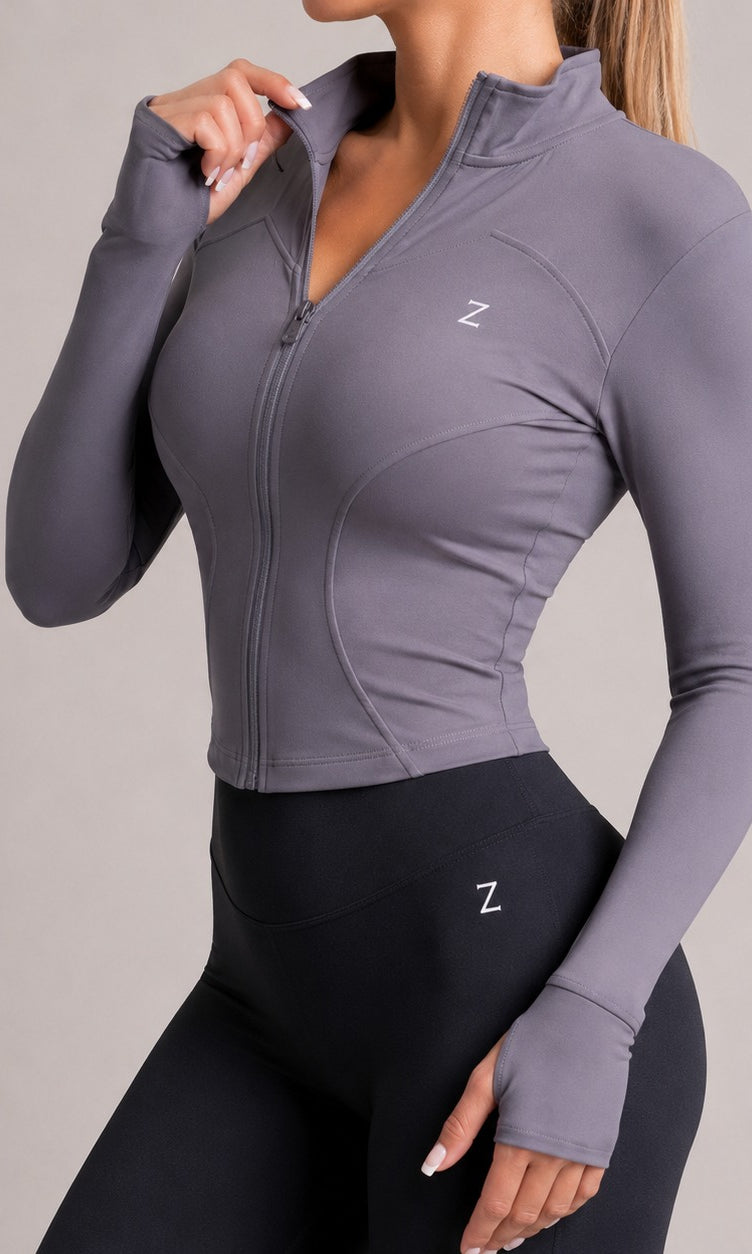
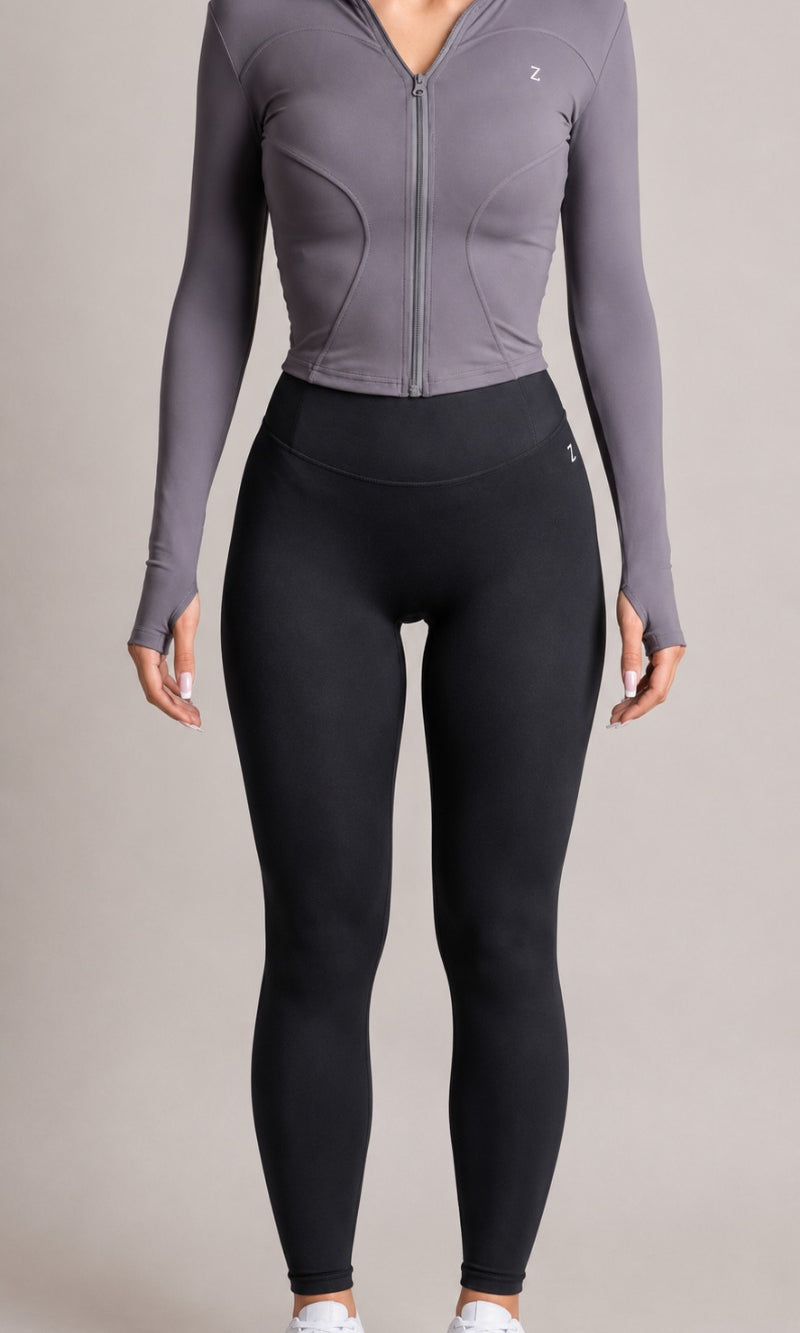
They can be worn with a hoodie, zip jacket, sports bra, oversized sweater, sneakers or a minimal everyday look.
But everyday wear also creates demands.
A garment worn throughout the day needs to stay comfortable for hours. It needs to work while sitting, walking, traveling, working from home, running errands or moving between different parts of the day.
This is often where true quality becomes visible.
Not only during one hour of movement.
But after several hours of wear.
A good pair of flare tights should feel just as natural later in the day as they did when you first put them on.
How to recognize well made flare tights
When trying flare tights, do not only look at the mirror.
Ask better questions.
Does the waistband feel stable without cutting in?
Does it roll when you sit?
Does the fabric feel soft but still structured?
Does the material become thin under stretch?
Does the garment follow the hips naturally?
Do the seams feel comfortable?
Does the flare fall cleanly?
Does the garment still feel good after wearing it for a while?
Does it keep its shape after washing?
Would you actually reach for it again?
The last question matters.
A good garment should not only impress when it is new.
It should become something you return to.
One of the core beliefs in the ZANOS manual is that women return to brands because of how the products make them feel, not because of logos. That feeling matters more than branding alone.
The feeling is everything.
Why transparency matters
We believe customers deserve to understand more about the products they wear.
Not only color, size and price.
But what sits behind the garment.
Why was the fabric chosen?
What was tested?
What failed?
What was improved?
What does fit mean in practice?
Why is the waistband constructed this way?
ZANOS wants to build more openly. We want to show the process, not only the polished final result. The brand manual states that transparency builds trust and that modern brands should feel more human. ZANOS does not pretend to be perfect. It shows the process of becoming better.
That is why a guide like this matters.
It is not only about flare tights.
It shows how we think.
Conclusion: flare tights should work in real life
Flare tights are one of the most versatile pieces in modern activewear. They can work for yoga, pilates, walking, travel, everyday wear and calmer forms of training. They can feel soft, elegant and easy to style.
But only if they are built correctly.
A well made pair of flare tights is about much more than a flared lower leg. It is about waistband construction, fabric recovery, seam placement, coverage under stretch, fit through the hips and thighs, the fall of the flare and how the garment feels after real use.
This is where ZANOS wants to focus.
Not fast hype.
Not endless product drops.
Not just looking good online.
But better fabrics.
Better fit.
Better testing.
Better comfort.
Better long term quality.
If a product is not good enough, it should not be released. That simple rule says a lot about how ZANOS is built.
Flare tights should feel as good as they look.
Not only the first time.
Again and again.