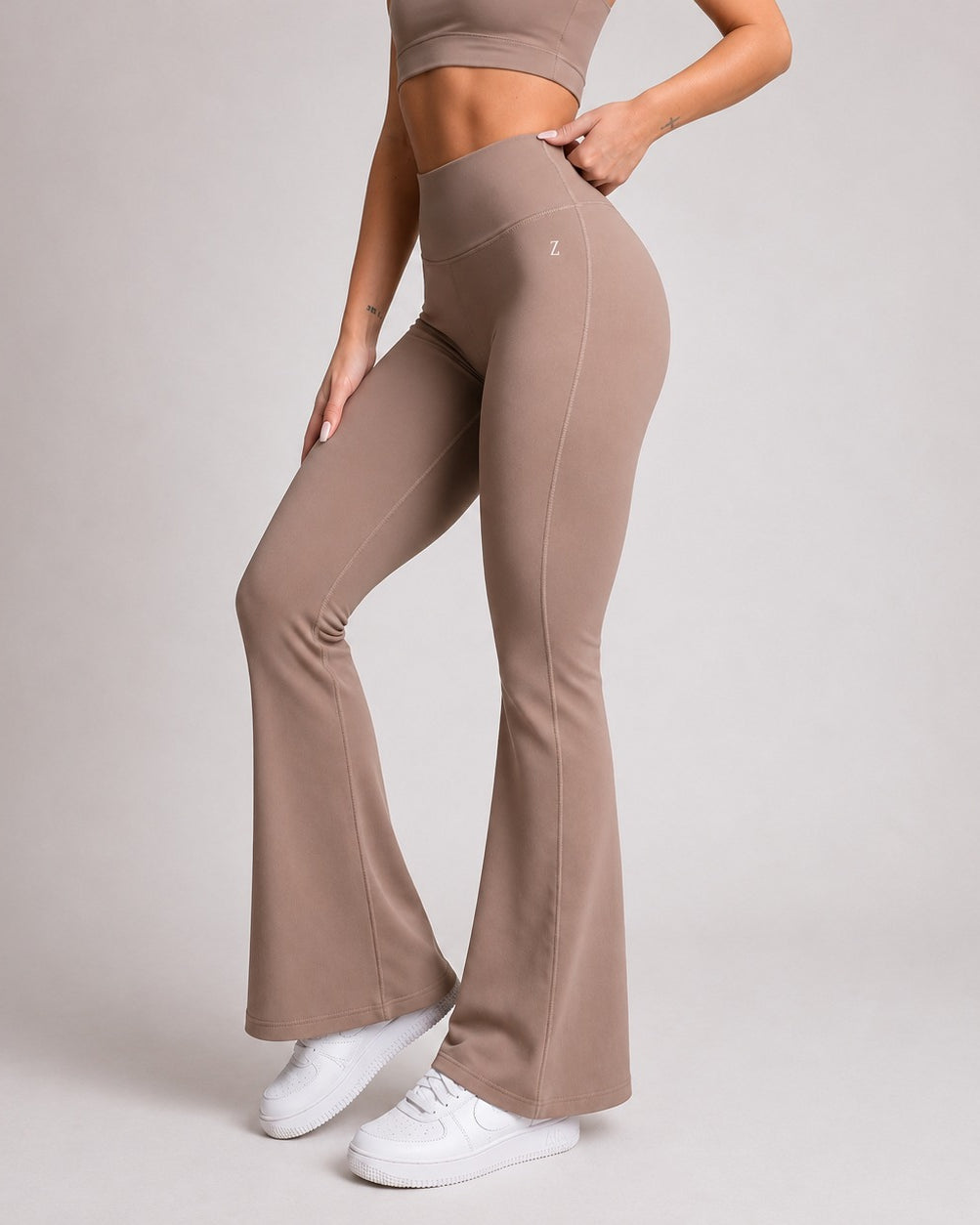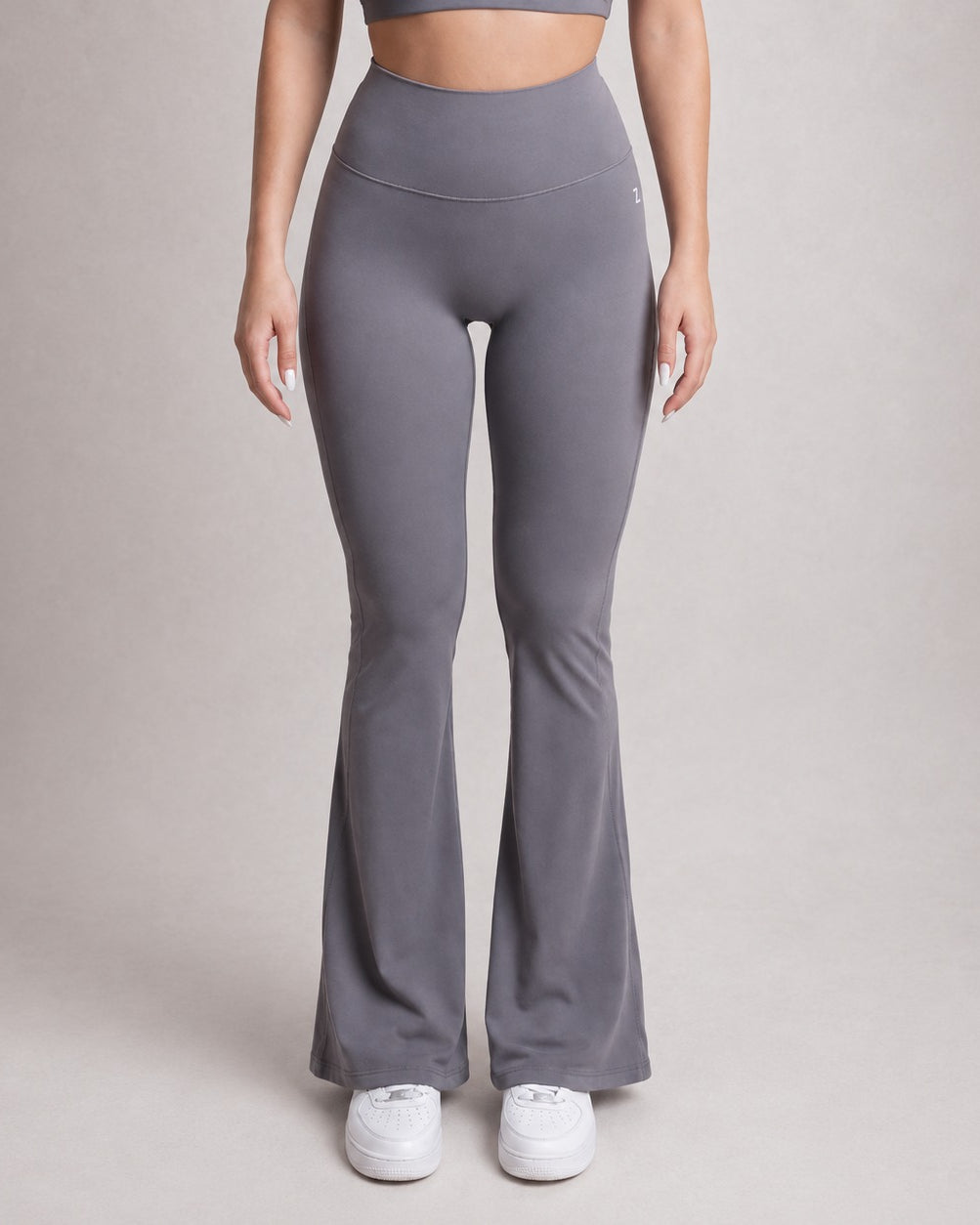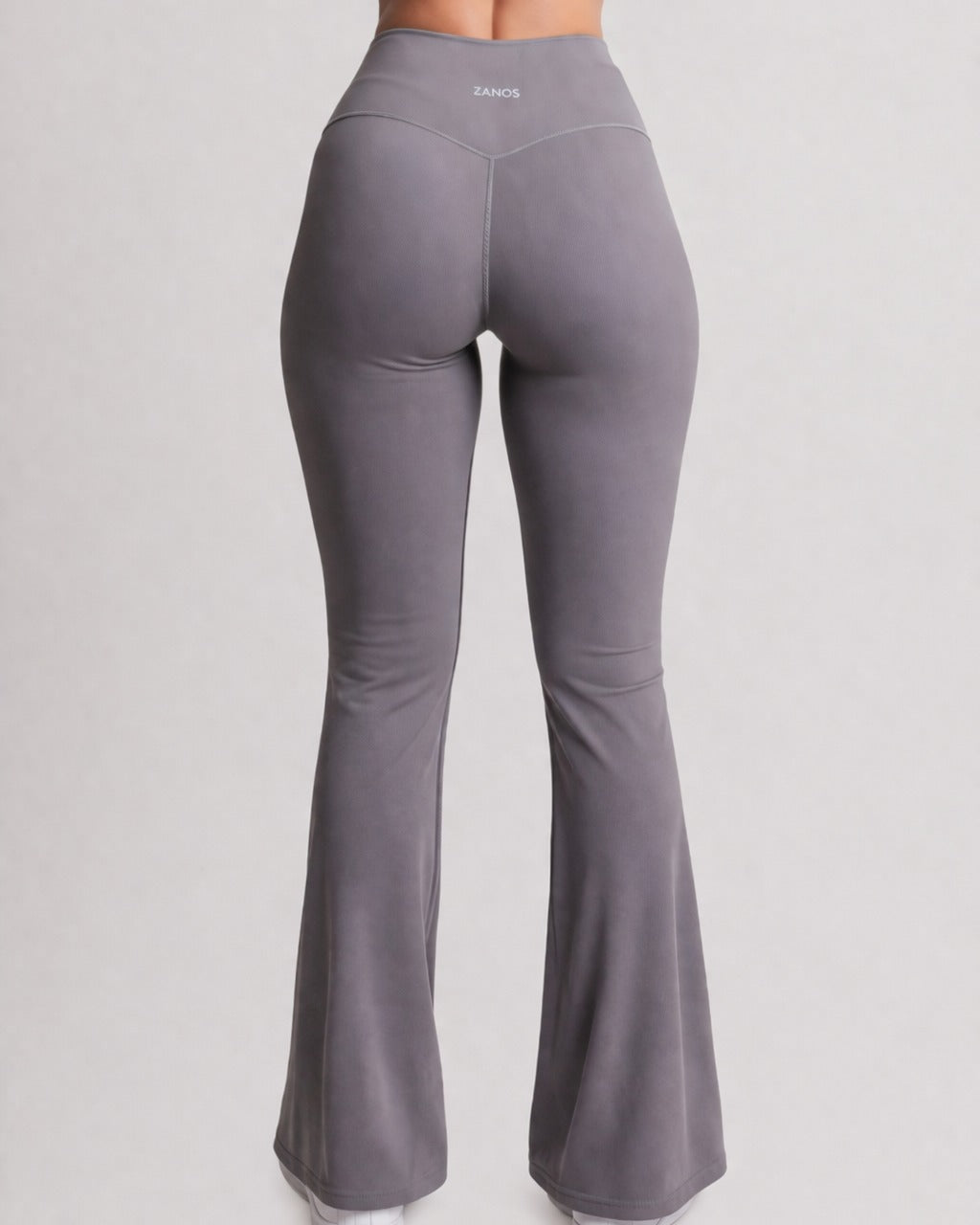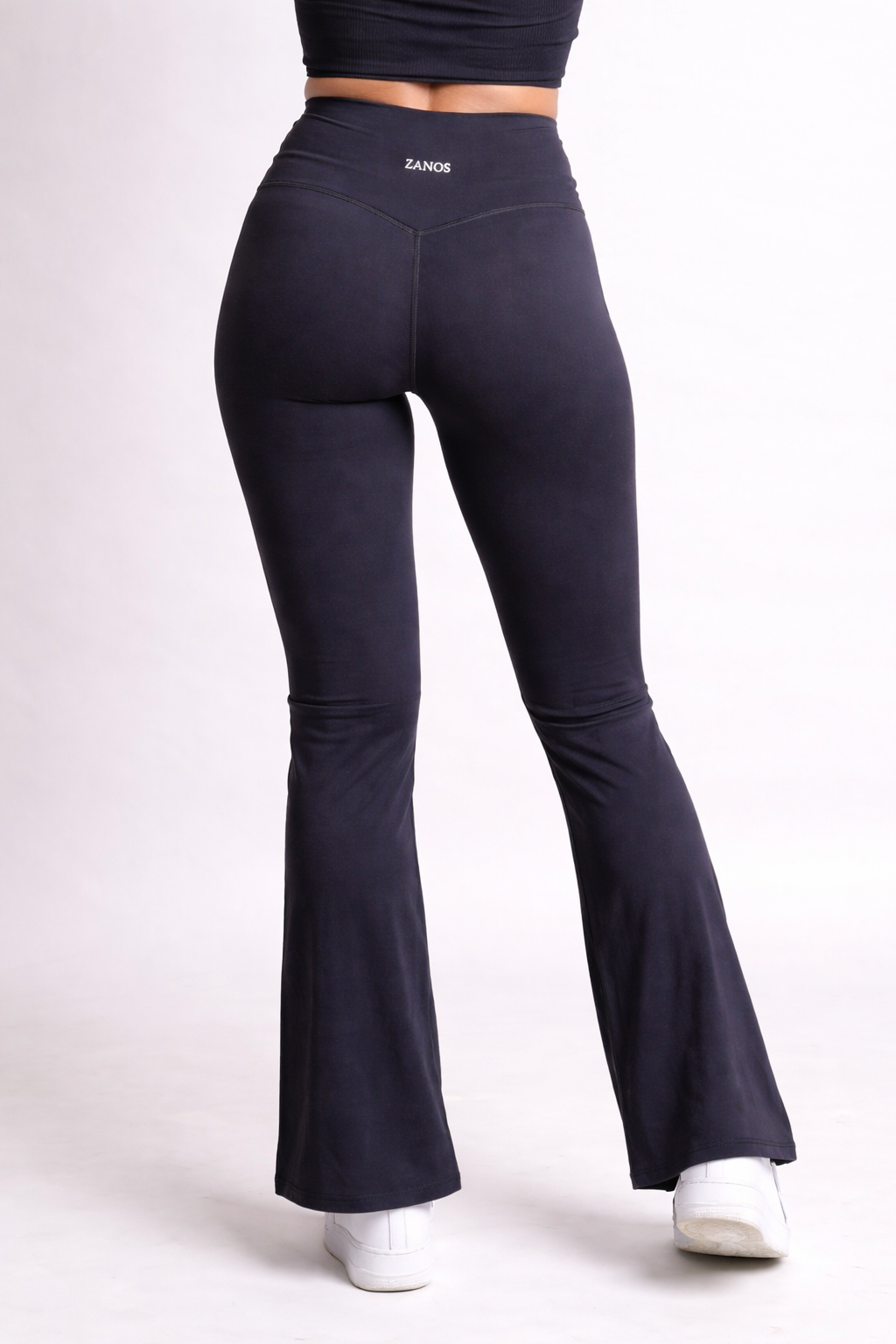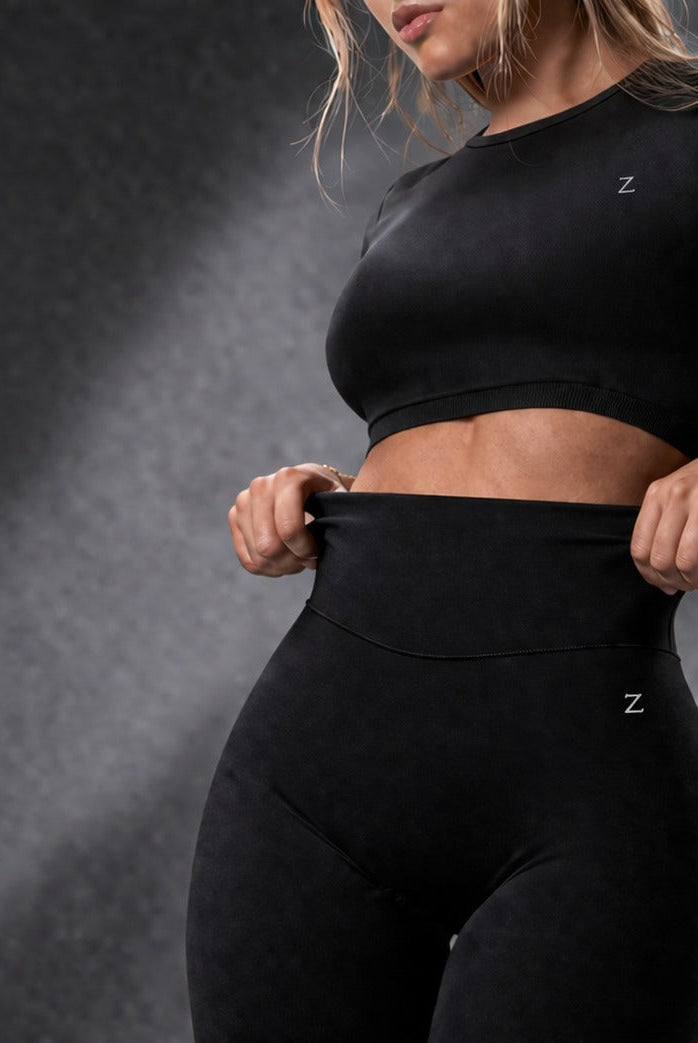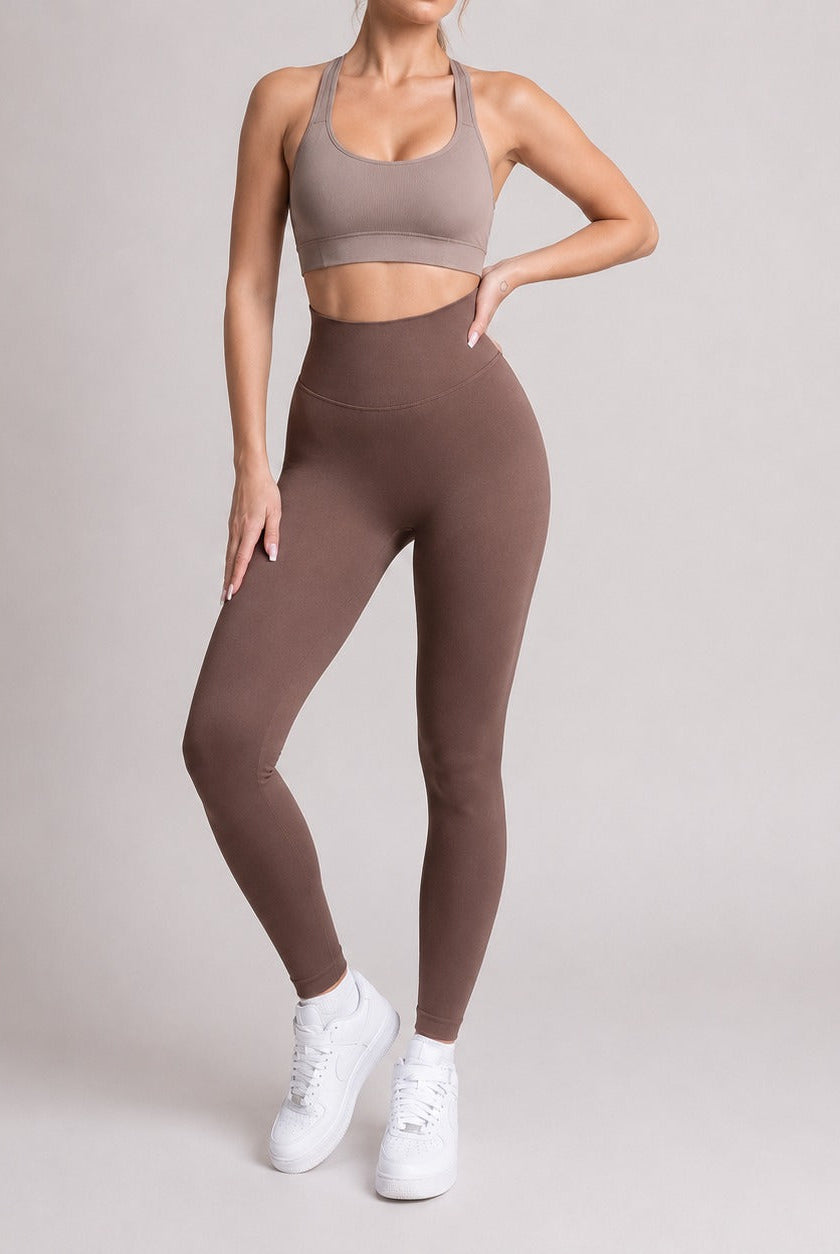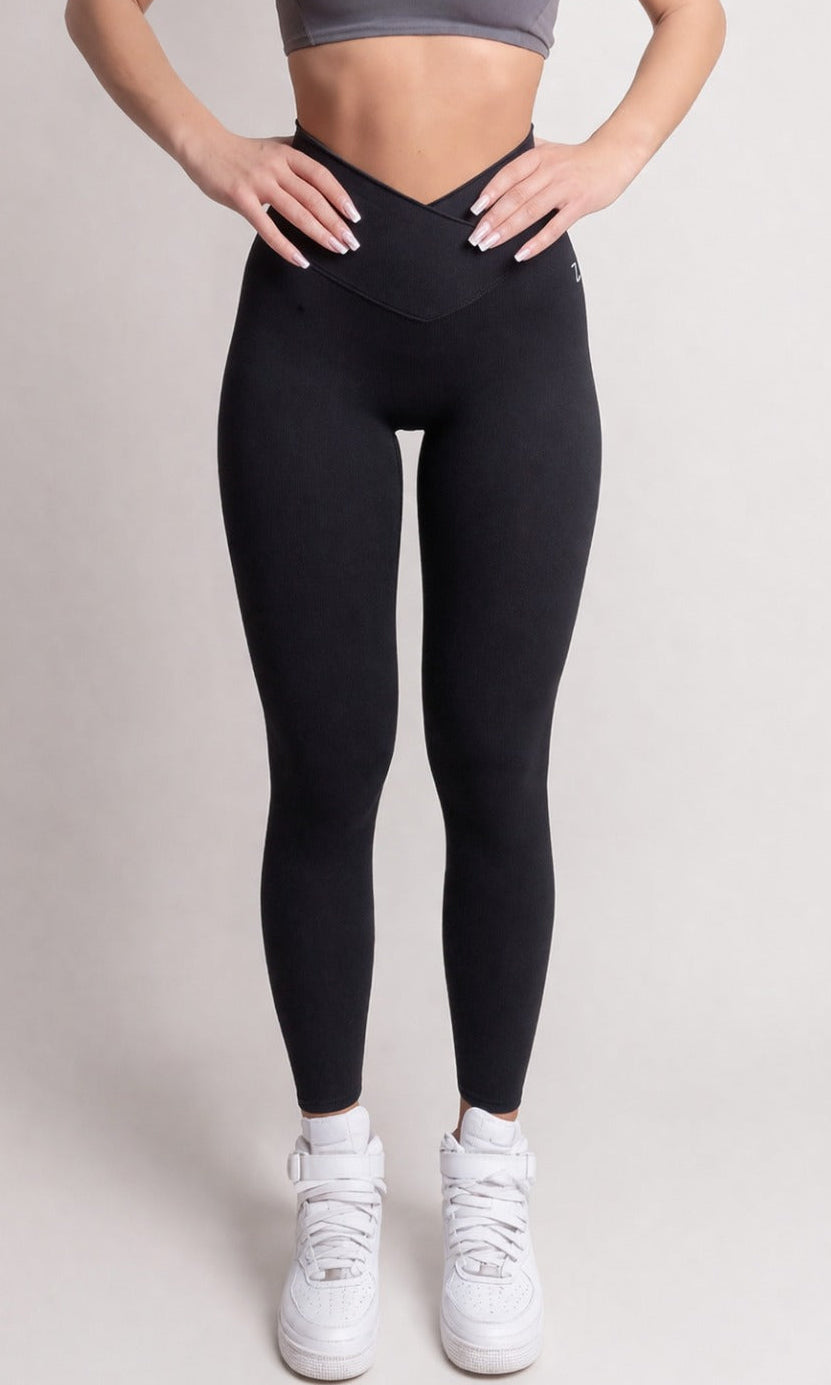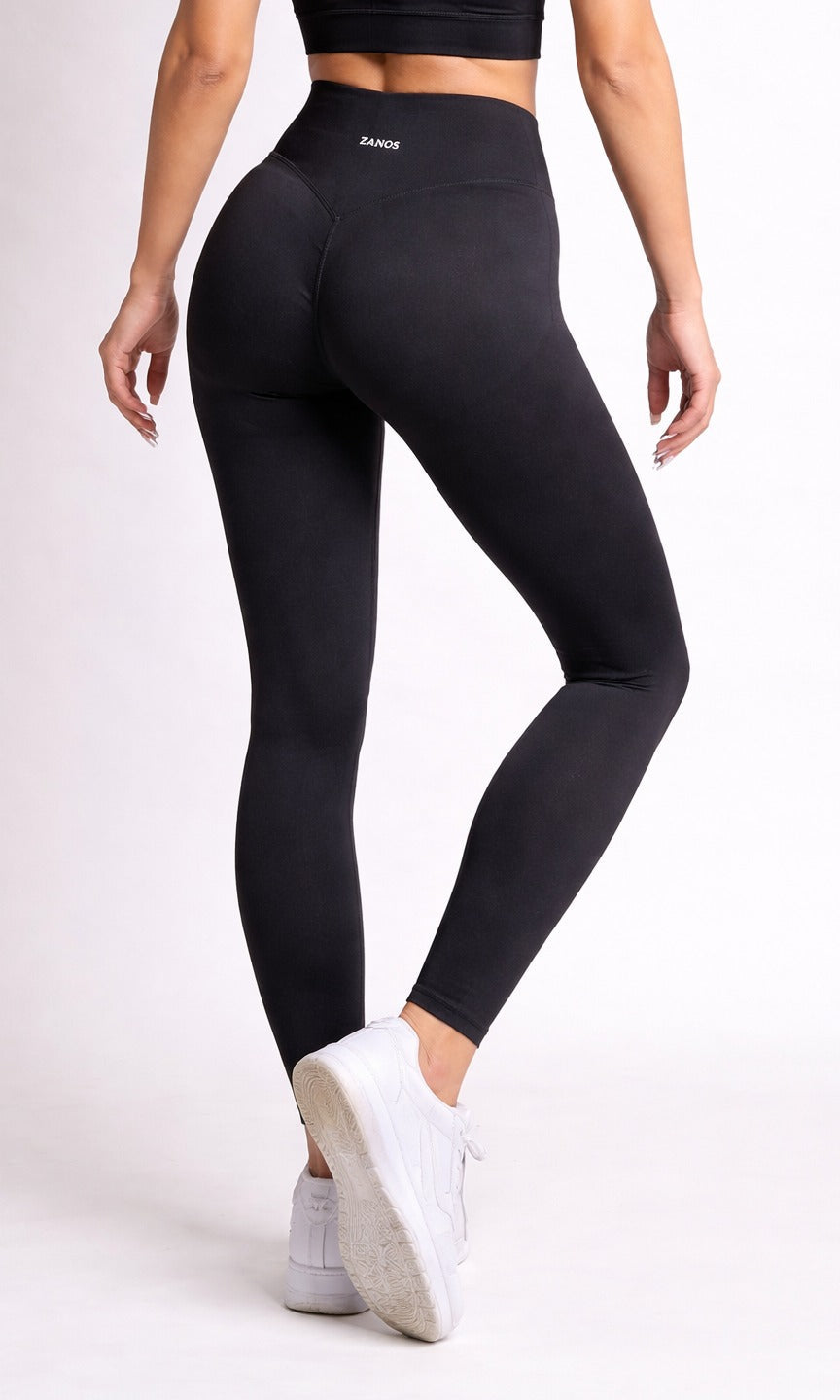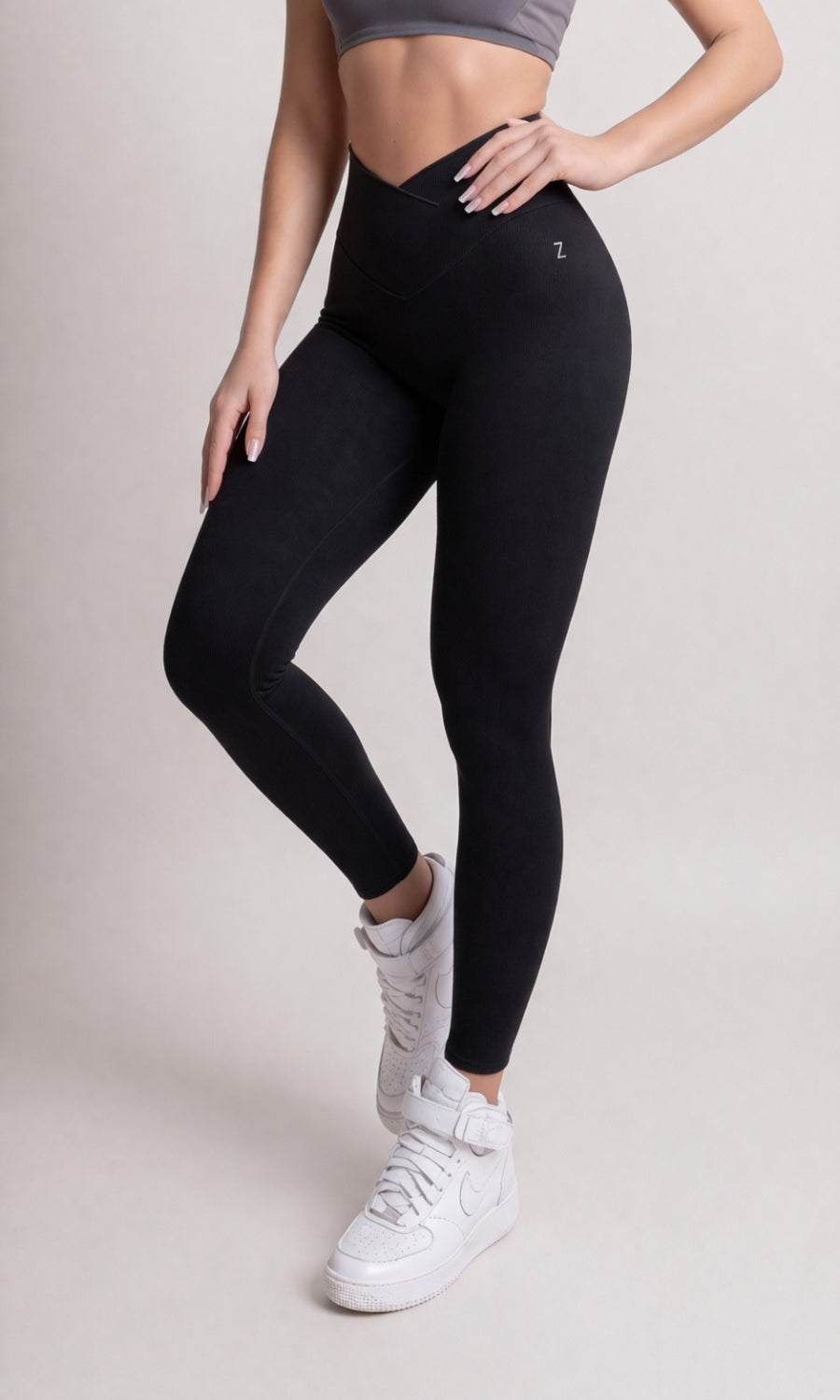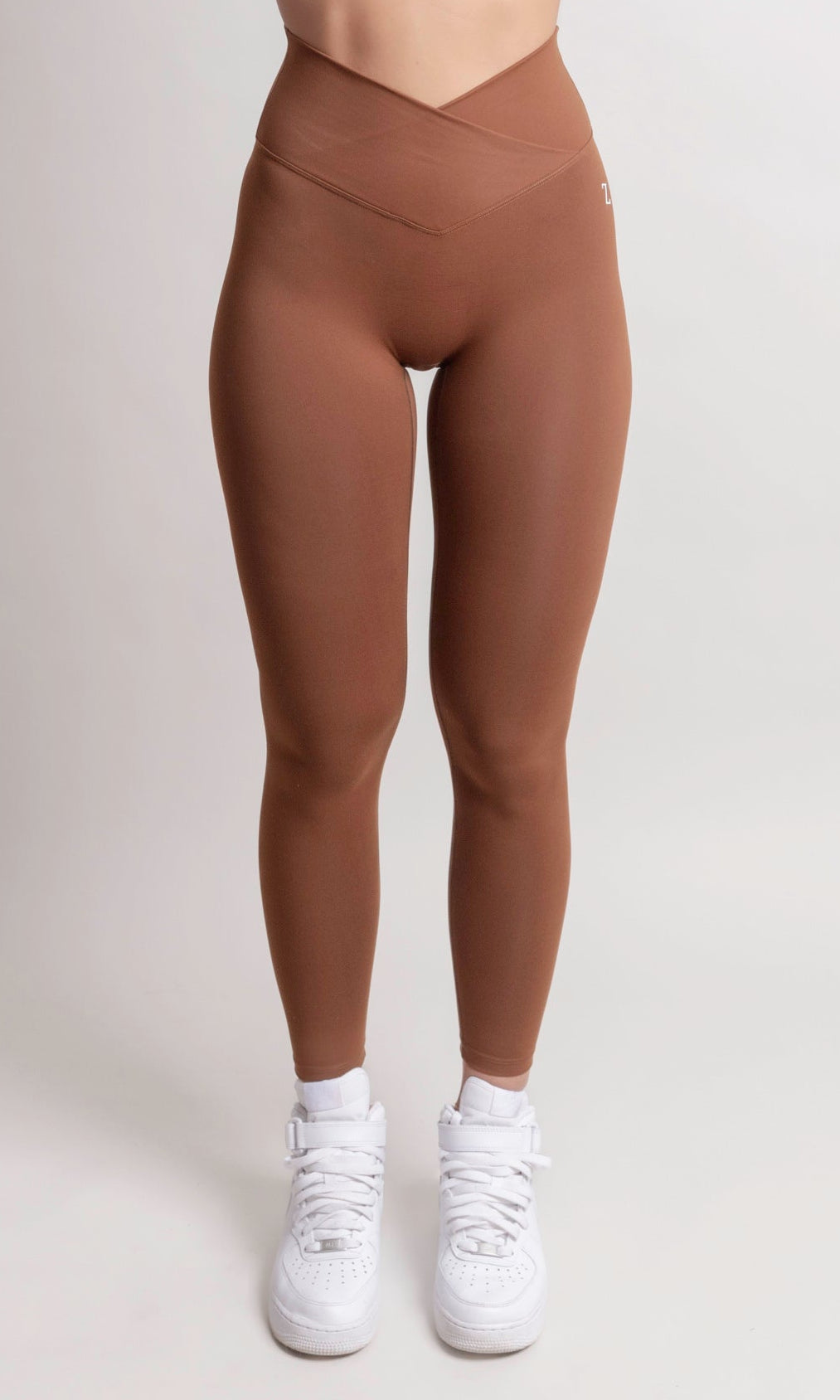
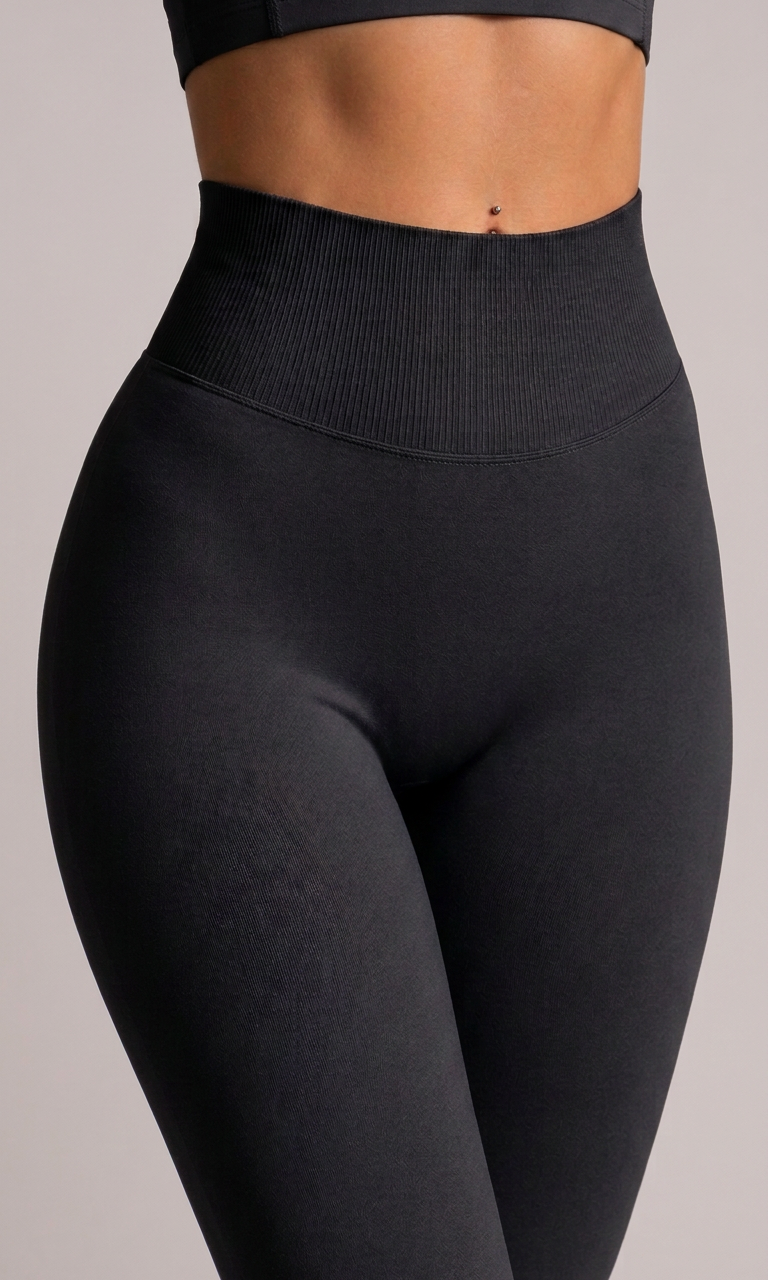
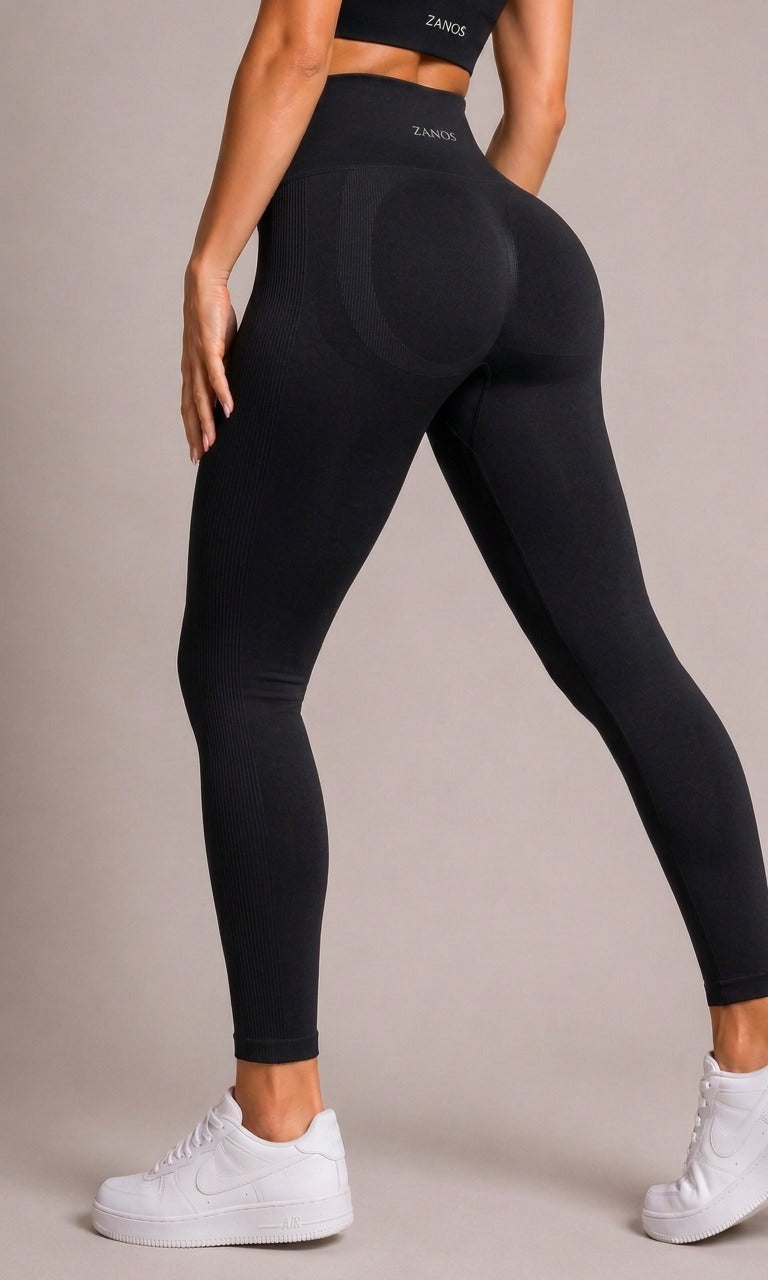
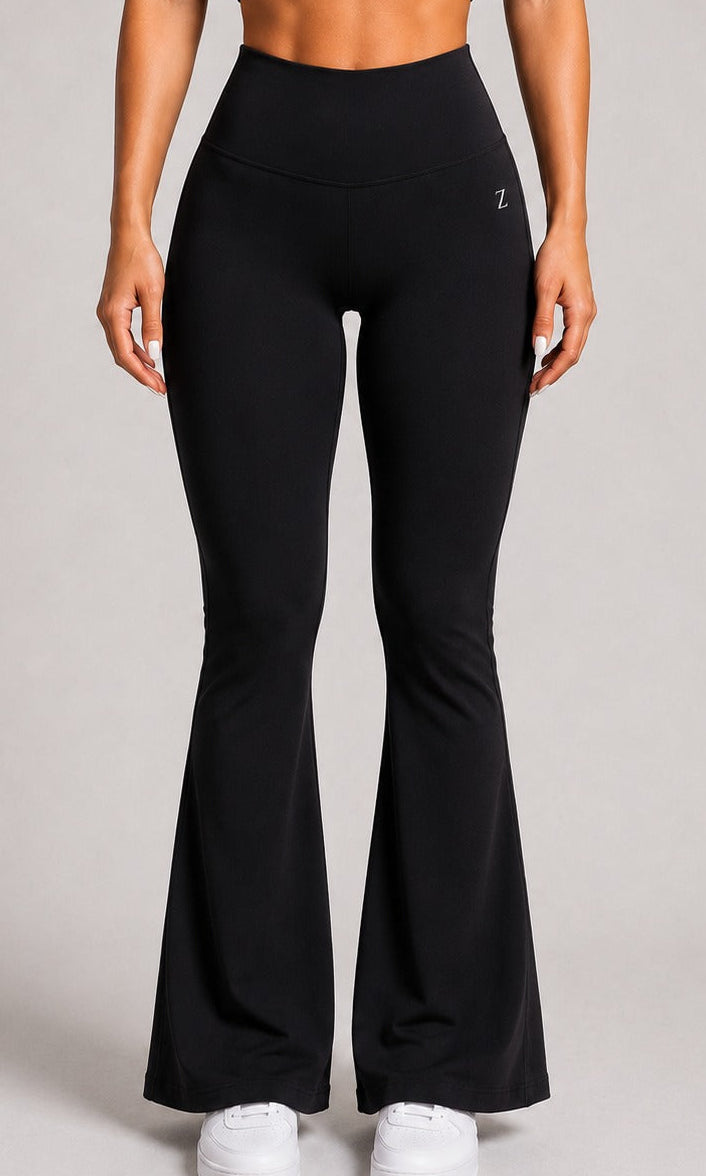
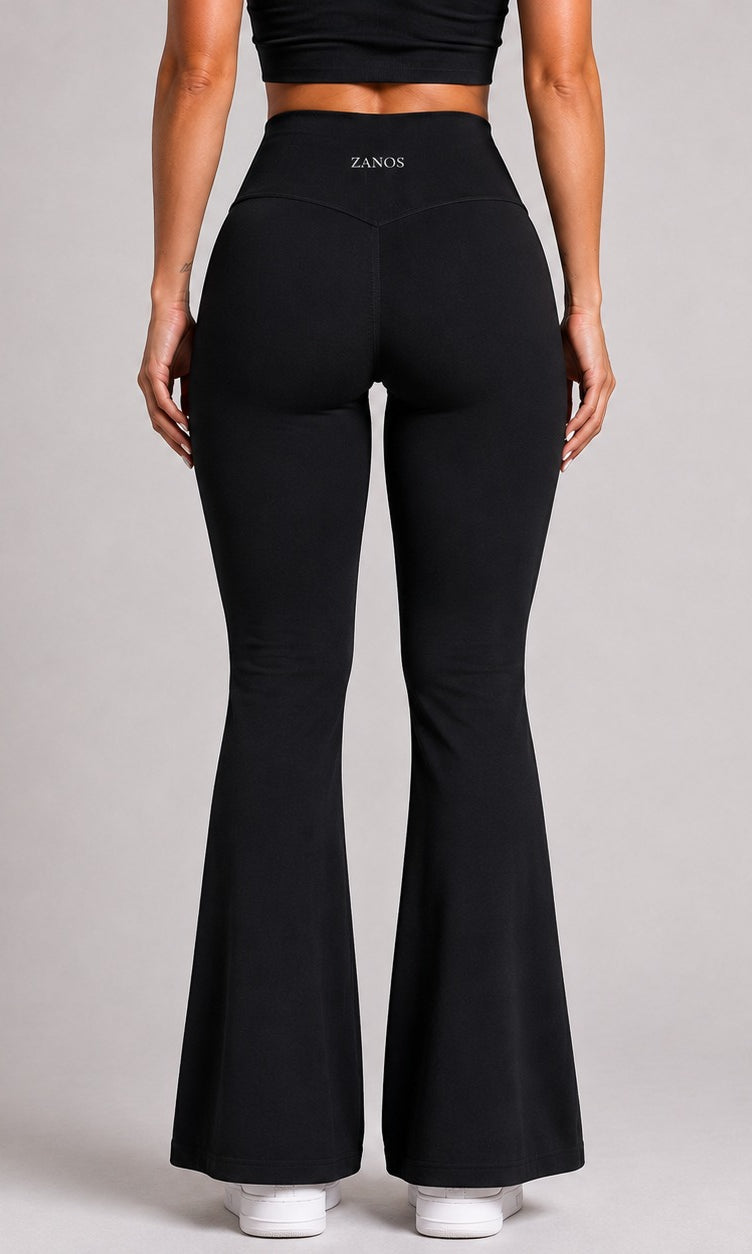
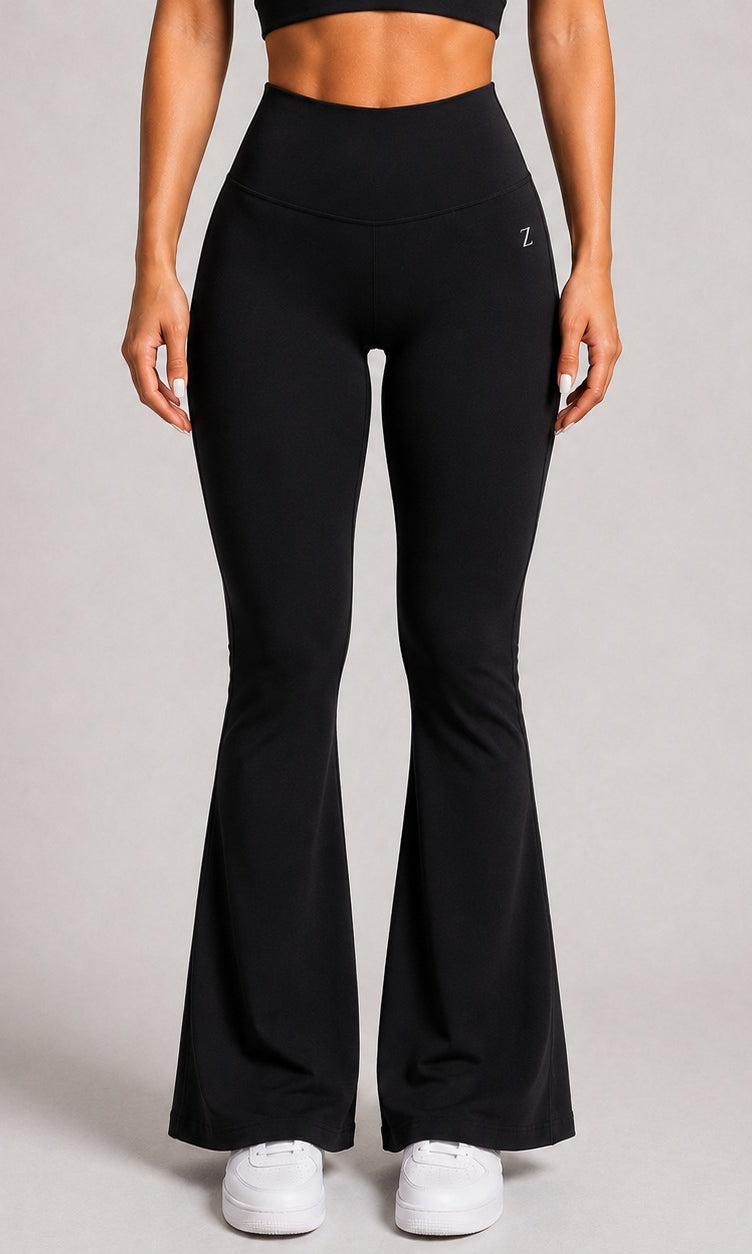
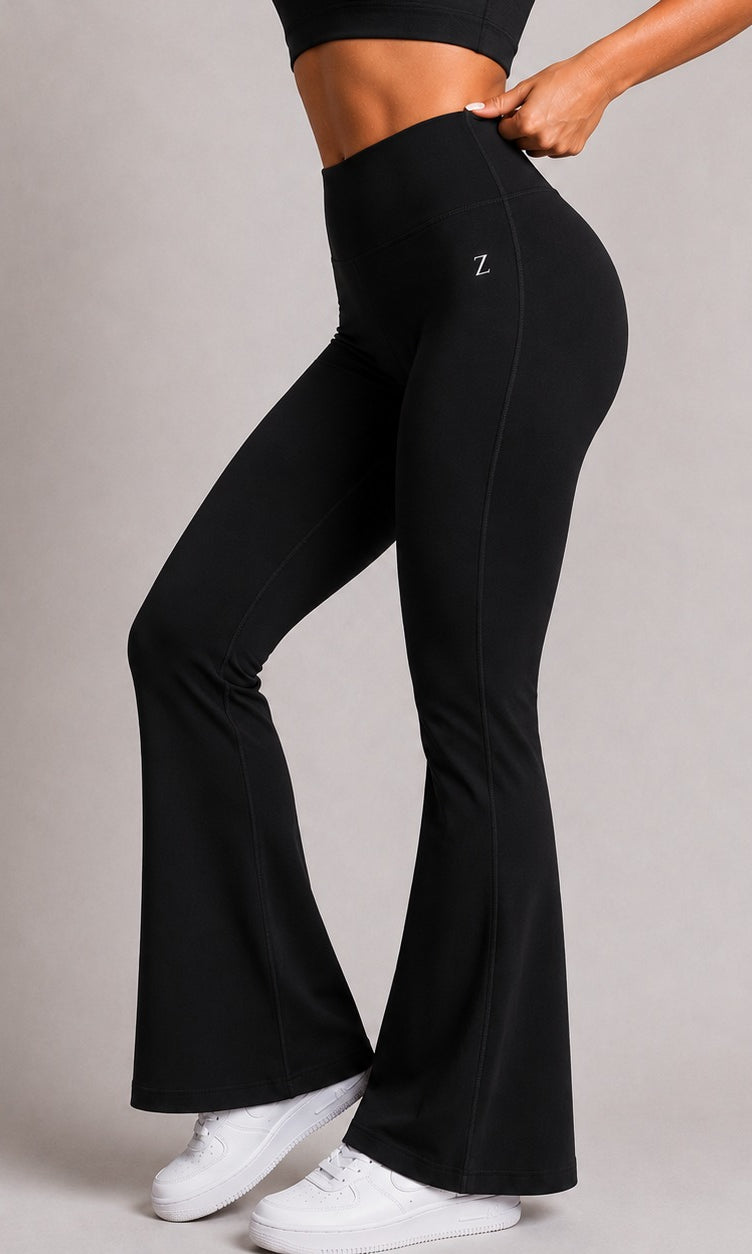
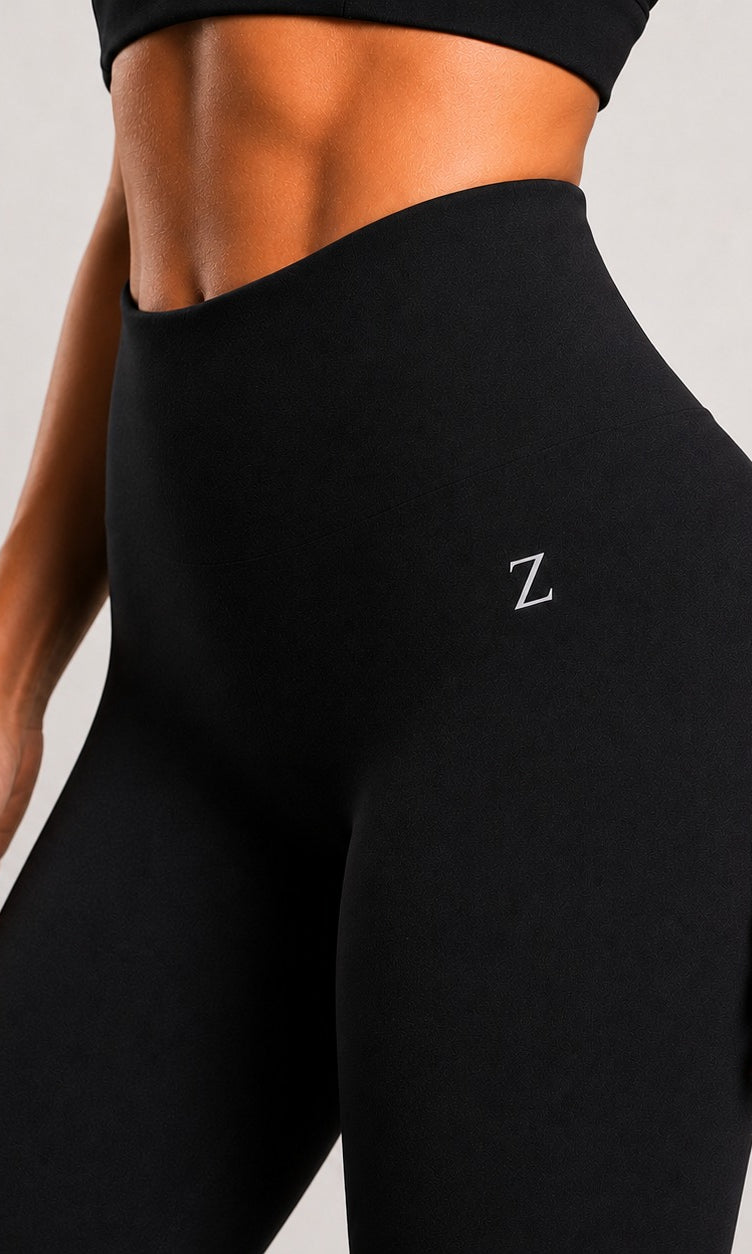
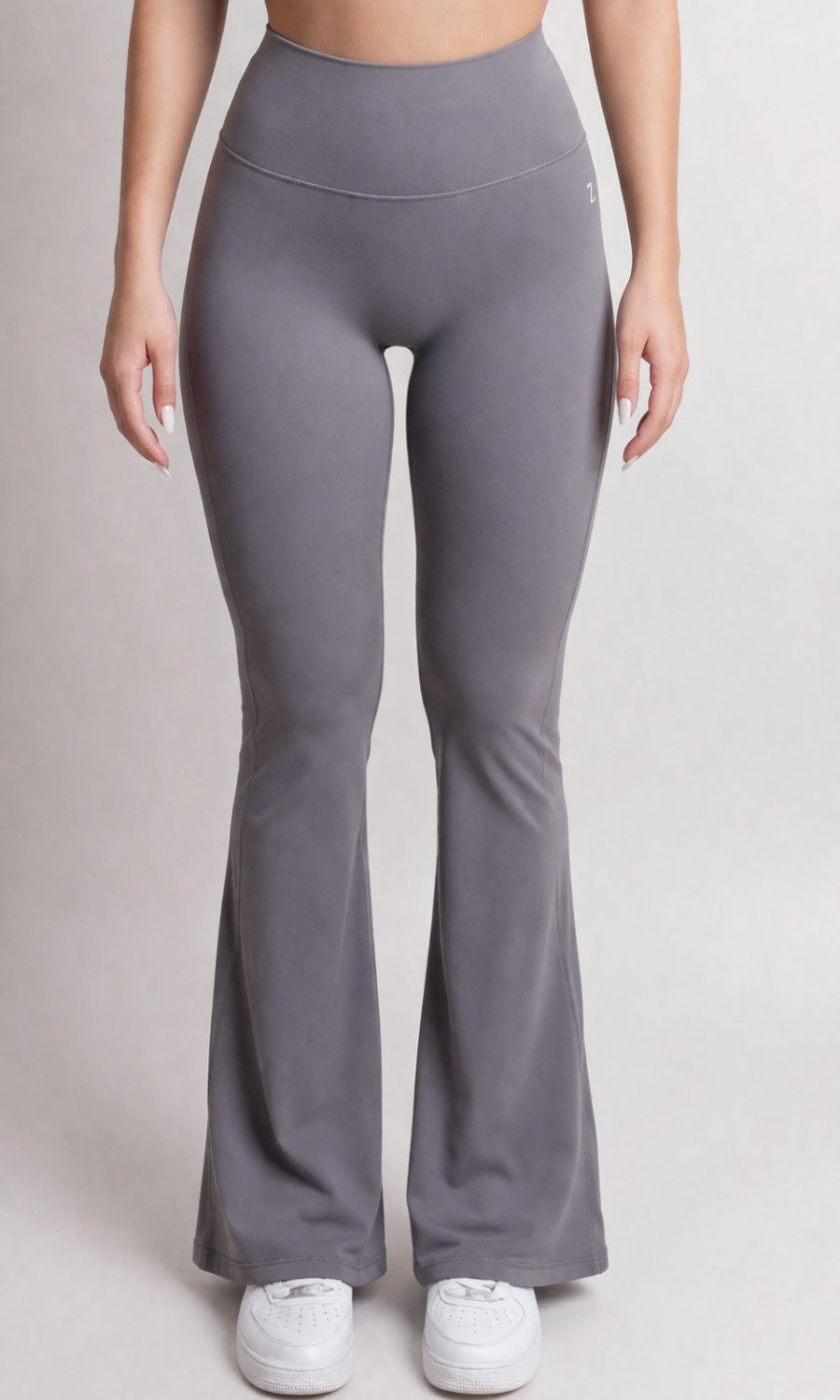
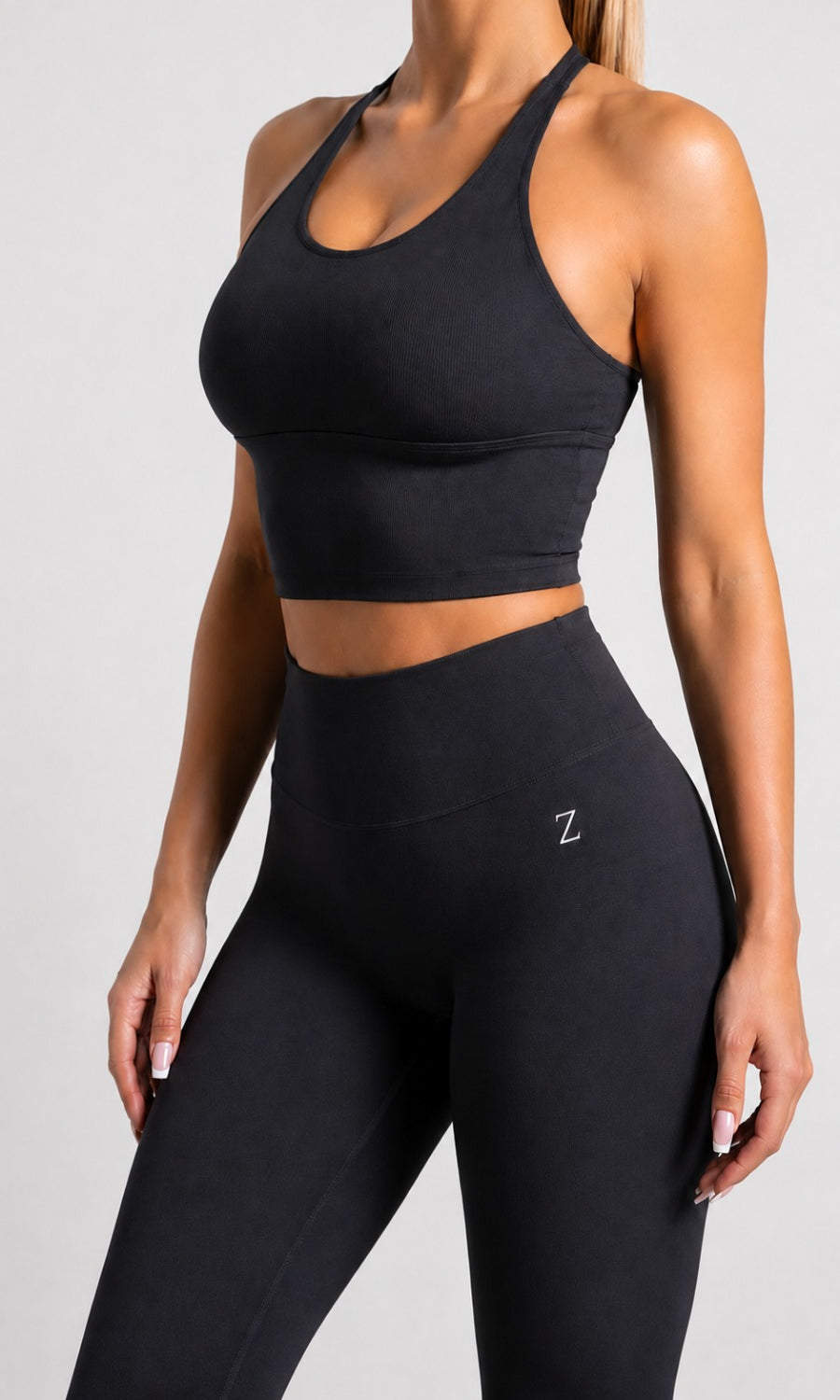
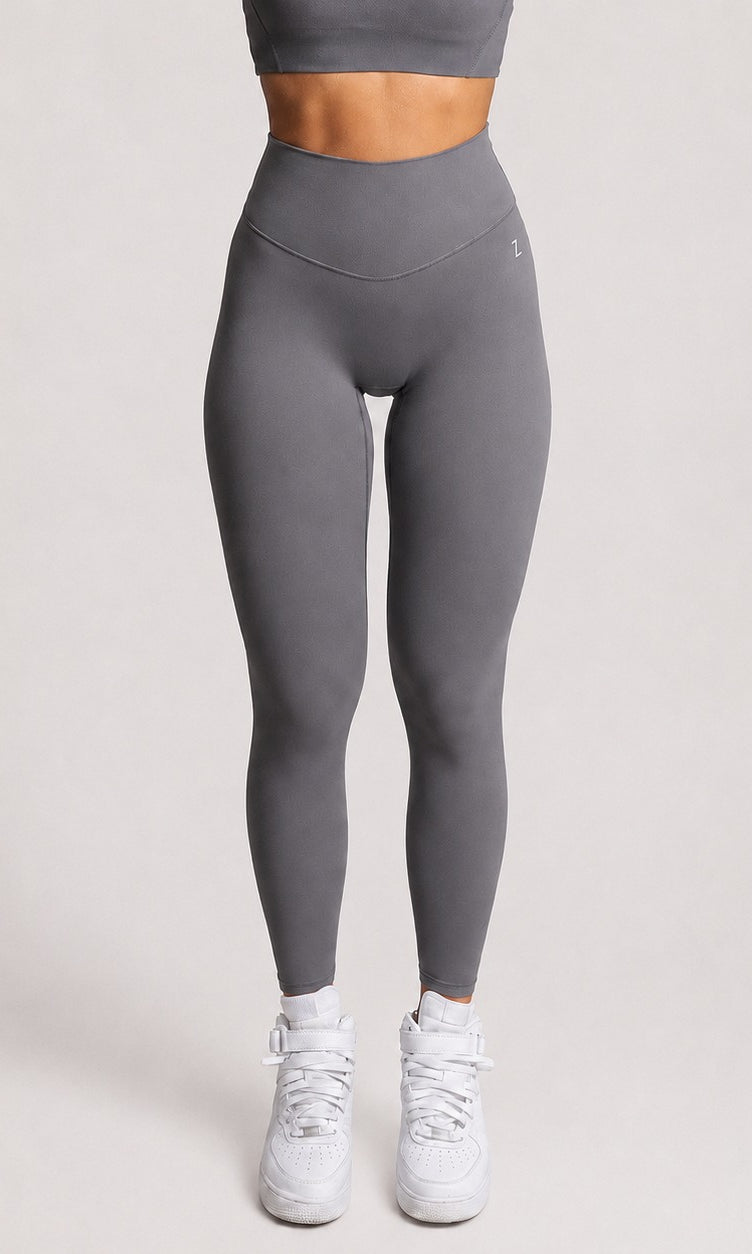
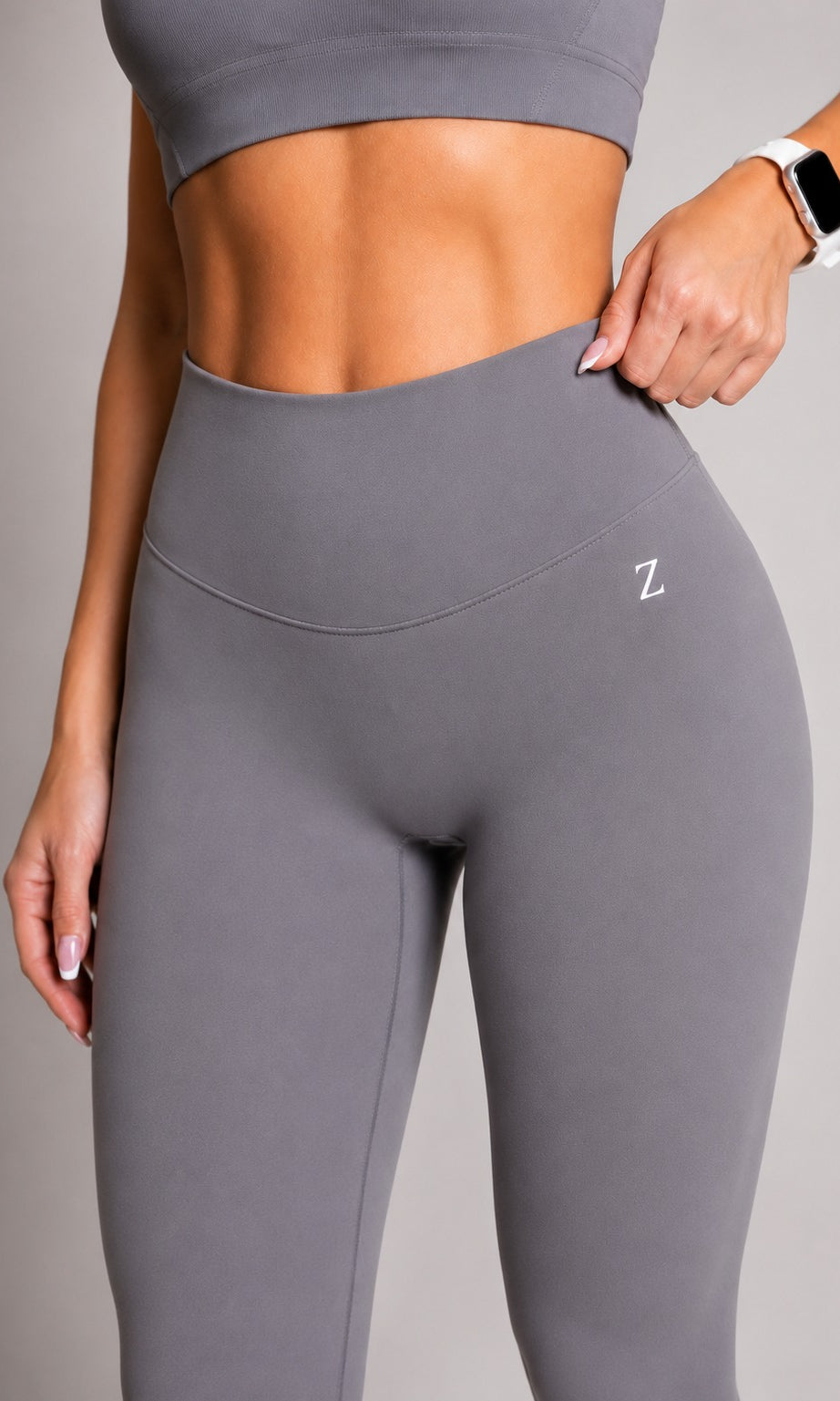
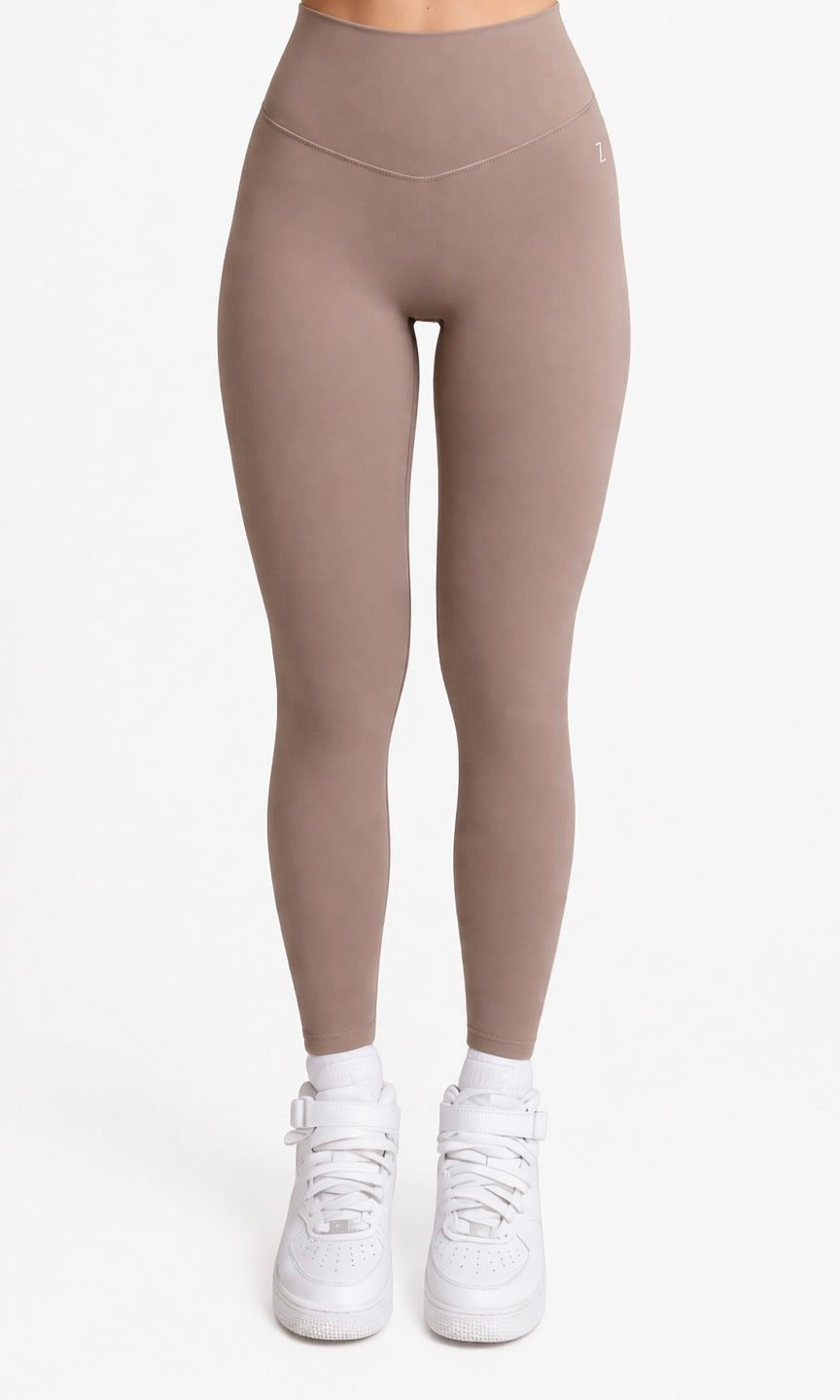
What Is the Main Difference Between Scrunch Tights and Regular Leggings?
Scrunch tights and regular leggings may use similar activewear fabrics, offer comparable stretch and support many of the same activities. The main difference is found in the construction at the back.
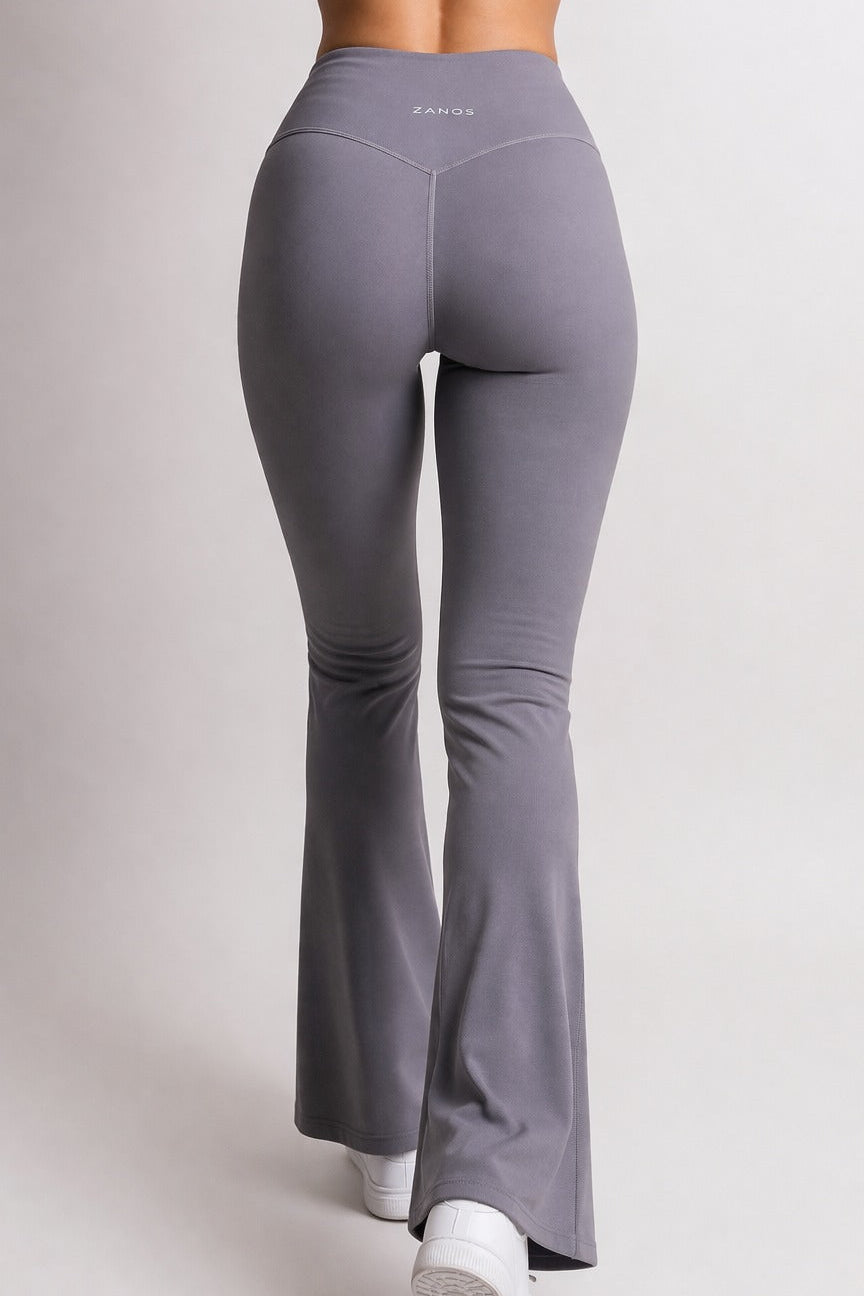
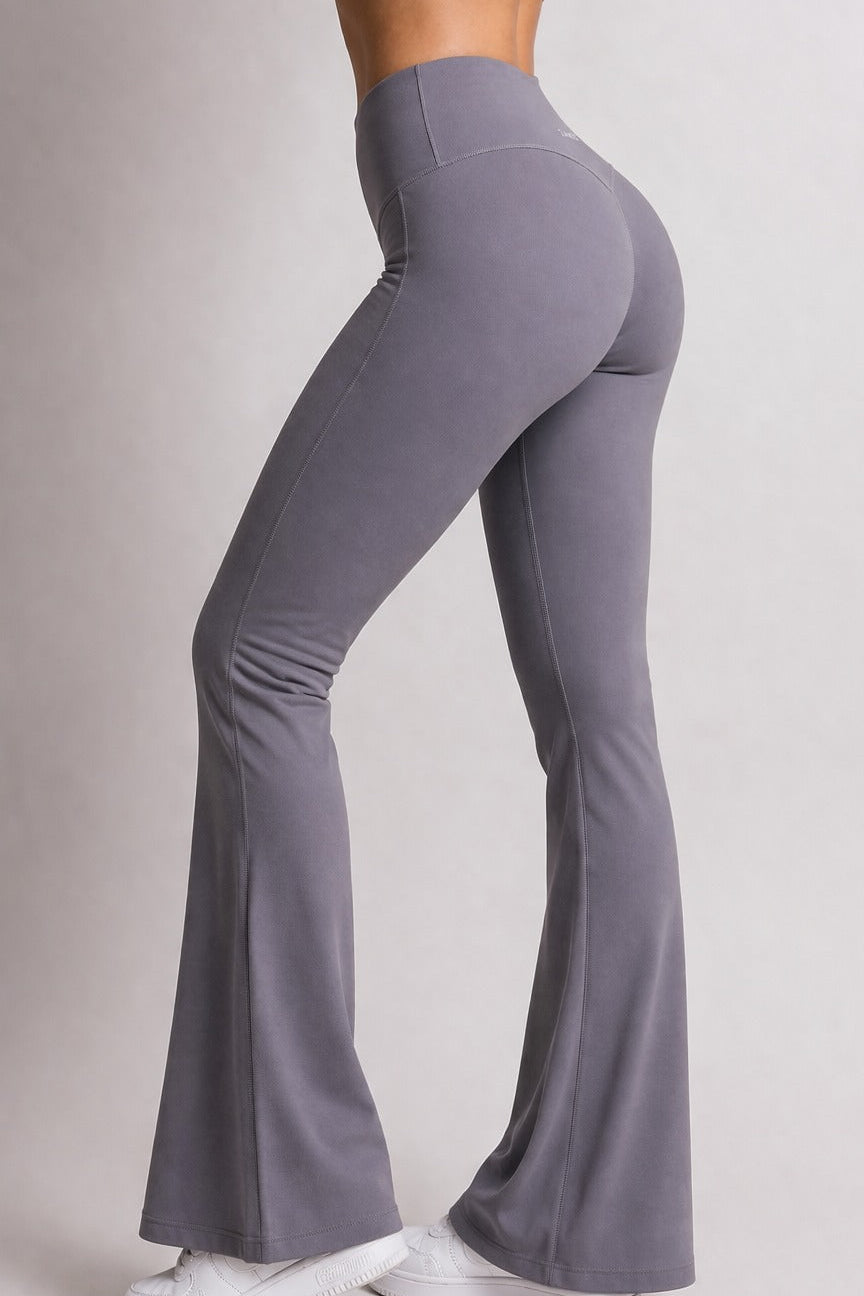
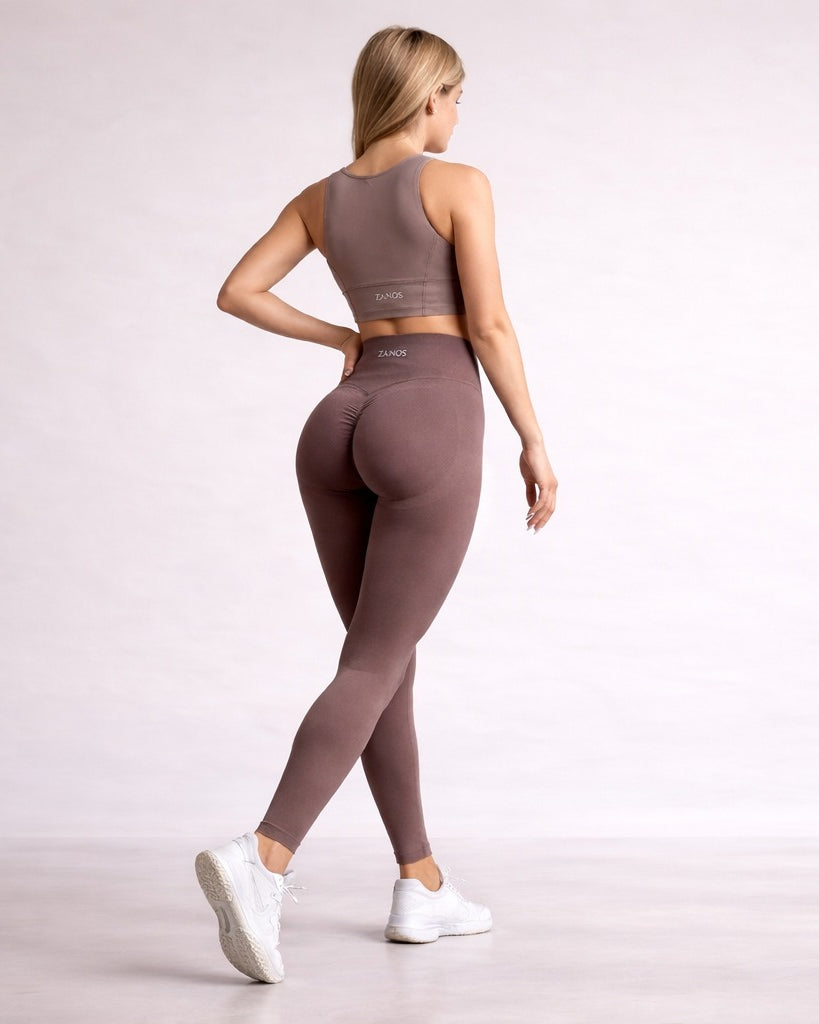
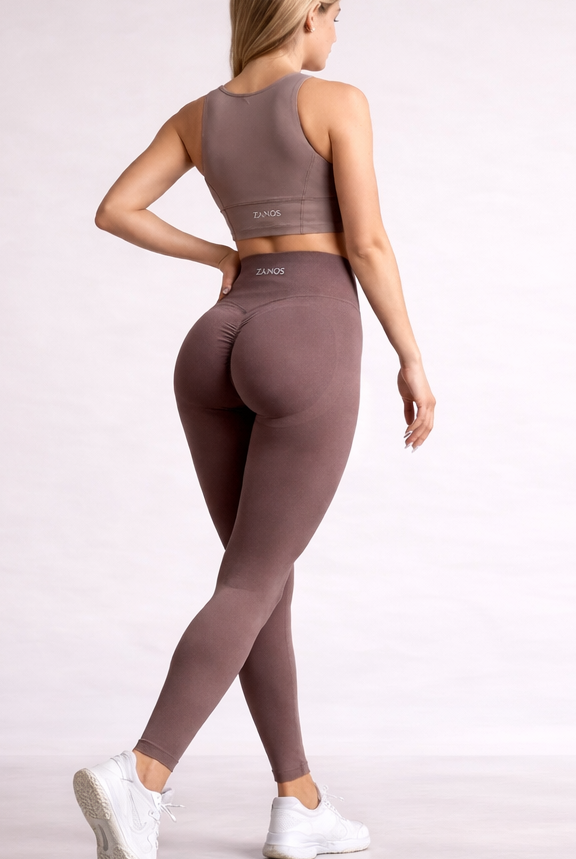
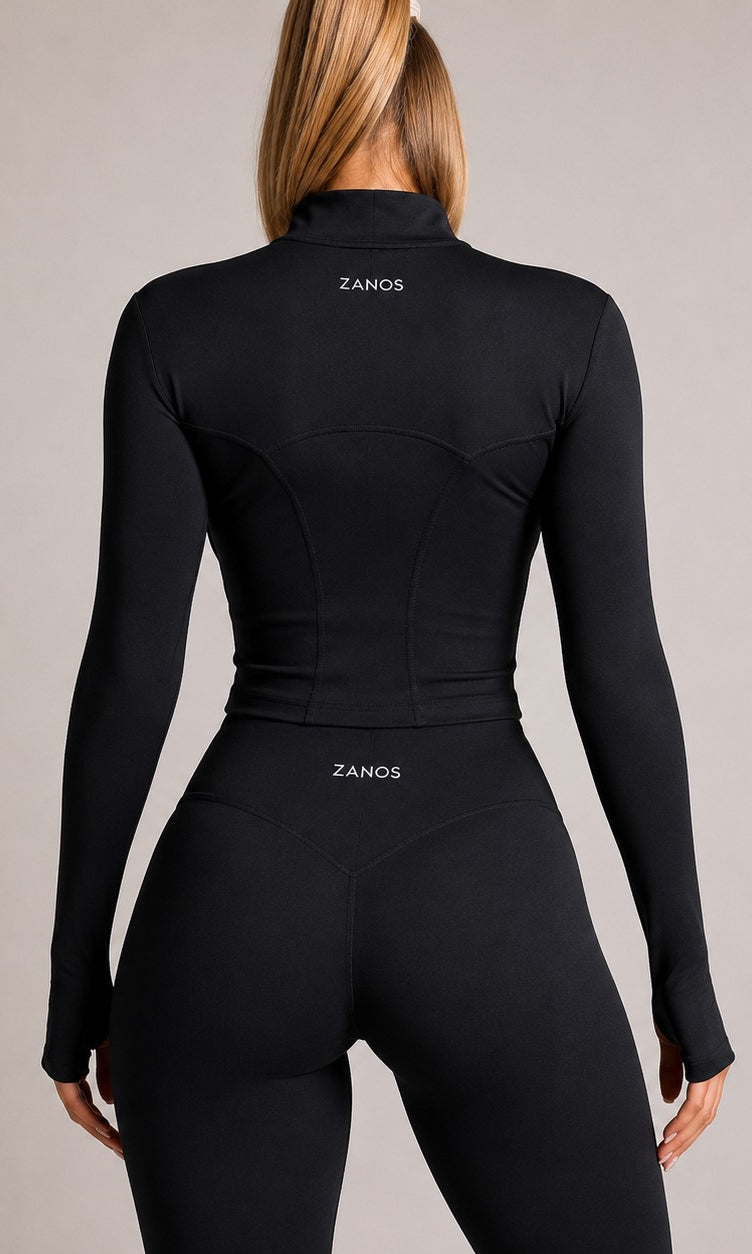
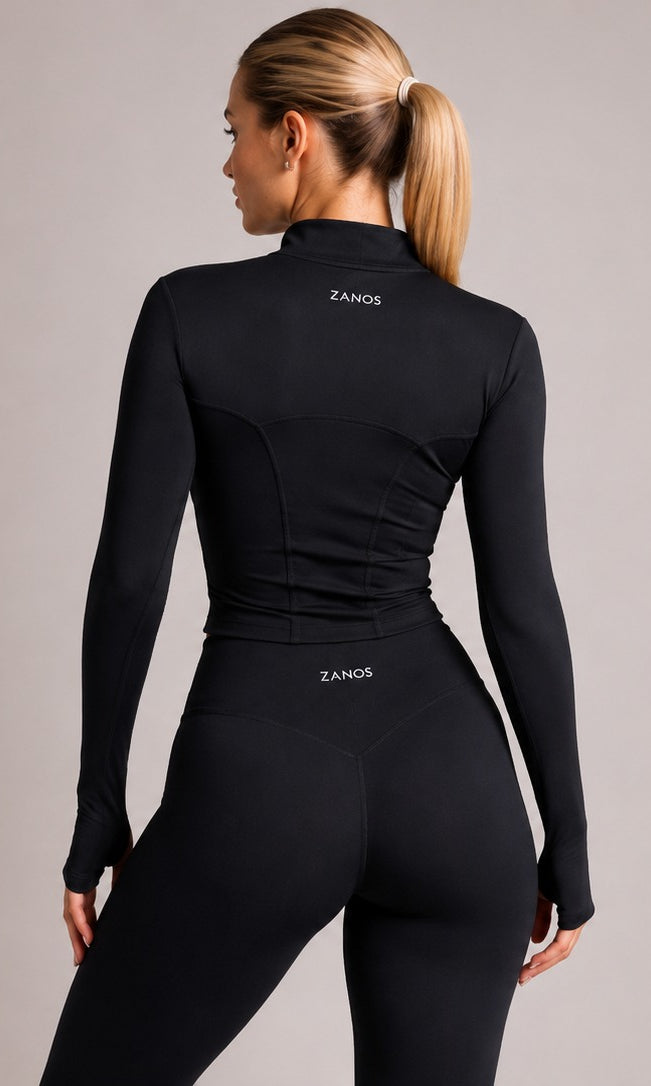
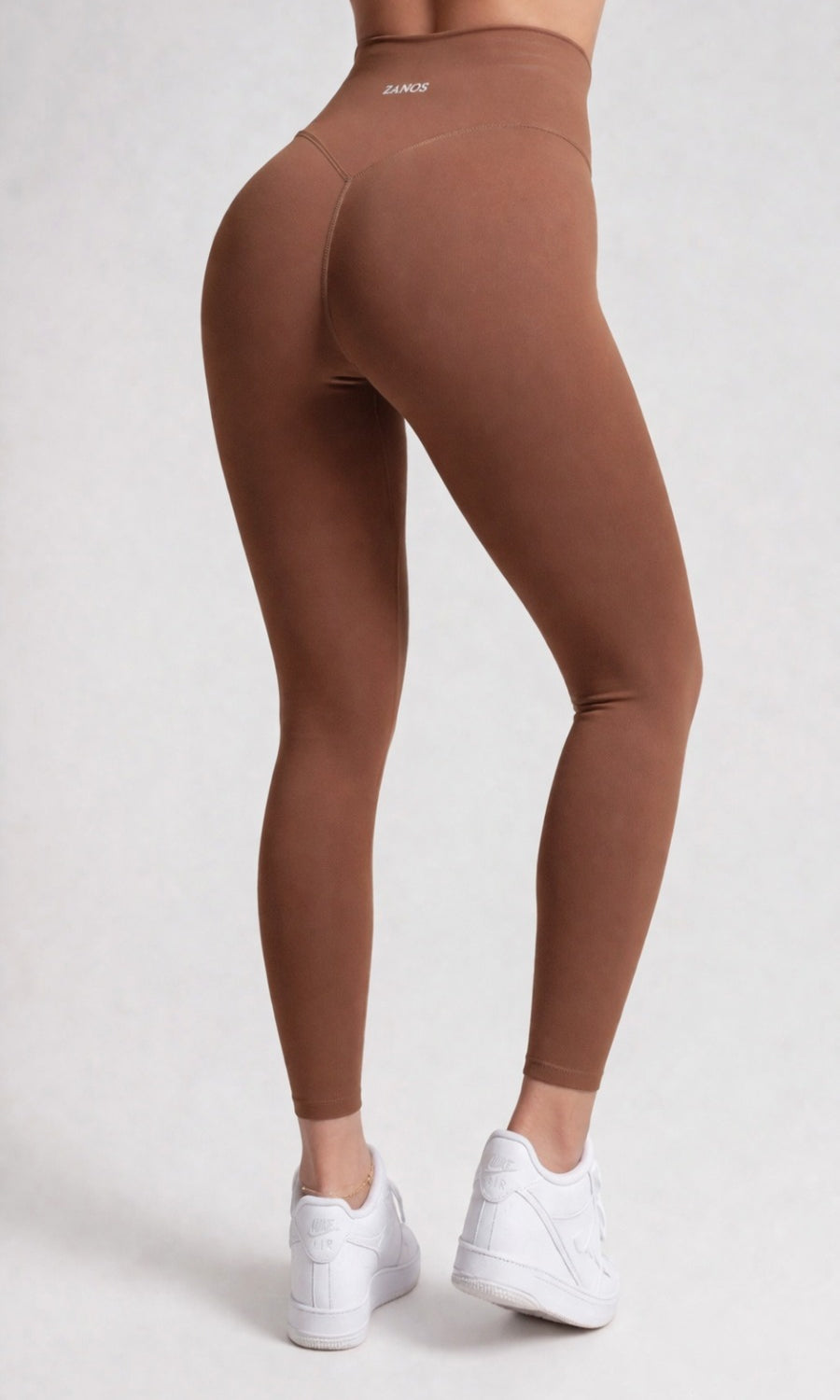
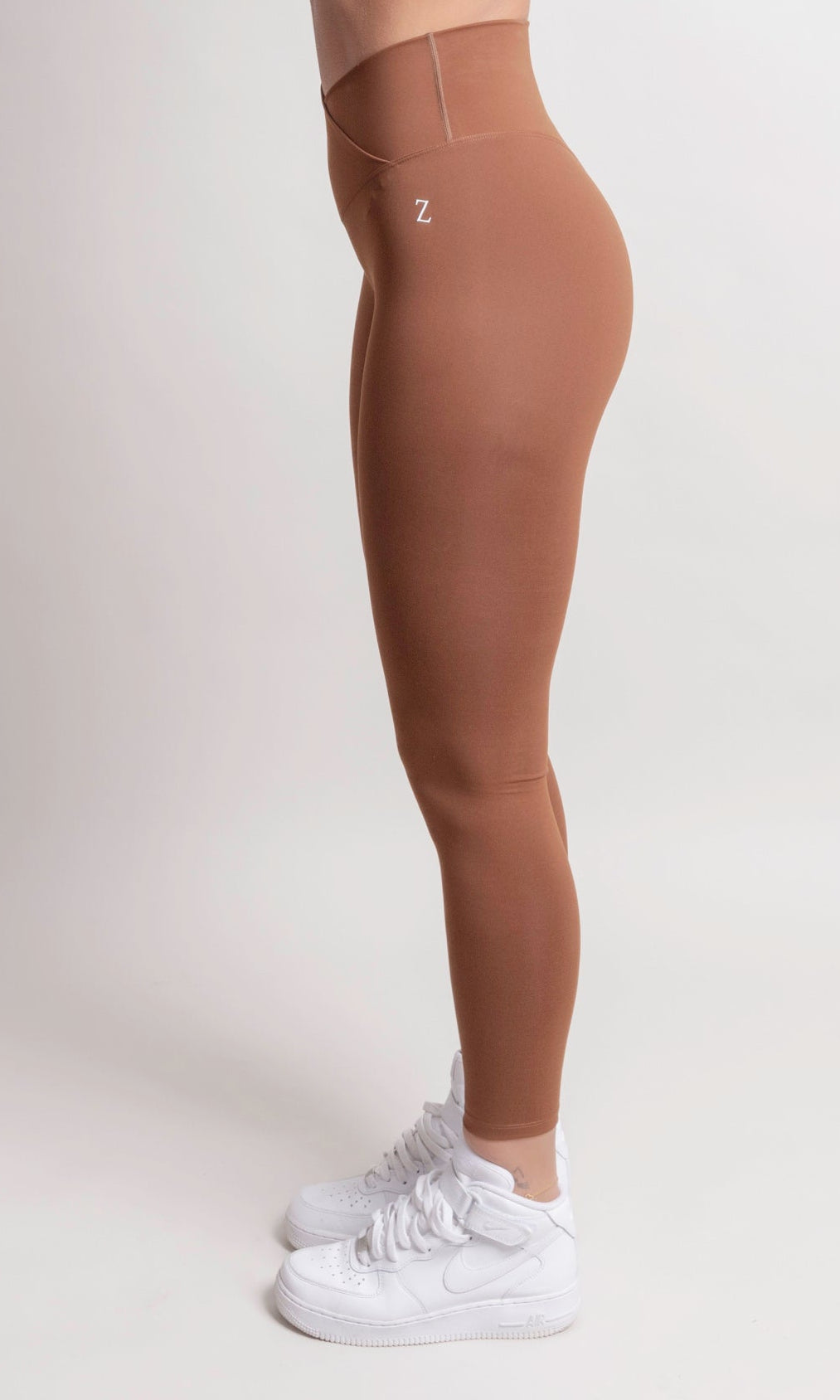
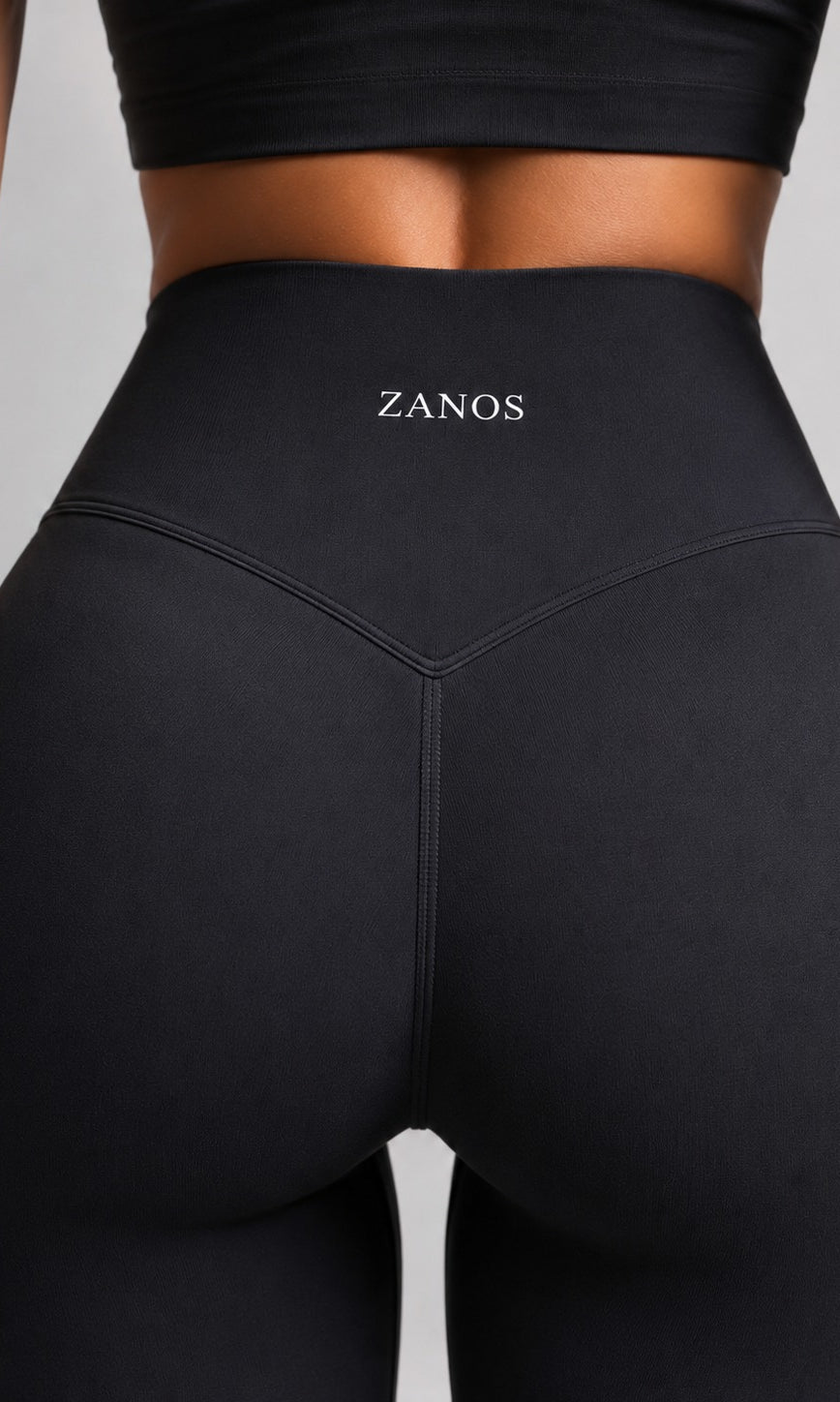
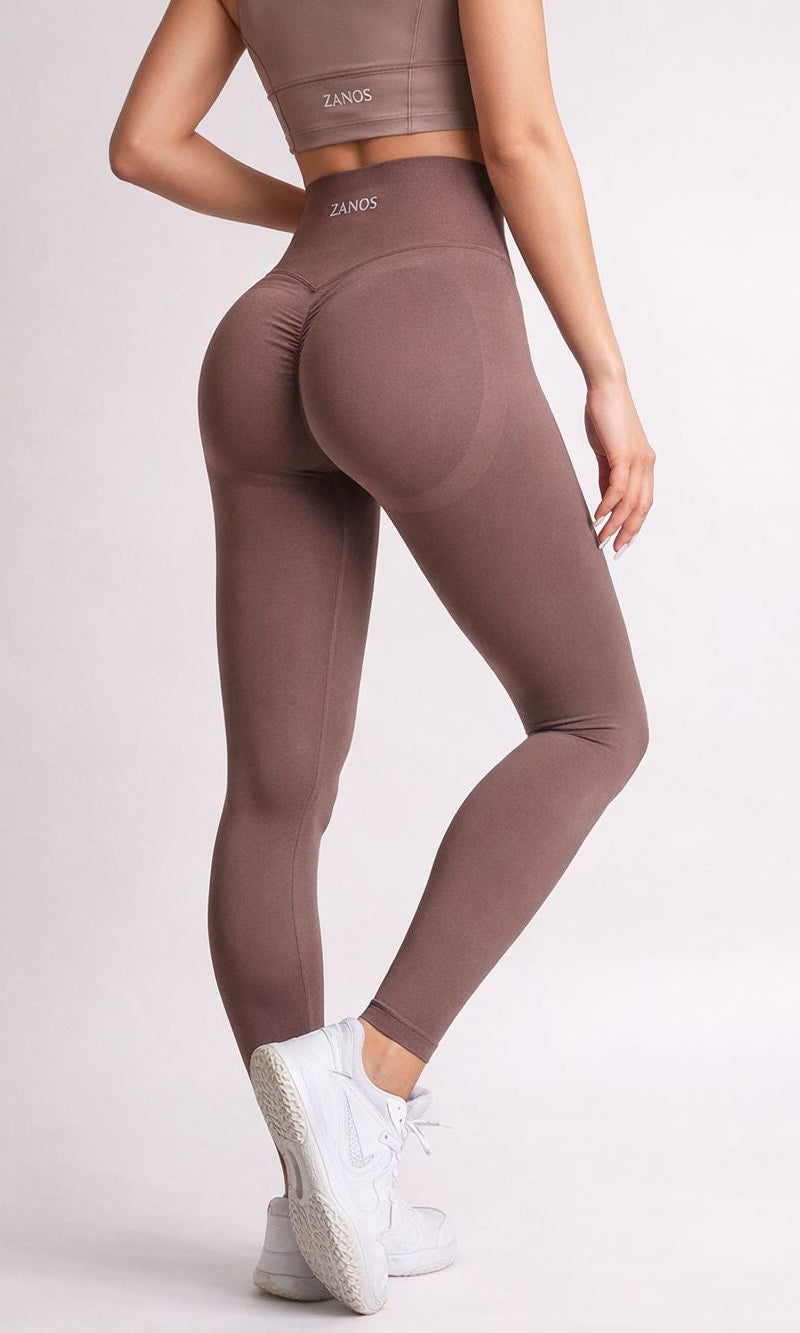
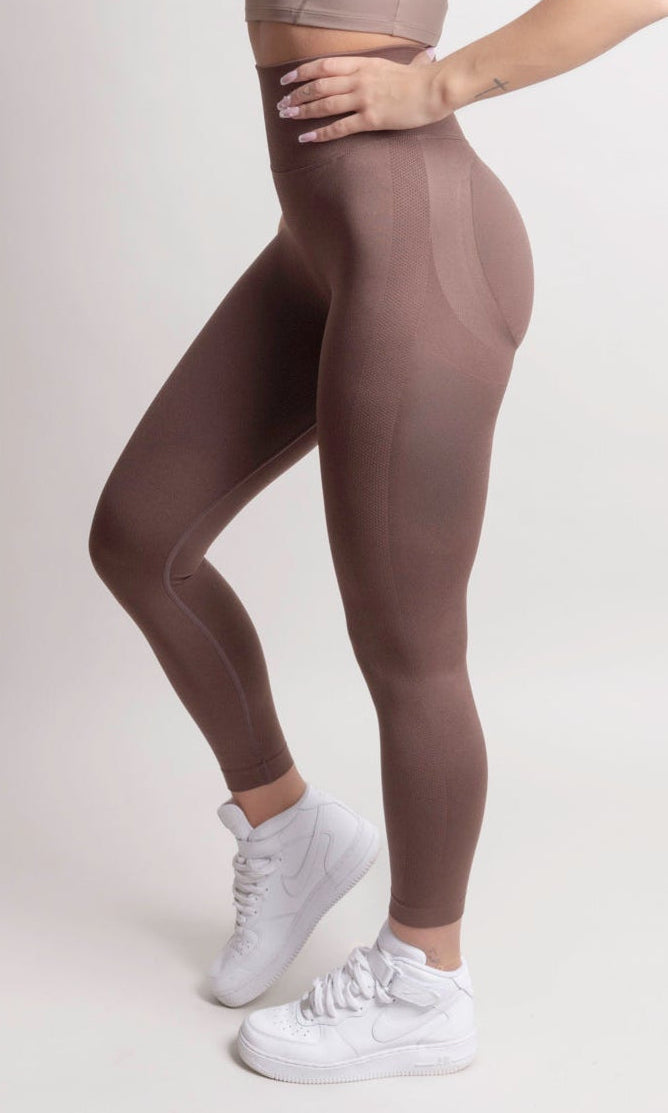
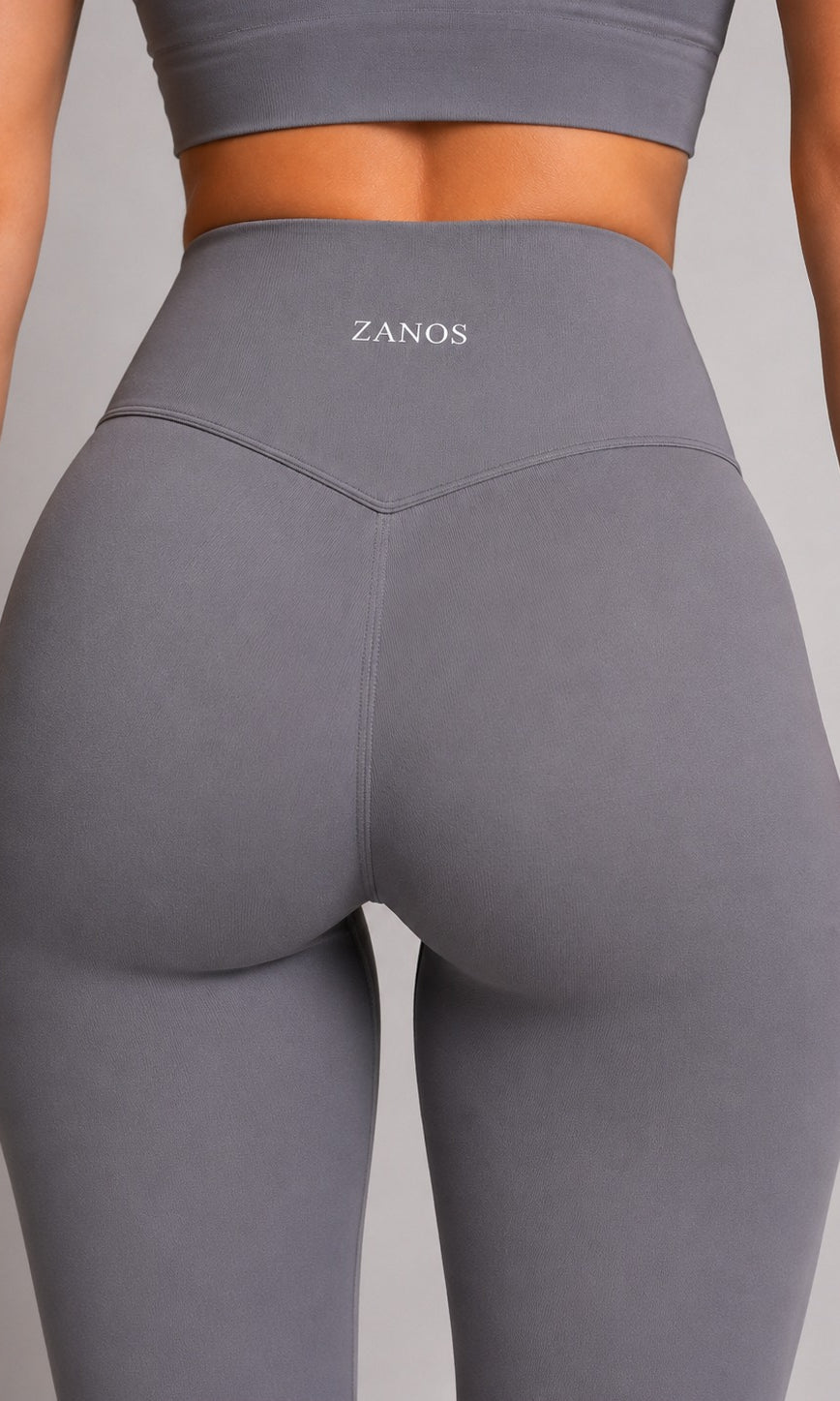
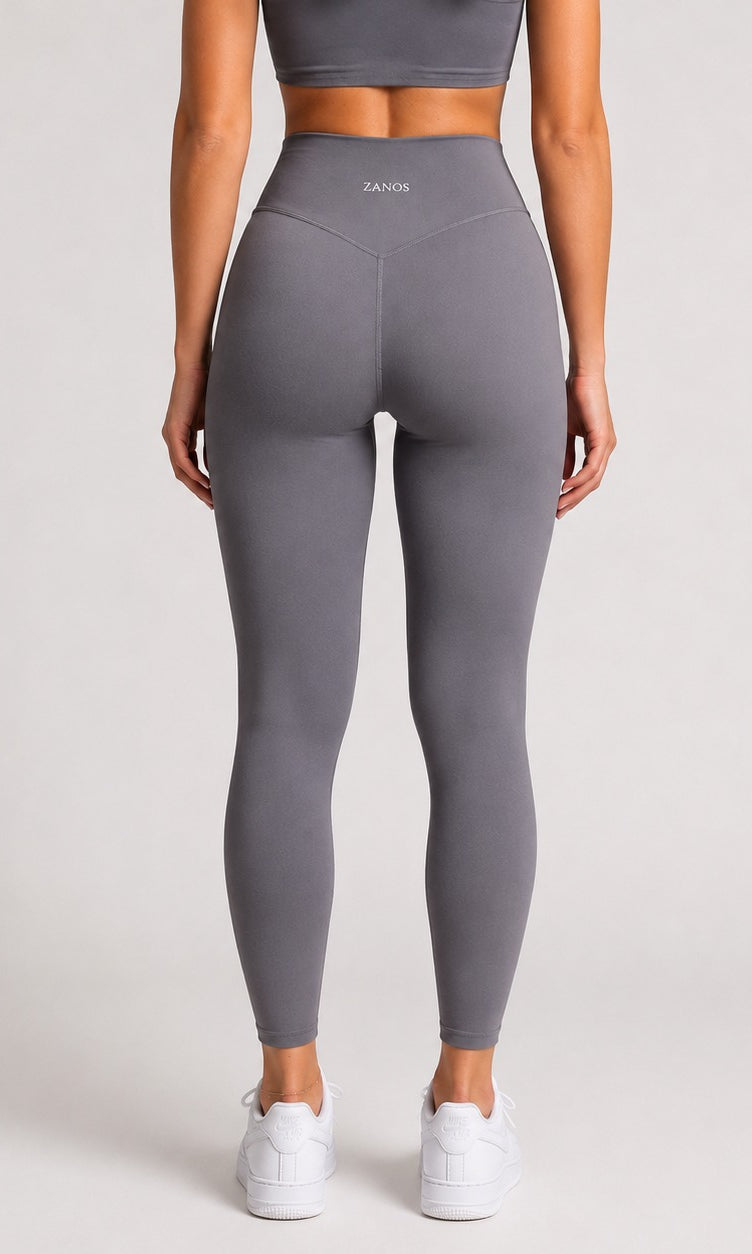
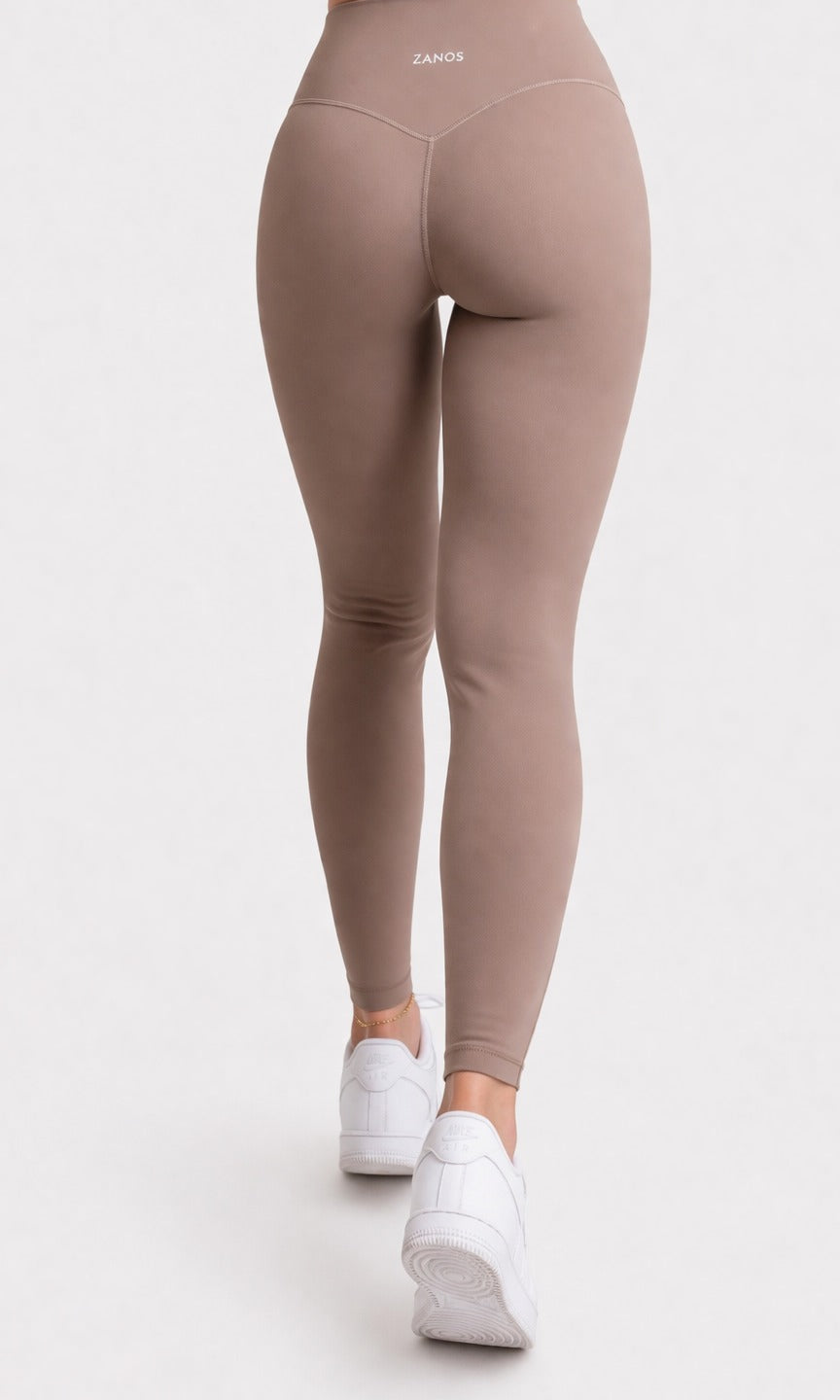
Scrunch tights use gathered fabric, controlled tension or a shaped centre seam that follows the natural separation between the glutes. Regular leggings normally use a smoother back construction that stretches across the seat as one continuous surface.
This changes how the leggings look, fit and move around the body. It does not automatically make one style better than the other.
Well-designed scrunch tights can create clearer definition without feeling restrictive. Regular leggings offer a more neutral appearance and may distribute compression more evenly across the seat.
The right choice depends on how noticeable you want the back detail to be, how you want the fabric to feel and what you plan to do while wearing the leggings.
What Is the Main Difference Between Scrunch Tights and Regular Leggings?
The main difference between scrunch tights and regular leggings is how the fabric is constructed at the centre back.
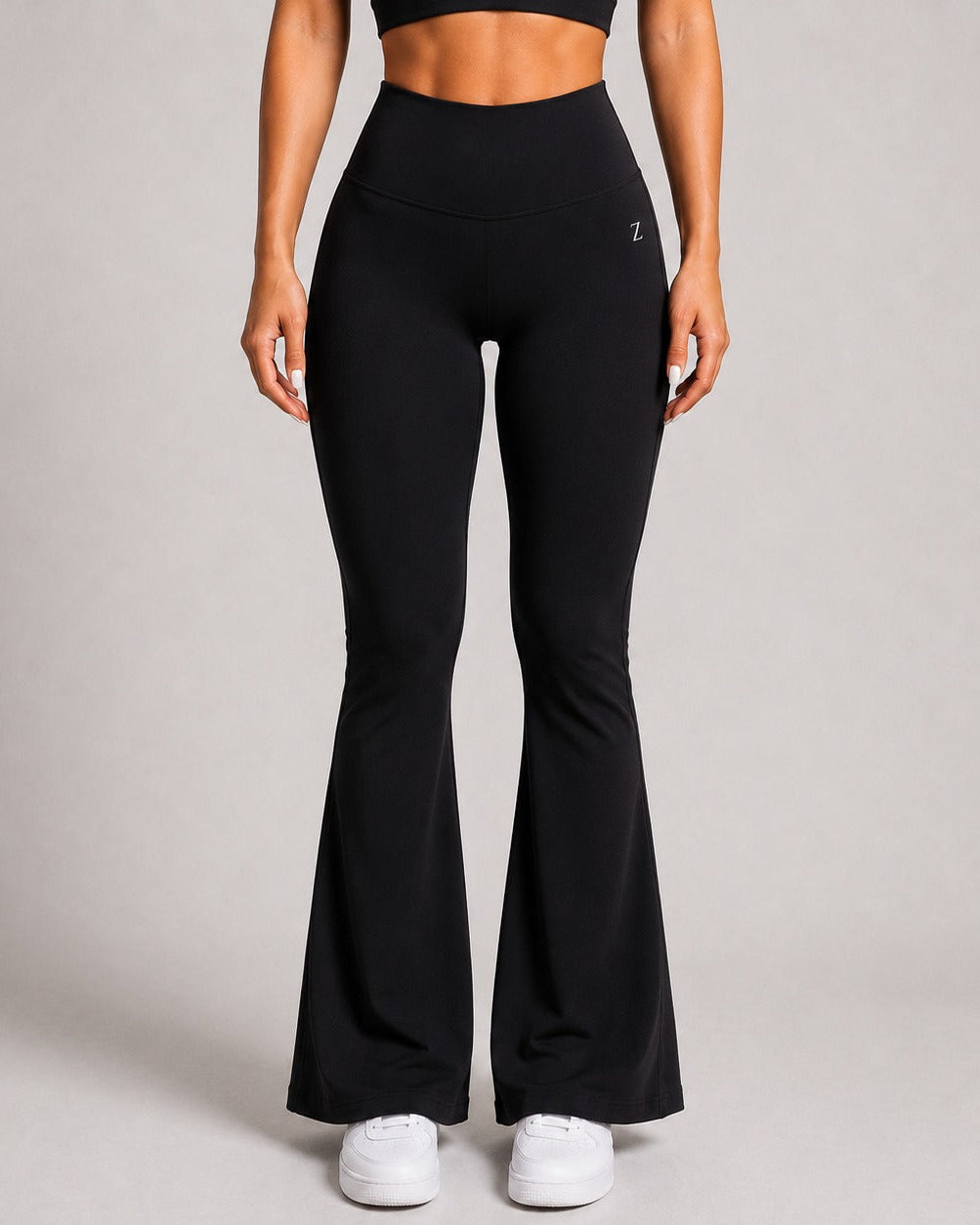
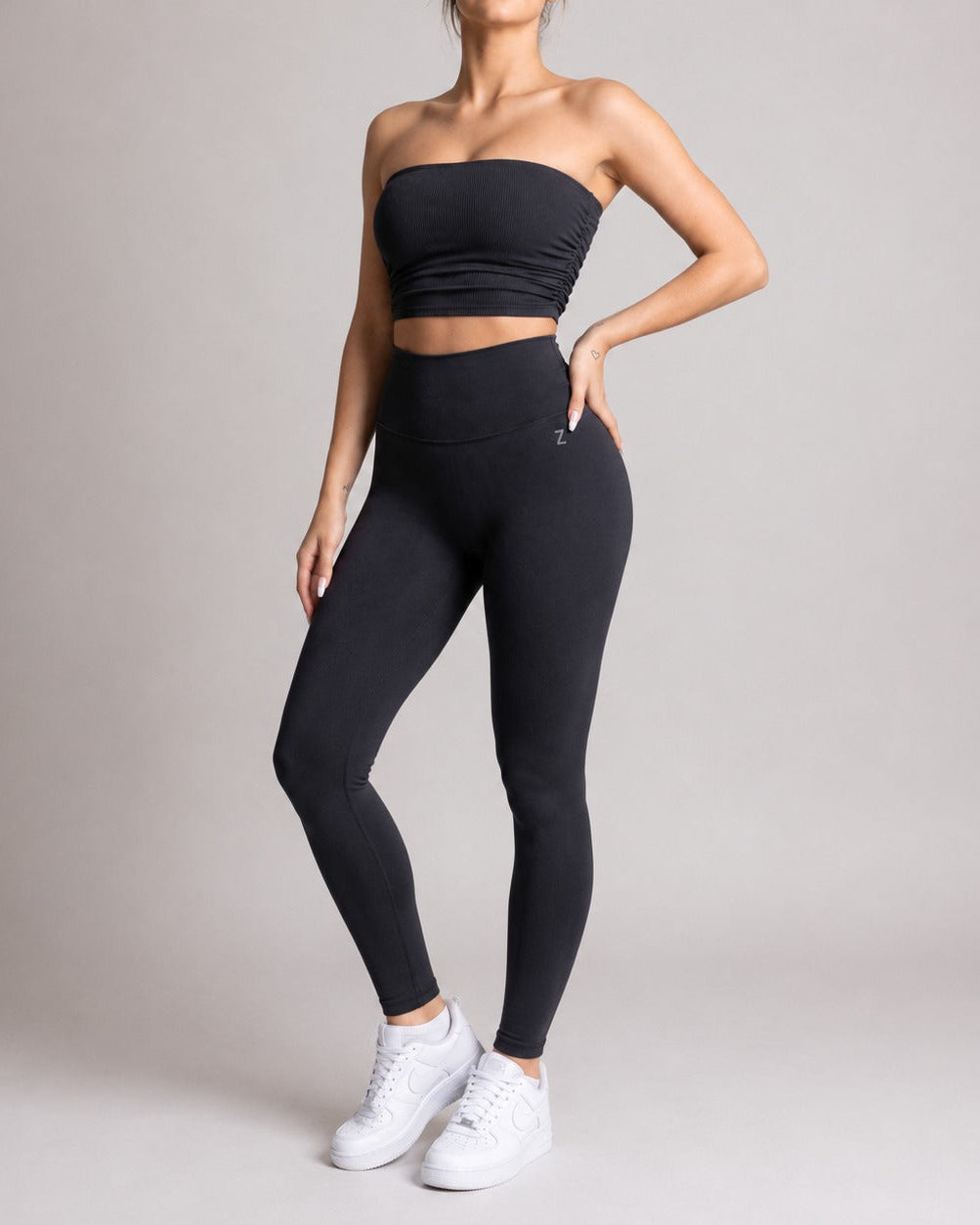
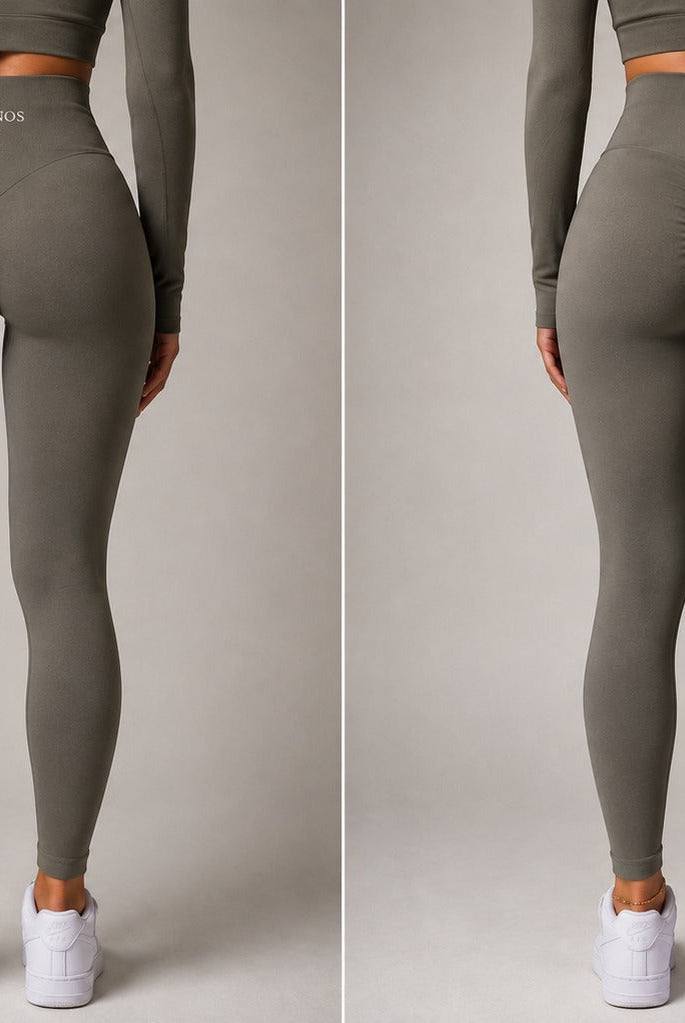
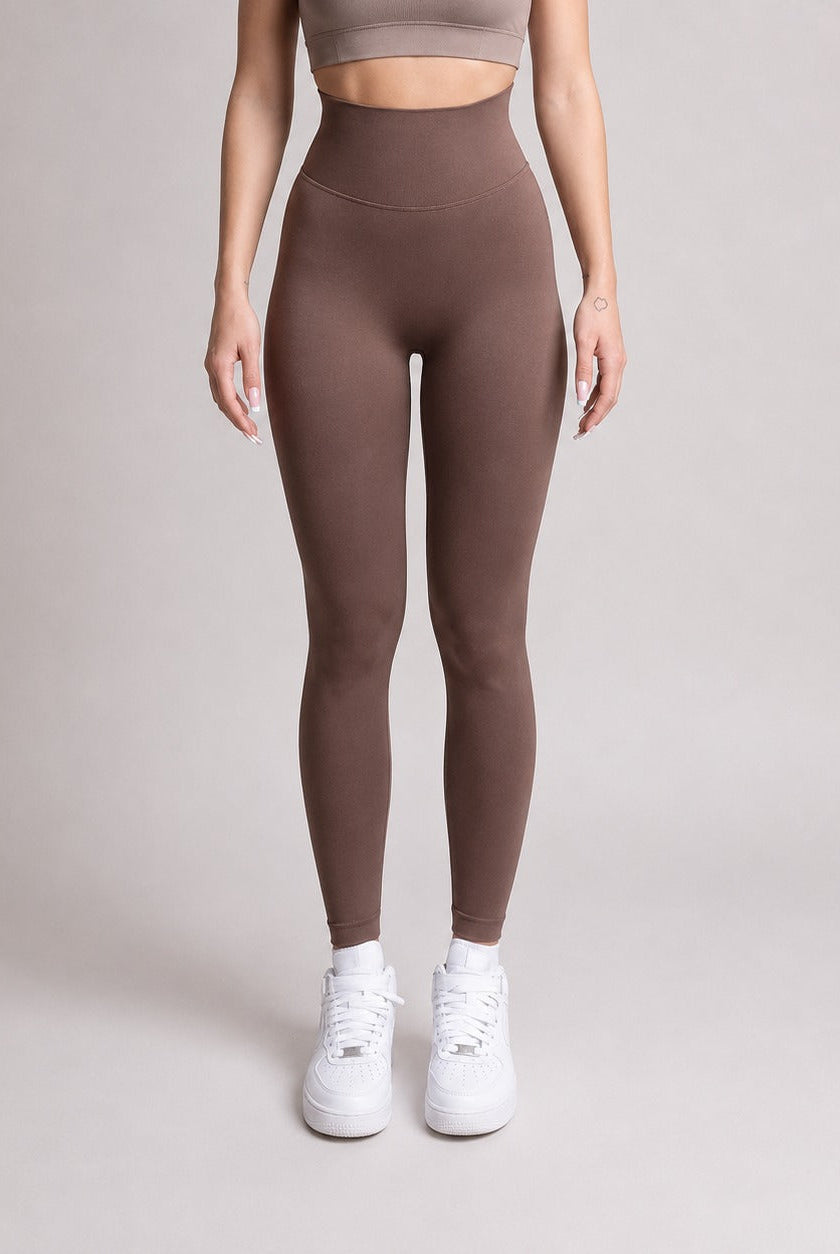
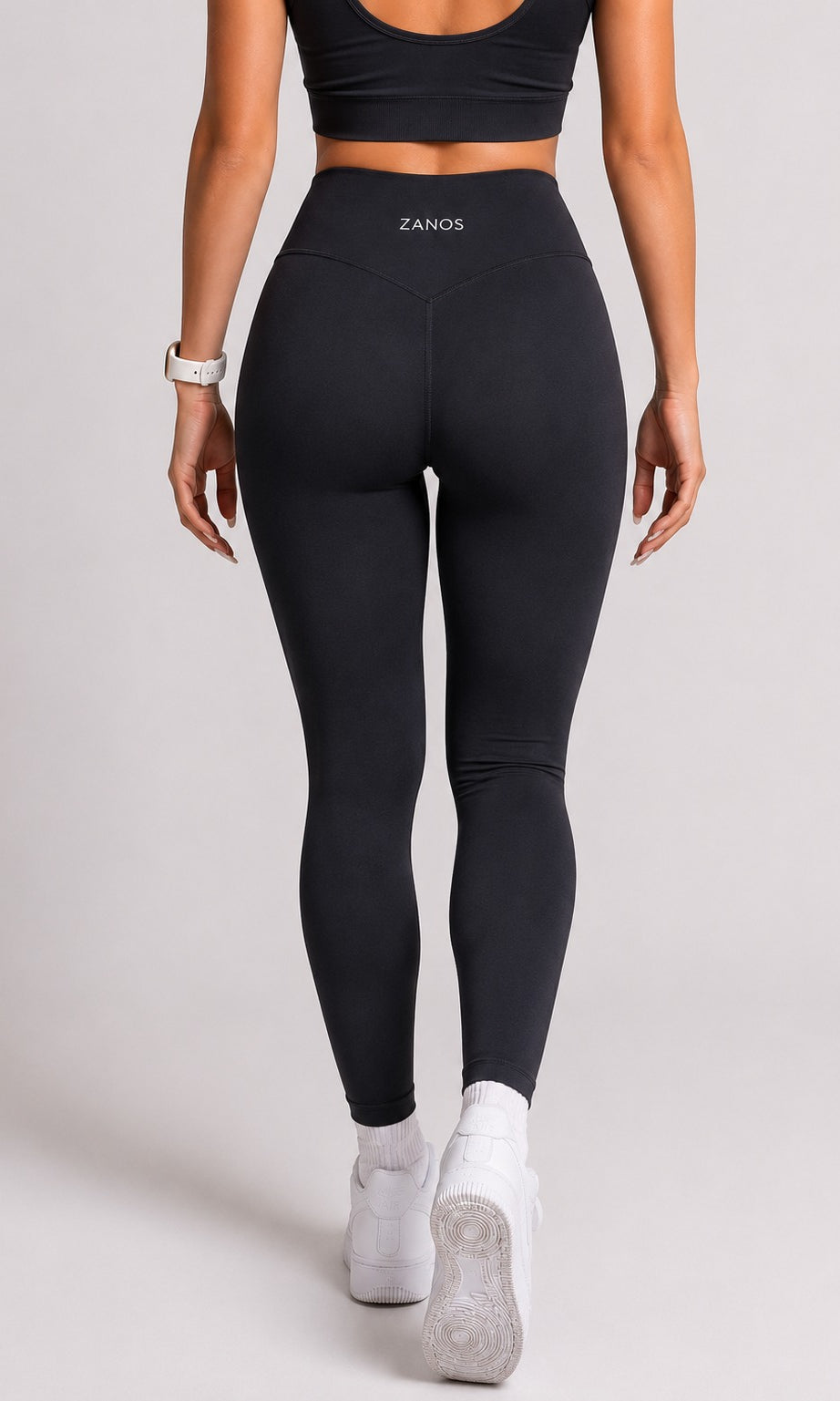
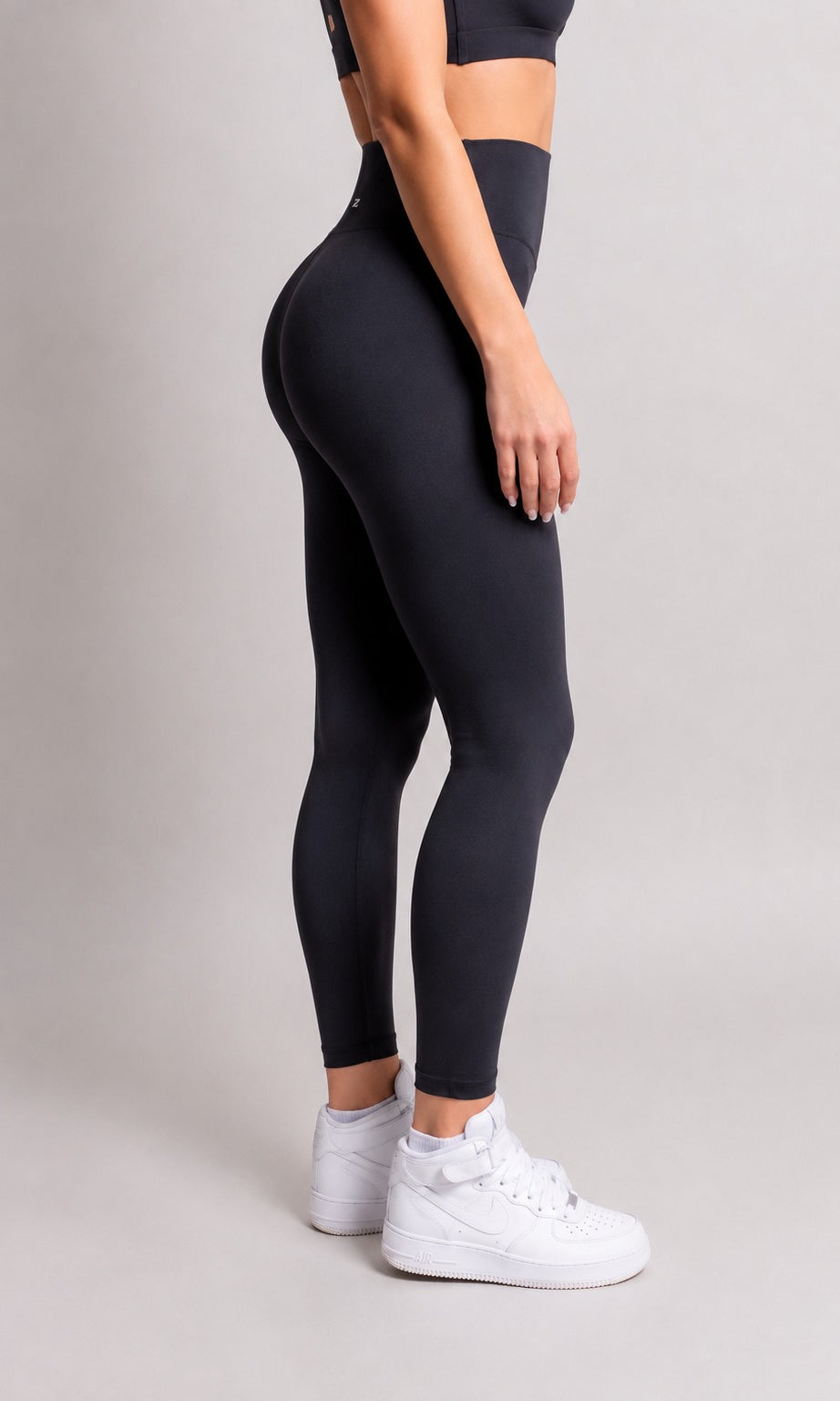
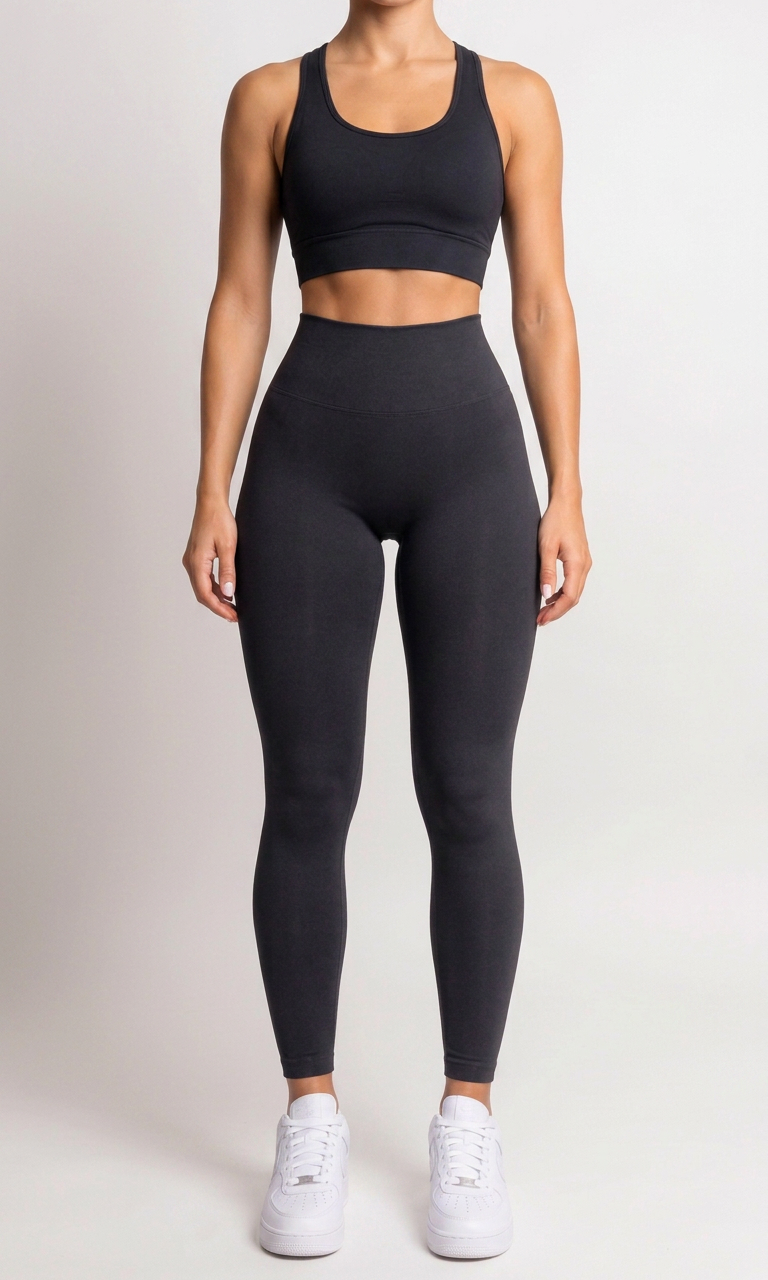
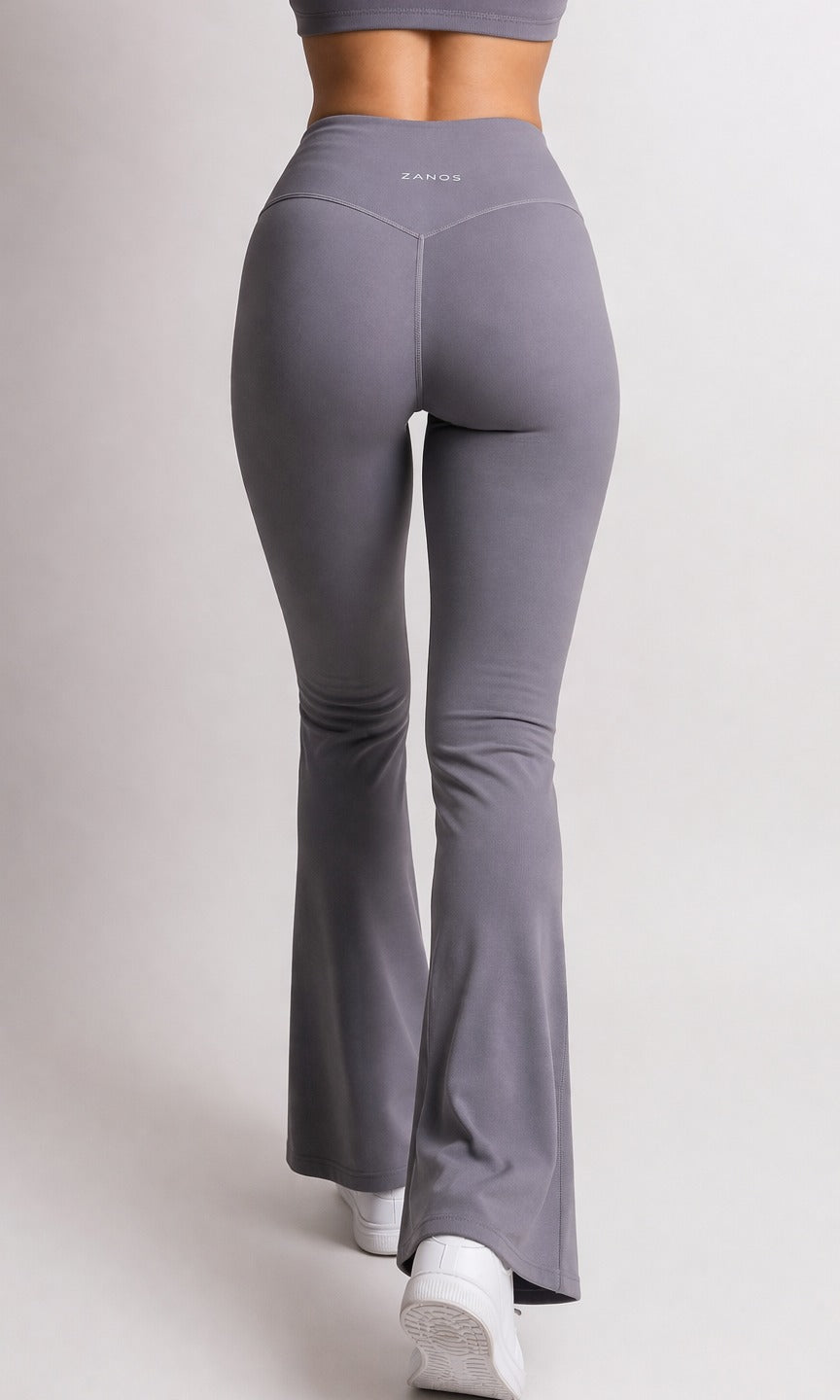
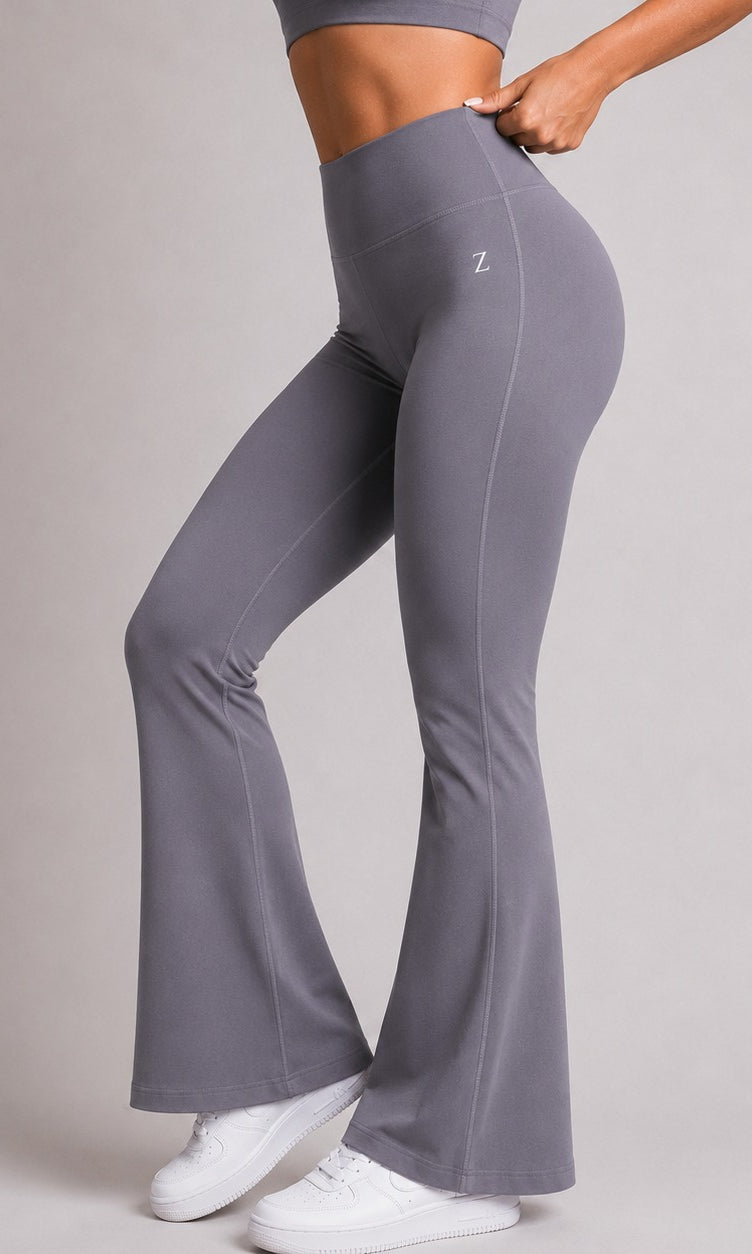
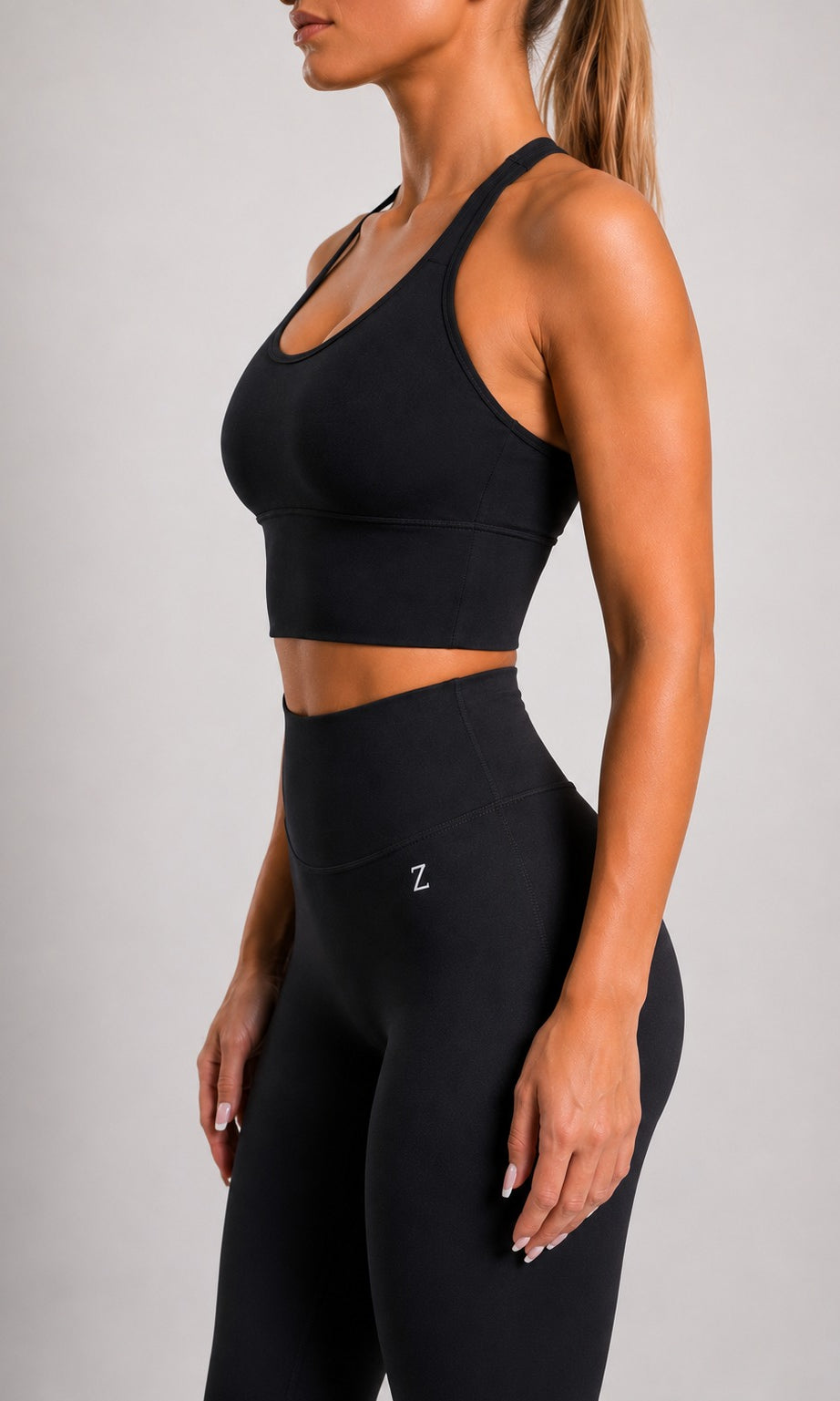
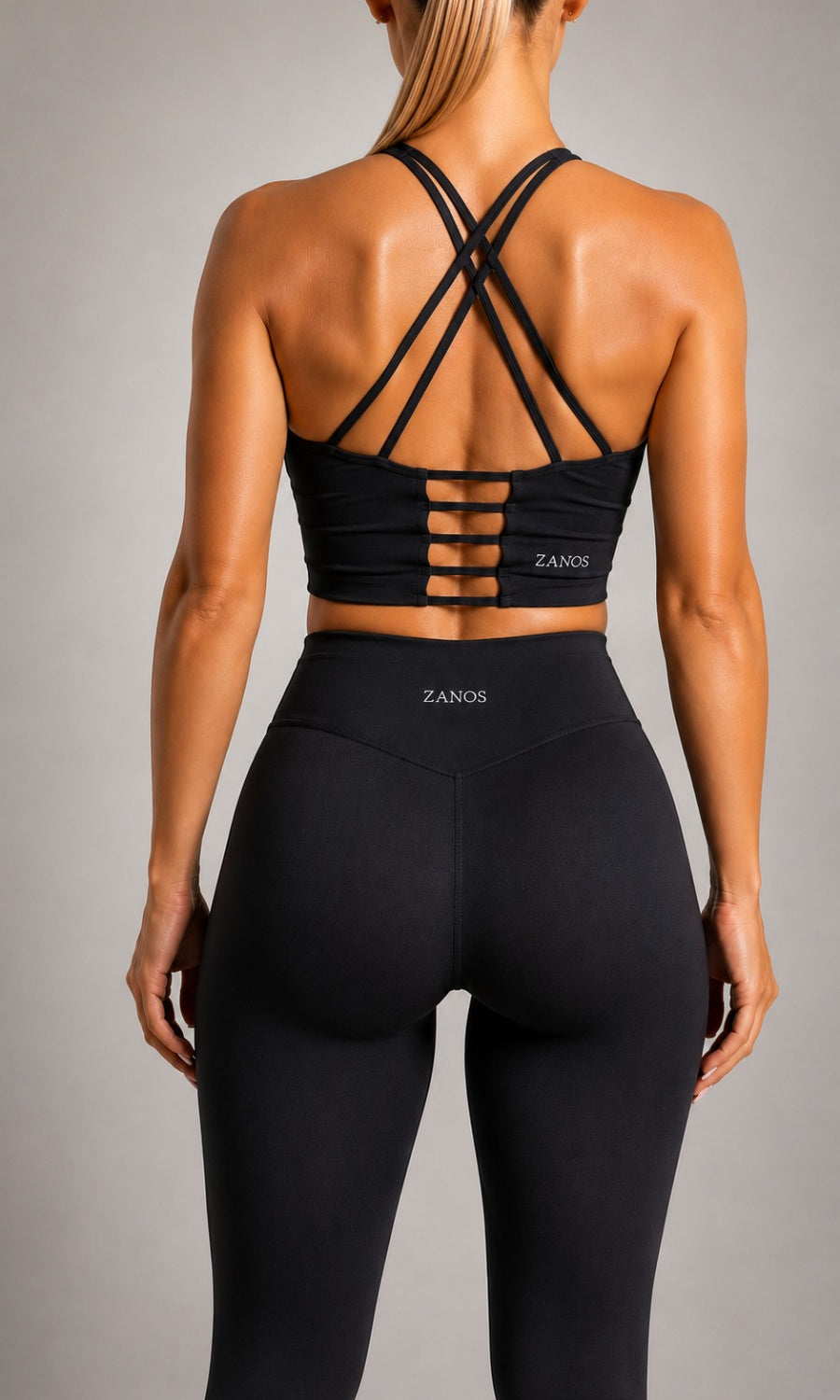
Regular leggings usually have a flat or gently curved back seam. The fabric stretches across both glutes as one smoother surface, creating a more neutral appearance.
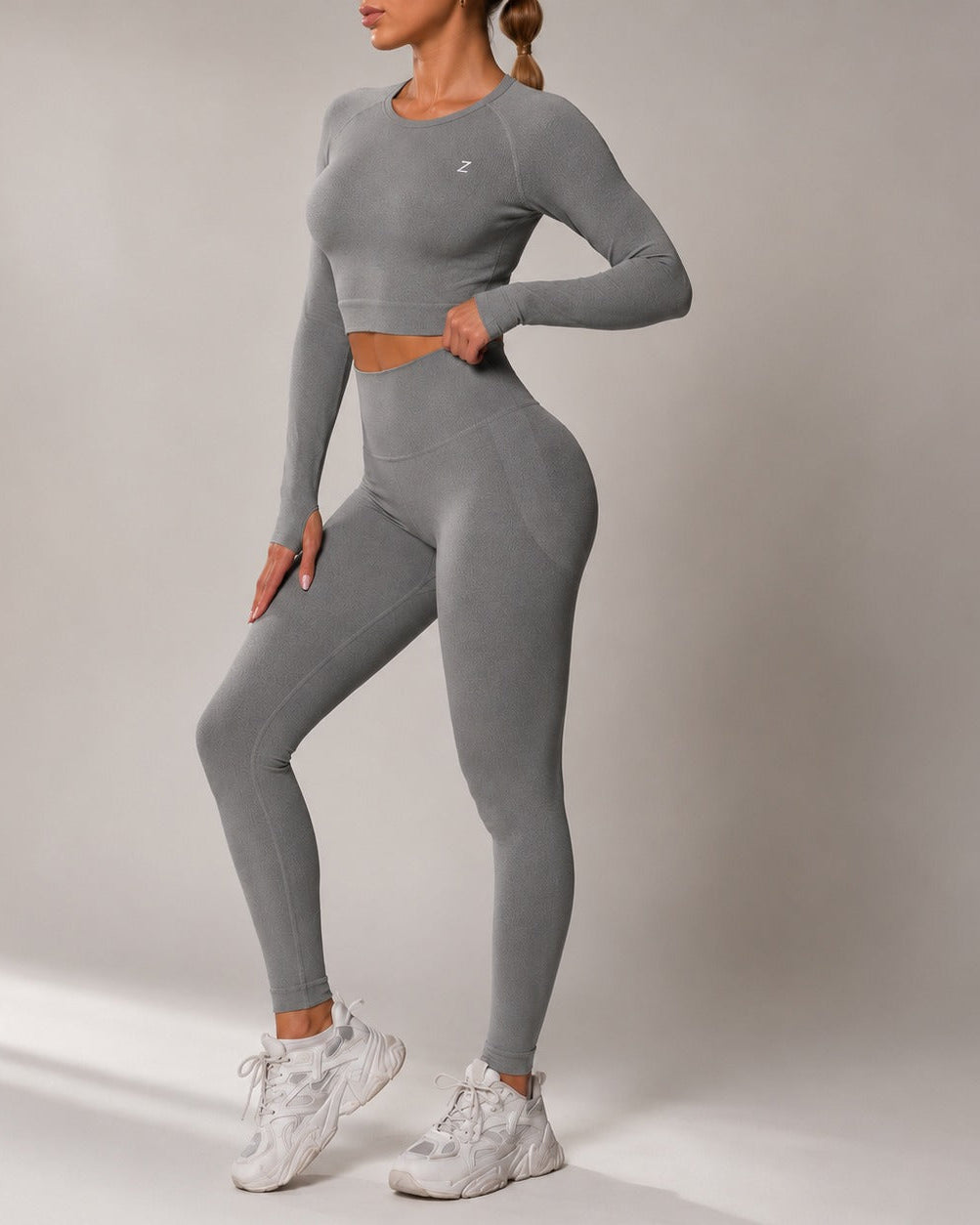
Scrunch tights draw part of the fabric inward along the centre back. This allows the material to sit more closely around each side instead of pressing both glutes beneath one uninterrupted panel.
The effect can be created through visible gathering, elastic tension, shaped pattern cutting or a combination of these methods.
This construction can make the body's existing shape easier to see. It does not add muscle, change the body or guarantee a physical lifting effect.
When comparing scrunch leggings vs regular leggings, the clearest distinction is therefore not the fabric composition or waistband height. It is the way the back of the garment has been designed to follow the body.
Scrunch Tights vs Regular Leggings at a Glance
| Feature | Scrunch tights | Regular leggings |
|---|---|---|
| Back construction | Gathered, shaped or tensioned at the centre | Usually flat, smooth or gently curved |
| Appearance | Creates clearer separation and definition | Creates a more neutral and continuous surface |
| Fit around the glutes | Fabric follows the centre more closely | Fabric generally stretches across the seat |
| Visibility | Can be subtle or clearly gathered | Normally more discreet |
| Compression | Depends on the complete fabric and fit | Often distributed more evenly across the seat |
| Comfort | Comfortable when tension and size are correct | Familiar and generally easy to wear |
| Common activities | Gym, strength training and everyday activewear | Yoga, gym, Pilates, running and everyday wear |
| Quality | Scrunch detail alone does not prove quality | Smooth construction alone does not prove quality |
Neither style automatically provides better stretch, support or coverage. Those qualities depend on the complete garment.
How Do Scrunch Leggings Work?
Scrunch leggings work by controlling where the fabric sits around the glutes.
In regular leggings, the back panel often stretches across the seat without being drawn inward. This may gently press the glutes together and reduce the visible separation between them.
The scrunch construction places controlled tension along the centre back. The surrounding fabric can then sit more independently over each side.
This is what produces the recognisable scrunch effect.
Different scrunch butt leggings create the effect in different ways. Some use visible ruching along the outside seam. Others place elastic inside the construction. Hidden scrunch leggings may use internal tension or shaped pattern cutting to create definition without showing heavy folds on the outside.
The strength of the result depends on several details working together:
- The depth and shape of the back pattern
- The length of the scrunch section
- The amount of tension
- The stretch and recovery of the fabric
- The size and proportions of the garment
A stronger scrunch is not automatically a better scrunch. Excessive gathering may look forced, feel intrusive or place unnecessary tension on one small section of the seam.
A well-balanced design should follow the body without making the construction itself feel like a distraction.
Do Scrunch Tights Actually Lift Your Glutes?
Scrunch tights do not physically lift or change the glutes. They create a visual shaping effect by changing how the fabric sits around them.
The centre construction encourages the fabric to follow the natural separation between both sides. This can make the existing curve appear clearer and create the impression of greater definition.
Some scrunch leggings also use a curved waistband, contoured knitting or shaped panels around the back. These details can change the overall appearance further, but they still work by arranging the garment around the body.
The tights cannot create muscle or permanently alter the shape beneath the fabric.
The most accurate answer is that scrunch tights can define what is already there.
The result will vary between body shapes because the same garment does not sit identically on every person. A scrunch construction should support the body's natural proportions rather than promise one fixed result for everyone.
Do Regular Leggings Flatten the Glutes?
Regular leggings do not automatically flatten the glutes, but their smoother construction can create less visible separation.
When one fabric panel stretches across the entire seat, it may gently press both sides together. Firm compression can make this effect more noticeable.
Other regular leggings use curved seams, shaped panels or softer materials that follow the body without adding a scrunch. These designs can still provide definition while maintaining a more discreet appearance.
The result depends on the fabric tension, compression level, pattern cutting, seam placement and chosen size.
Regular leggings should not be treated as one identical product category. Some are designed to smooth and support. Others are lightweight and follow the body more naturally.
The absence of a scrunch seam tells you how the back has been styled. It does not tell you everything about the fit.
What Is the Difference Between a Visible and Hidden Scrunch?
A visible scrunch uses clearly gathered fabric along the centre back. The ruched seam is intentionally noticeable and creates a stronger visual effect.
A hidden scrunch creates tension more discreetly. It may use internal elastic, shorter gathering or shaped pattern construction to follow the glutes without leaving a heavily ruched line on the outside.
A traditional visible scrunch suits women who want the detail to be a clear part of the design. A hidden or subtle scrunch suits those who want more definition without making the seam itself the main focus.
Neither construction is automatically stronger or more comfortable.
The quality depends on how the tension has been balanced, how securely the seam has been finished and how naturally the fabric follows the body.
Do Scrunch Tights Feel Different From Regular Leggings?
Scrunch tights can feel different because the material sits closer to the centre back.
A correctly balanced scrunch should follow the body without creating sharp pressure or a constant pulling sensation. Once positioned, it should feel like a natural part of the garment.
An overly aggressive scrunch may feel intrusive. This can happen when the garment is too small, the elastic section is too short or too much tension has been concentrated around the seam.
Regular leggings distribute the back fabric more evenly across the seat. This may feel more familiar to someone wearing scrunch leggings for the first time.
Comfort is personal, but pain or strong pulling should not be dismissed as something the wearer must accept. It normally indicates that the construction or size is unsuitable.
Are Scrunch Leggings Comfortable?
Scrunch leggings can be comfortable when the size, fabric and centre tension work together correctly.
Some women prefer the way scrunch tights allow the fabric to follow each side separately. They may find this more natural than one firm panel compressing across the entire seat.
Others prefer the smooth and evenly distributed feeling of regular leggings.
The waistband and fabric often have a greater effect on comfort than the scrunch detail itself. Softness, breathability, stretch, seam placement and recovery all influence how the garment feels during longer wear.
Comfortable leggings should remain secure without pinching, sliding or demanding repeated adjustment. If the wearer constantly thinks about the seam or needs to reposition the fabric, the construction is not doing its job.
Are Scrunch Tights Tighter Than Regular Leggings?
Scrunch tights are not automatically tighter than regular leggings.
The scrunch section may feel closer to the body because of where the fabric sits, but the overall compression comes from the material, knit density, elastane, pattern and size.
Soft scrunch leggings can provide less compression than firm regular workout tights. Dense scrunch fabric can provide considerably more support than lightweight everyday leggings.
Do not choose a smaller size simply to create a stronger scrunch effect. Excessive tension can reduce coverage, distort the back construction and place additional pressure on the centre seam.
The correct size should sit securely around the waist and hips while allowing the fabric to move and recover normally.
Are Scrunch Tights Better for the Gym?
Scrunch tights are popular for gym and strength training because their back construction creates more visible definition during movements involving the glutes.
They can work well for squats, lunges, hip thrusts and general gym sessions when the complete garment provides coverage, reliable stretch and a secure waistband.
The scrunch detail itself does not improve physical performance. It does not make the fabric stronger, prevent the waistband from moving or guarantee that the tights are squat proof.
Regular leggings can perform equally well in the gym. They may be preferred by women who want a smoother appearance or more uniform compression across the seat.
Choose gym leggings by evaluating the entire garment:
- Does the waistband remain stable?
- Does the material stay covered during a squat?
- Does the fabric recover after stretching?
- Do the seams remain comfortable?
- Does the fit allow unrestricted movement?
Explore our scrunch leggings for women to compare current colours, fits and back constructions.
Can You Wear Scrunch Tights for Yoga and Pilates?
Scrunch tights can be worn for yoga and Pilates when the centre construction remains comfortable during seated positions, deep stretches and floor-based movement.
Both activities place fabric under tension in several directions. The leggings need sufficient flexibility, coverage and recovery regardless of how the back has been designed.
A strongly tensioned scrunch may become more noticeable during longer seated positions. A softer or hidden scrunch may feel more natural for controlled movement.
Regular leggings remain a strong option because their smoother back distributes tension more evenly.
Neither style is universally better for yoga. The better option is the one that stays secure and comfortable during the movements you perform.
For a construction developed specifically around controlled movement, compare our yoga tights for women.
Are Scrunch Leggings Squat Proof?
The presence of a scrunch seam does not make leggings squat proof.
Squat proof coverage depends on fabric density, yarn quality, colour, stretch and fit. The scrunch changes where the material sits, but it cannot compensate for thin or unstable fabric.
To assess scrunch tights properly, the material should be examined under clear lighting while the wearer performs a deep squat. Pay particular attention to the seat, centre seam and back of the thighs.
Dark colours can still become transparent. Black fabric may appear completely covered while relaxed and noticeably thinner when stretched.
Sizing also matters. Tights that are too small place additional tension across the seat and scrunch seam. This may reduce opacity and increase strain on the construction.
Both scrunch tights and regular leggings can provide reliable coverage when the fabric and fit have been developed correctly.
Can the Scrunch Seam Break?
Any seam can fail if it is poorly constructed, damaged or placed under more tension than it was designed to handle.
The centre seam in scrunch tights experiences concentrated movement. Suitable stitching, fabric recovery and correct sizing are therefore important.
Pull the tights on gradually from the lower legs instead of forcing the entire garment upward from the waistband. Distribute the fabric evenly across the thighs and hips before gently positioning the back.
Avoid pulling aggressively on the scrunch seam itself.
A garment that is too small may place continuous tension on the centre construction. Sharp nails, jewellery, rough surfaces and unsuitable washing can also weaken the fibres.
A well-made scrunch seam should tolerate normal movement. It is still part of a textile garment and should be treated accordingly.
Do Scrunch Tights Cause a Wedgie?
Scrunch tights are intentionally designed to sit closer to the centre back than regular leggings. The sensation can therefore feel different.
A balanced design should follow the body without creating painful pressure. Some women barely notice the detail once the leggings are positioned, while others prefer the smoother feeling of regular leggings.
If the seam feels aggressively pulled inward, the garment may be too small or the scrunch tension may be stronger than you prefer.
The purpose is controlled separation and definition, not discomfort.
Which Style Provides Better Waistband Support?
Neither scrunch tights nor regular leggings automatically provide better waistband support.
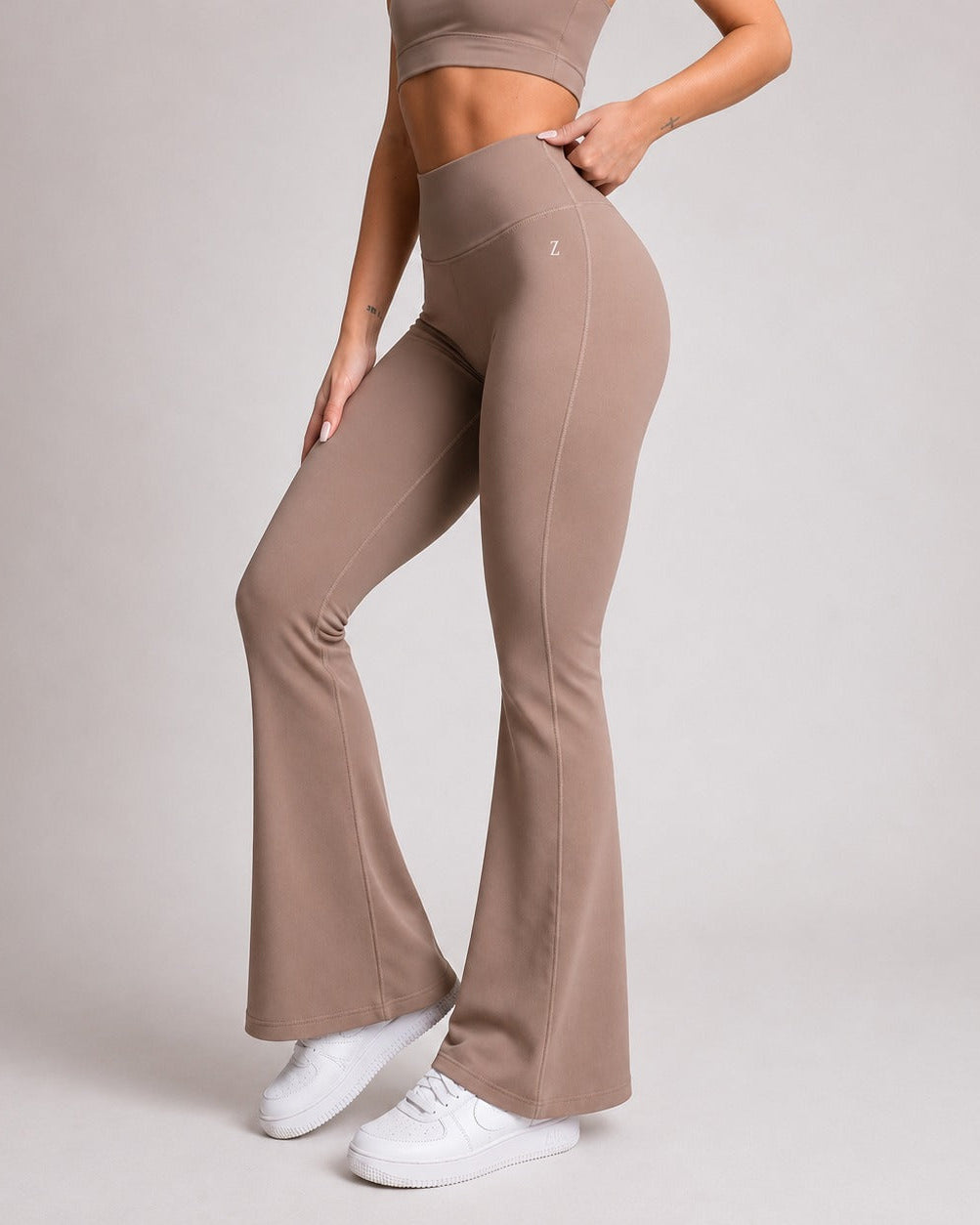
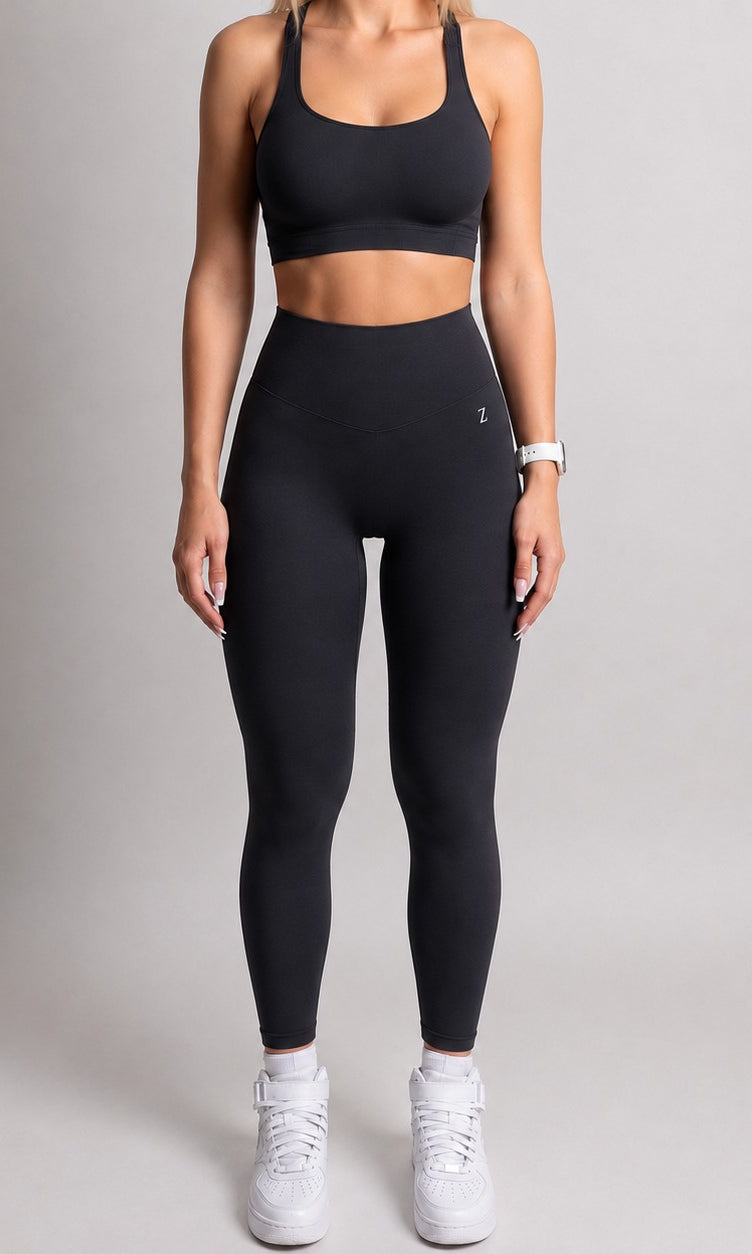
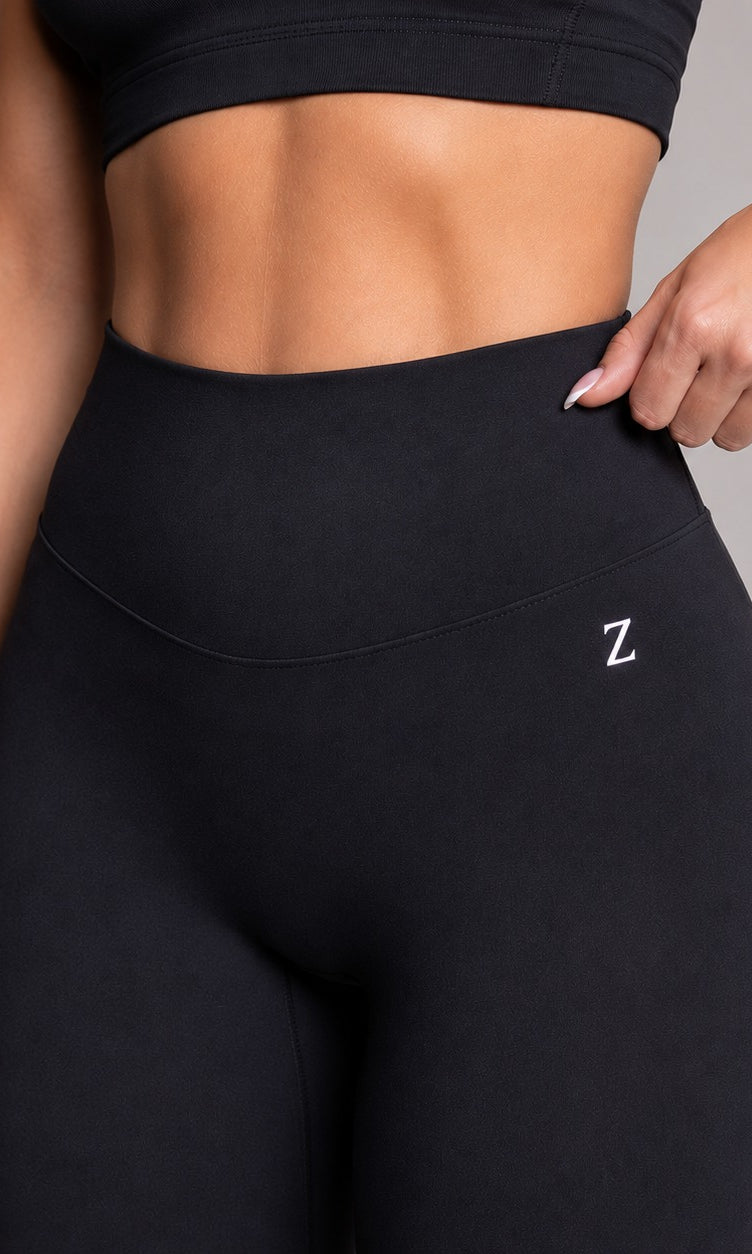
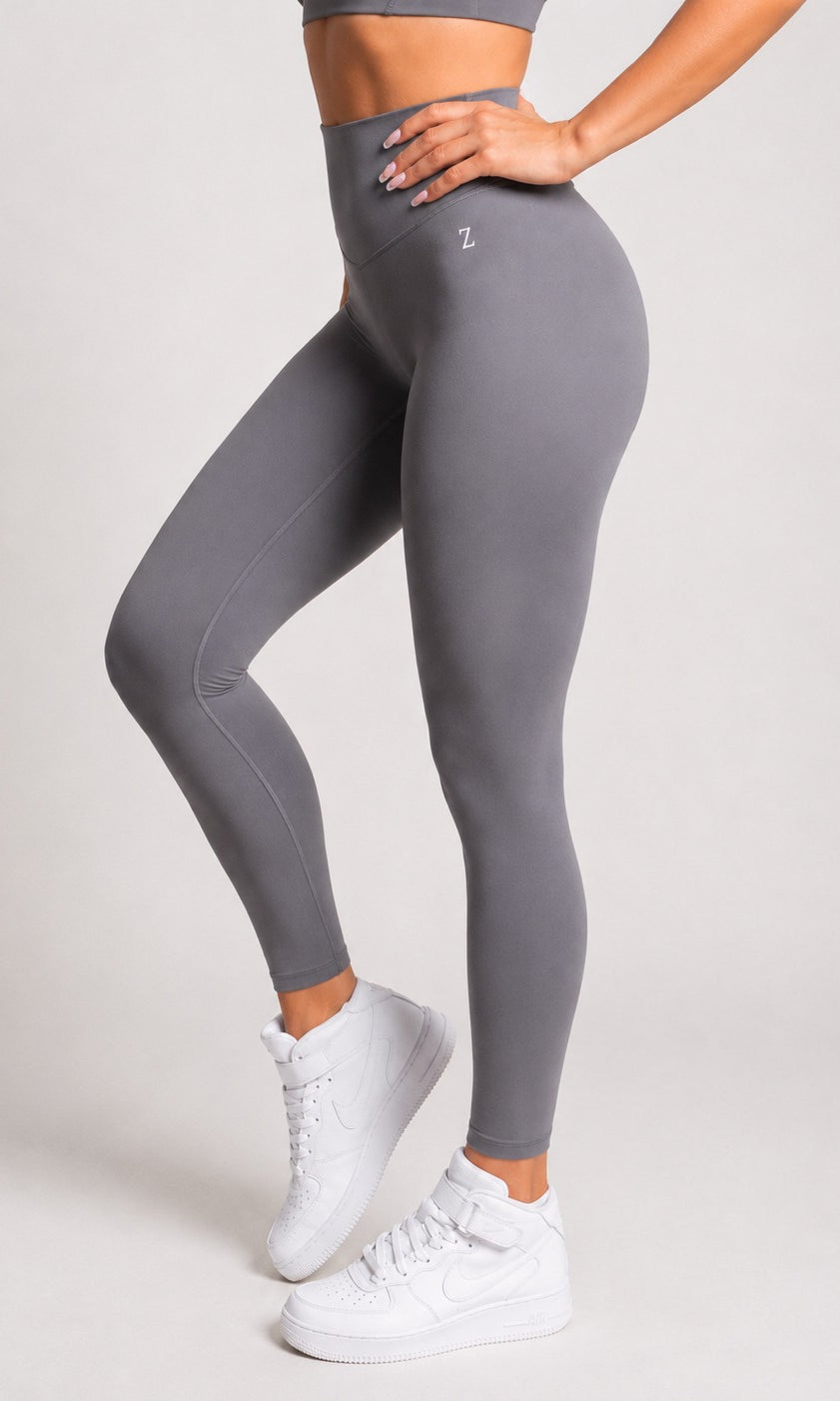
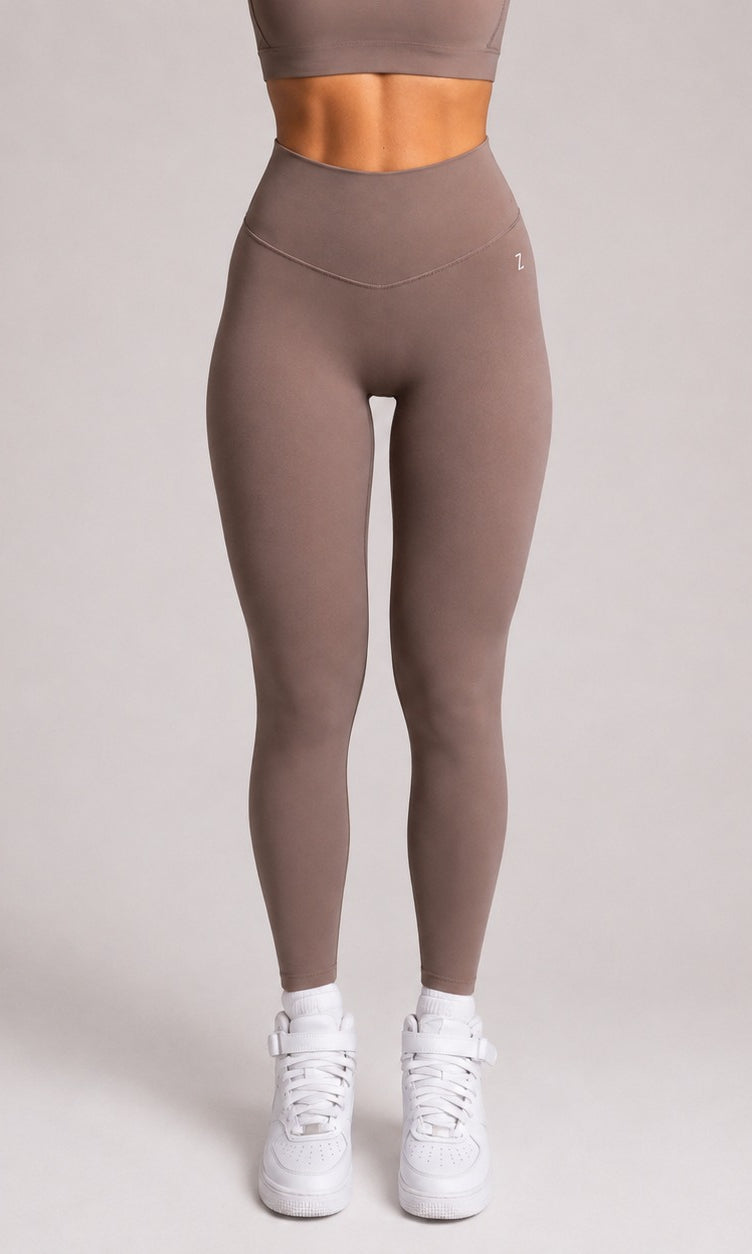
The back construction and waistband are separate elements. Scrunch leggings can have a soft waistband, firm compression or a curved high waist. Regular leggings can use the same variations.
Waistband stability depends on its height, width, elasticity, tension and how well the size matches the wearer's proportions.
A good waistband should remain stable during squats, bends and transitions without rolling, sliding or creating excessive pressure.
If waistband support is your main priority, evaluate it directly rather than assuming that one back style provides better stability.
Explore our high waisted leggings for women for styles with a higher waist construction.
Do Scrunch Tights and Regular Leggings Use Different Materials?
Not necessarily. Both styles can use polyamide, polyester, elastane and other activewear fibres.
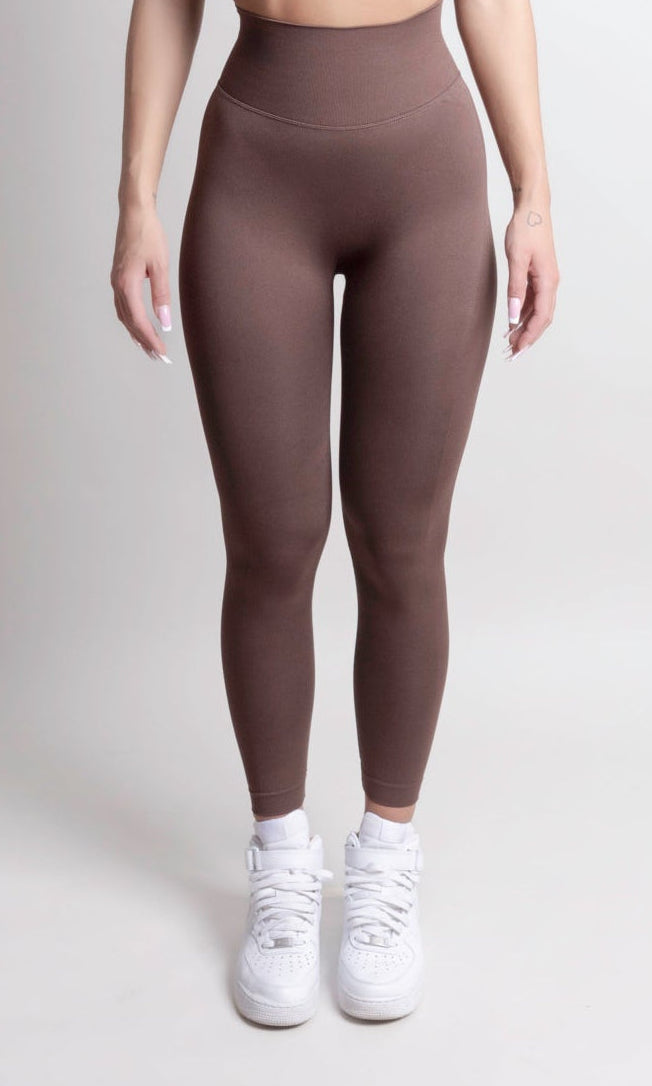
They can also be soft, compressive, brushed, lightweight or seamless.
The difference between scrunch tights and regular leggings primarily comes from the pattern and back construction rather than one required material composition.
Fabric behaviour still affects the result. A soft and fluid material may create a subtle scrunch that follows the body closely. A firmer fabric may create stronger definition but require more carefully controlled tension.
The material also needs to recover after stretching. Weak recovery can cause loose fabric around the seat or reduce the original scrunch effect over time.
The fibre label can help explain how the fabric may behave, but it cannot reveal the complete fit or quality of the garment.
Are Scrunch Tights the Same as Seamless Leggings?
No. Scrunch and seamless describe two different garment features.
Scrunch refers to the gathered, tensioned or shaped detail at the centre back.
Seamless refers to a knitting and production method that creates the garment, or large sections of it, with fewer traditional cut and sewn seams.
Leggings can be seamless and include a scrunch. They can also be seamless without any scrunch detail. Traditionally sewn leggings can likewise use a scrunch construction.
This distinction matters because the terms are often incorrectly used as though they describe the same type of leggings.
Browse our seamless tights for women to compare different seamless constructions.
Which Style Looks More Discreet?
Regular leggings usually create the more discreet appearance because the fabric remains smoother across the back.
Hidden or subtle scrunch leggings sit between the two styles. They can create some separation without showing a strongly gathered centre seam.
A pronounced scrunch makes the back construction an obvious part of the design. Some women prefer that effect for strength training and gym outfits. Others want a quieter style for yoga, walking or everyday use.
There is no correct amount of definition.
Choose the construction that matches how you want the leggings to look and how comfortable you feel wearing them.
How Should Scrunch Tights Fit?
Scrunch tights should sit securely around the waist and hips without placing excessive tension on the centre seam.
The fabric should be distributed evenly along the legs and across the seat. The waistband should remain stable, and the scrunch should follow the centre naturally rather than appearing stretched into a strained line.
Possible signs that the tights are too small include:
- Reduced coverage during a squat
- Strong pulling around the scrunch
- A waistband that cuts into the body
- Seams placed under obvious tension
- Restricted movement
Possible signs that the tights are too large include loose fabric around the knees or seat, reduced definition and a waistband that slides.
The strongest scrunch effect does not come from choosing the smallest possible size. It comes from the correct relationship between the body, fabric and construction.
How Should You Put On Scrunch Tights?
Pull scrunch tights on gradually from the lower legs.
Distribute the material evenly over the calves, thighs and hips before positioning the waistband. Once the surrounding fabric sits correctly, gently adjust the centre back.
Do not pull the entire garment upward using only the waistband, and avoid yanking directly on the scrunch seam.
This method reduces unnecessary strain and helps the material settle naturally around the body.
If the garment requires considerable force or continuous adjustment, review the size rather than pulling harder.
How Do You Choose Between Scrunch Tights and Regular Leggings?
Choose scrunch tights when you want the fabric to follow the glutes more closely and create clearer definition at the back.
Choose regular leggings when you prefer a smoother and more neutral construction or want compression distributed more evenly across the seat.
Then evaluate the qualities both styles need.
The waistband should remain stable. The fabric should provide sufficient coverage and recover after stretching. The seams should support movement without creating unnecessary pressure.
Think about where you intend to wear the leggings. A strong scrunch may suit the look you want for gym training. A subtle scrunch or smooth regular construction may feel more natural for yoga, walking and everyday wear.
The correct choice is not simply the pair that looks most dramatic in a product image. It is the garment that continues to feel right once you begin moving.
The Final Verdict
The difference between scrunch tights and regular leggings begins with the back construction.
Scrunch tights use gathered fabric, controlled tension or a shaped centre seam to allow the material to follow each glute more closely. This creates visible separation and can make the natural shape appear more defined.
Regular leggings use a smoother back construction that stretches across the seat more evenly. They create a cleaner and more neutral appearance and may provide more uniform compression.
Scrunch tights do not physically lift or change the body. Regular leggings do not automatically flatten it. The final result depends on the pattern, fabric, tension, size and the body wearing the garment.
Choose scrunch tights when you want a more defined back construction. Choose regular leggings when you prefer a smoother look and feel.
Whichever style you choose, quality still depends on the complete garment: reliable coverage, controlled stretch, a stable waistband and construction that remains comfortable throughout movement.