Polyamide vs Polyester: Understanding the Key Differences
Polyamide and polyester appear on the labels of everything from yoga tights and sports bras to running tops and everyday leggings. At first glance, they can seem almost interchangeable. Both are synthetic, both are durable and both are frequently blended with elastane to create stretch.
Once you start moving and sweating in them, however, the differences become easier to notice.
Polyamide usually feels softer, smoother and more flexible against the skin. Polyester absorbs less moisture, normally dries faster and tends to retain its colour well. This does not make one fabric universally better than the other. It means they are suited to different priorities.
If you want soft yoga tights that feel comfortable through slower movements and floor-based positions, polyamide will often be the stronger choice. If you train in heat, sweat heavily or want activewear that dries quickly, polyester may be more practical.
This guide explains what separates the two materials and how to choose the right one for the way you actually train.
Polyamide vs Polyester at a Glance
| Feature | Polyamide | Polyester |
|---|---|---|
| Feel | Usually softer and smoother | Often drier and more structured |
| Drying time | Quick, but normally slower than polyester | Generally faster |
| Moisture absorption | Absorbs more moisture | Absorbs very little moisture |
| Abrasion resistance | Excellent | Very good |
| Colour retention | Good | Usually excellent |
| Flexibility | Often feels more fluid | Depends heavily on elastane and construction |
| Odour | Can retain odour | More likely to retain oil-based body odours |
| Best use | Yoga, Pilates and soft leggings | Hot yoga, running and intense workouts |
These are general differences rather than guarantees. A lightweight polyamide fabric can dry faster than thick polyester, while brushed polyester can feel softer than firm polyamide compression fabric.
The percentages on a care label are useful, but they only tell part of the story.
What Is Polyamide?
Polyamide is a family of synthetic materials known for strength, smoothness and excellent resistance to abrasion. Nylon is the most familiar type of polyamide used in clothing.
In activewear, polyamide is commonly used to create fabrics that sit close to the body without feeling overly stiff. It can produce the soft, smooth sensation often associated with yoga tights, seamless leggings, underwear and swimwear.
Its resistance to friction is particularly useful in clothing that regularly comes into contact with yoga mats, gym benches or other fabric surfaces. It can feel delicate against the skin while remaining surprisingly strong during repeated movement.
Not every polyamide fabric feels the same. Yarn quality, fabric weight and knit density can make one blend feel light and fluid while another feels supportive and compressive.
Polyamide is therefore not a description of the finished experience. It is the starting point from which the fabric is developed.
What Is Polyester?
Polyester is a synthetic fibre valued for low moisture absorption, fast drying and reliable shape and colour retention.
It is one of the most widely used fibres in sportswear because it handles frequent training and washing well. Since polyester absorbs very little water into the fibre itself, it can remain relatively light during sweaty workouts and dry quickly afterwards.
Older or lower-quality polyester is sometimes associated with a stiff or shiny surface. Modern polyester can be considerably more refined. Depending on how the yarn is treated and knitted, it may feel lightweight, matte, brushed, smooth or supportive.
Polyester is particularly useful in running clothes, training tops and garments developed for hot or intense sessions. Its naturally dry feeling may not be as silky as polyamide, but it can be exactly what you want when perspiration and drying speed matter most.
Is Polyamide the Same as Nylon?
Nylon is a type of polyamide.
Polyamide is the wider material family, while nylon describes specific synthetic polyamide fibres. Clothing labels in Europe commonly use "polyamide", whereas "nylon" may be more familiar in other markets.
For everyday discussions about leggings and activewear, the terms are often used as though they mean the same thing. However, different varieties of polyamide and nylon can still vary in texture, strength and performance.
A label that says polyamide therefore tells you what family the fibre belongs to. It does not tell you exactly how soft, stretchy or supportive the finished garment will feel.
Is Polyamide the Same as Polyester?
No. Although both are synthetic fibres, polyamide and polyester have different structures and behave differently when worn.
Polyamide usually has a smoother surface and absorbs more moisture. Polyester absorbs much less water and normally dries faster. Polyamide is particularly resistant to friction, while polyester is recognised for dependable colour retention and stability through repeated washing.
They often appear in similar garments because both can form strong, lightweight fabrics. Their different characteristics simply make them suitable for different types of activewear.
What Is the Main Difference Between Polyamide and Polyester?
The easiest way to understand the difference is to compare softness with drying performance.
Polyamide normally provides the softer, smoother experience. It often feels fluid against the body and comfortable during movements where the material stretches closely across the skin.
Polyester normally provides the drier experience. Because it absorbs little moisture, it is well suited to warm environments and workouts that produce substantial perspiration.
This difference explains why polyamide is frequently chosen for yoga tights and soft leggings, while polyester is common in running garments and high-intensity sportswear.
That does not mean polyamide cannot handle sweat or that polyester cannot feel soft. It means each fibre begins with a different natural advantage.
Which Is Softer: Polyamide or Polyester?
Polyamide is generally the softer of the two.
Its smooth surface can be especially noticeable during seated yoga positions, deep stretches and longer sessions. When fabric remains close to the skin for an extended period, a silky surface may feel less distracting than something firmer and drier.
Polyester can feel slightly more structured. Some people prefer that sensation because it creates a more technical or supportive training feel.
Modern finishing methods have made the comparison less predictable. Brushed polyester can feel exceptionally soft, while dense polyamide can feel firm and compressive. If softness is important, the fibre label can guide you, but touching and testing the finished material gives a more complete answer.
Which Fabric Dries Faster?
Polyester generally dries faster than polyamide because it absorbs less water.
Instead of taking much moisture into the fibre, a well-developed polyester fabric helps spread perspiration across its surface, where it can evaporate. This makes it a practical option for running, hot yoga, power yoga and intense gym sessions.
Polyamide also dries faster than many natural fabrics. It simply tends to hold more moisture than polyester, which can make it take slightly longer to dry after washing or a sweaty workout.
Fabric thickness can reverse the expected result. Thin polyamide may dry faster than thick, brushed polyester. The fibre matters, but the amount of fabric matters too.
Which Fabric Handles Sweat Better?
For workouts involving heavy perspiration, polyester will usually be the more practical choice.
Its low water absorption helps the garment avoid becoming excessively heavy or saturated. This is particularly useful when training in a hot studio or moving continuously at a high intensity.
Polyamide can still manage moderate perspiration effectively, especially when the fabric is lightweight and well constructed. For traditional yoga, Pilates and mobility training, the added softness may be more valuable than shaving a little time from the drying process.
The correct choice depends on the session. A slow yoga class and an hour of hot yoga place very different demands on the same pair of tights.
Which Fabric Is More Breathable?
The answer is not found in the fibre name alone.
Breathability depends largely on the way the material has been constructed. A lightweight fabric with an open knit allows more air to move through it than a thick, dense compression material. This remains true whether the base fibre is polyester or polyamide.
Fabric weight, knit density, ventilation zones and surface treatments can all affect how warm a garment feels. A thin polyamide blend may breathe better than heavy polyester, while lightweight polyester may feel cooler than dense polyamide.
When shopping for activewear for warm conditions, look beyond the percentages. The thickness and structure of the fabric will often tell you more about airflow.
Is Polyamide Stretchier Than Polyester?
Polyamide often feels more flexible, but most of the stretch in activewear does not come from polyamide or polyester alone.
Elastane and fabric construction create the flexibility required for leggings and yoga tights. Both base fibres can produce four-way stretch when they are combined with suitable elastane and knitted correctly.
What matters is not only how far a fabric stretches. It must also return to its original form. Without reliable recovery, the knees may become loose, the waistband may begin to sag and the garment may change shape during training.
A fabric that stretches easily but cannot recover is not a successful activewear fabric.
Why Four-Way Stretch Matters
Yoga movements place tension on fabric in several directions at once. During a lunge, twist or forward fold, the material must move both across the body and along the length of the garment.
Four-way stretch allows it to follow these multidirectional movements without feeling restrictive.
Polyamide and polyester can both provide four-way stretch, but the material percentages cannot confirm it. Two pairs of tights may contain identical fibre blends while moving completely differently.
This is one reason real movement testing matters. A care label cannot show whether a fabric remains comfortable during a deep position or returns to shape afterwards.
Which Material Is More Durable?
Both materials are durable, but they handle wear differently.
Polyamide offers excellent resistance to abrasion. It is especially capable of handling repeated rubbing against yoga mats, equipment and other surfaces. This helps explain why such a smooth fibre is widely used in demanding close-fitting garments.
Polyester is also strong and tends to perform consistently through repeated washing. It generally retains colour well and is less affected by prolonged sunlight than polyamide.
If surface friction is the main concern, polyamide has the advantage. If frequent washing and colour stability are more important, polyester may be the more dependable choice.
The quality of the garment still decides the final result. Strong fibres cannot compensate for weak seams, poor yarn or an unstable waistband.
Does Polyamide or Polyester Pill More?
Both can pill.
Pilling occurs when loose or broken fibres collect into small balls on the material's surface. Friction between the thighs, contact with rough equipment and washing activewear together with towels can all contribute.
Polyamide resists abrasion well, but that does not make it immune. Polyester fibres are strong, so any pills that form may remain attached to the surface.
A tightly knitted fabric made from consistent yarn will usually handle friction better than a loose, low-quality construction. Washing the garment inside out and keeping it away from rough fabrics can also help protect the surface.
Which Fabric Retains Its Shape Better?
Polyester and polyamide can both retain their shape effectively when combined with reliable elastane.
Polyester is naturally stable and usually handles repeated washing well. Polyamide also has strong recovery when the fabric has been knitted correctly.
Heat is often a greater threat than the base fibre. Activewear normally contains elastane, and excessive heat can weaken its ability to return to shape. The polyester or polyamide may remain intact while the waistband and knees gradually lose their recovery.
This is why low-temperature washing and air drying can make a meaningful difference to how long activewear keeps its fit.

Which Fabric Retains Colour Better?
Polyester generally retains colour extremely well. It is also more resistant to fading from prolonged sunlight.
This makes it useful for deep black leggings, bright colours and printed garments that are frequently washed.
Polyamide also takes colour well, but it may be more affected by long periods of ultraviolet exposure.
Production quality remains important. High-quality dyeing can allow polyamide to outperform poorly manufactured polyester. The fibre creates the potential, but the finishing process determines how well that potential is used.
Why Can Polyester Hold Odour?
Polyester can attract oils from the skin. Compounds responsible for body odour may remain attached to those oils even after an ordinary wash, particularly when activewear is repeatedly used for sweaty workouts.
Polyamide can develop odour too, but persistent smells are more commonly associated with polyester sportswear.
Leaving damp clothing inside a gym bag gives odour more time to develop. Washing shortly after use, turning garments inside out and avoiding fabric softener can all help.
More detergent is not necessarily better. Excess detergent may remain in the fabric, trap residue and make odour more difficult to remove.
What Are the Disadvantages of Polyamide?
Polyamide feels soft and resists friction exceptionally well, but it has several limitations.
It absorbs more moisture than polyester and therefore normally dries more slowly. It may also cost more to produce and can be affected by extended exposure to sunlight.
Like conventional polyester, conventional polyamide is generally created from fossil-based resources and does not biodegrade. It can also release synthetic microfibres during washing.
These limitations do not make polyamide a bad fabric. They explain why it works brilliantly in some garments but is not automatically the best choice for every activity.
Is Polyamide a Good Fabric for Activewear?
Yes, particularly when softness, flexibility and resistance to abrasion are important.
Polyamide works well in garments designed to remain close to the skin. Its smooth surface can feel comfortable through repeated movement, while its strength helps the material tolerate friction.
The word "polyamide" on a label is not proof of quality, however. A successful pair of tights also requires consistent yarn, suitable fabric weight, reliable opacity, thoughtful seam placement and a waistband that stays secure.
Material composition is important. Construction determines what that composition becomes.
Polyamide vs Polyester for Leggings
For soft leggings and a close second-skin feeling, polyamide will often provide the better experience. Its smooth surface works well for yoga, Pilates, mobility and everyday wear.
Polyester leggings can be a stronger choice for running, cardio and workouts where perspiration is the primary concern. They normally dry faster, retain colour well and handle frequent washing effectively.
The intended activity should guide the choice more than the idea that one fibre is automatically more luxurious or advanced.
A well-developed polyester pair can outperform poorly constructed polyamide. A carefully tested polyamide blend can provide both softness and substantial support.
Is Polyamide or Polyester Better for Yoga Tights?
For traditional yoga, polyamide is usually our preferred option. For hot yoga, polyester may be more practical.
Yoga tights need to remain comfortable through deep movement, floor positions and longer holds. Polyamide often performs well because it moves smoothly against the skin and resists the friction created by repeated contact with a yoga mat.
Polyester becomes particularly useful when the room is hot or the session is intense. Its lower moisture absorption helps it dry faster and remain lighter when exposed to substantial perspiration.
The simplest decision is to think about what normally limits your comfort. If stiff or rough fabric distracts you, choose polyamide. If remaining wet after an intense class bothers you, polyester may suit you better.
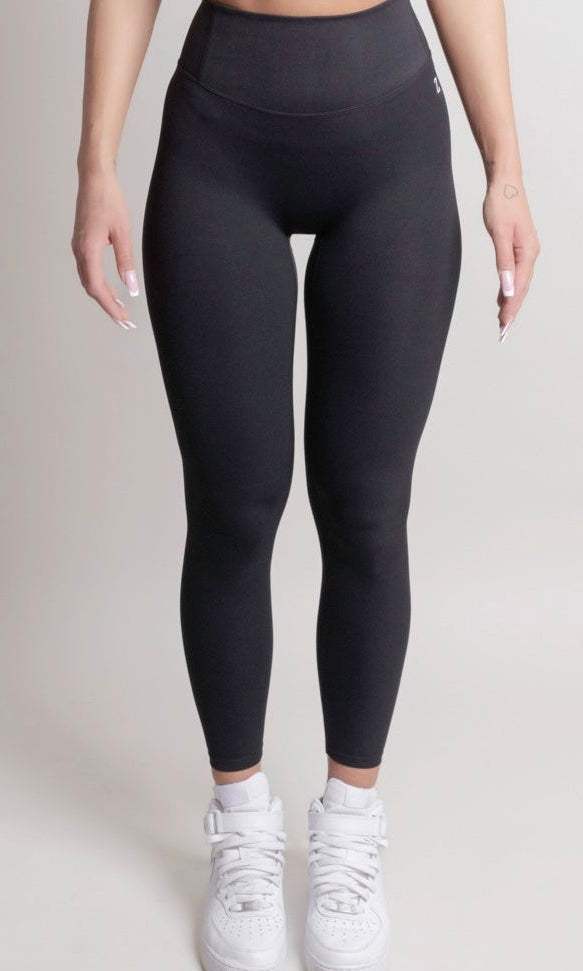
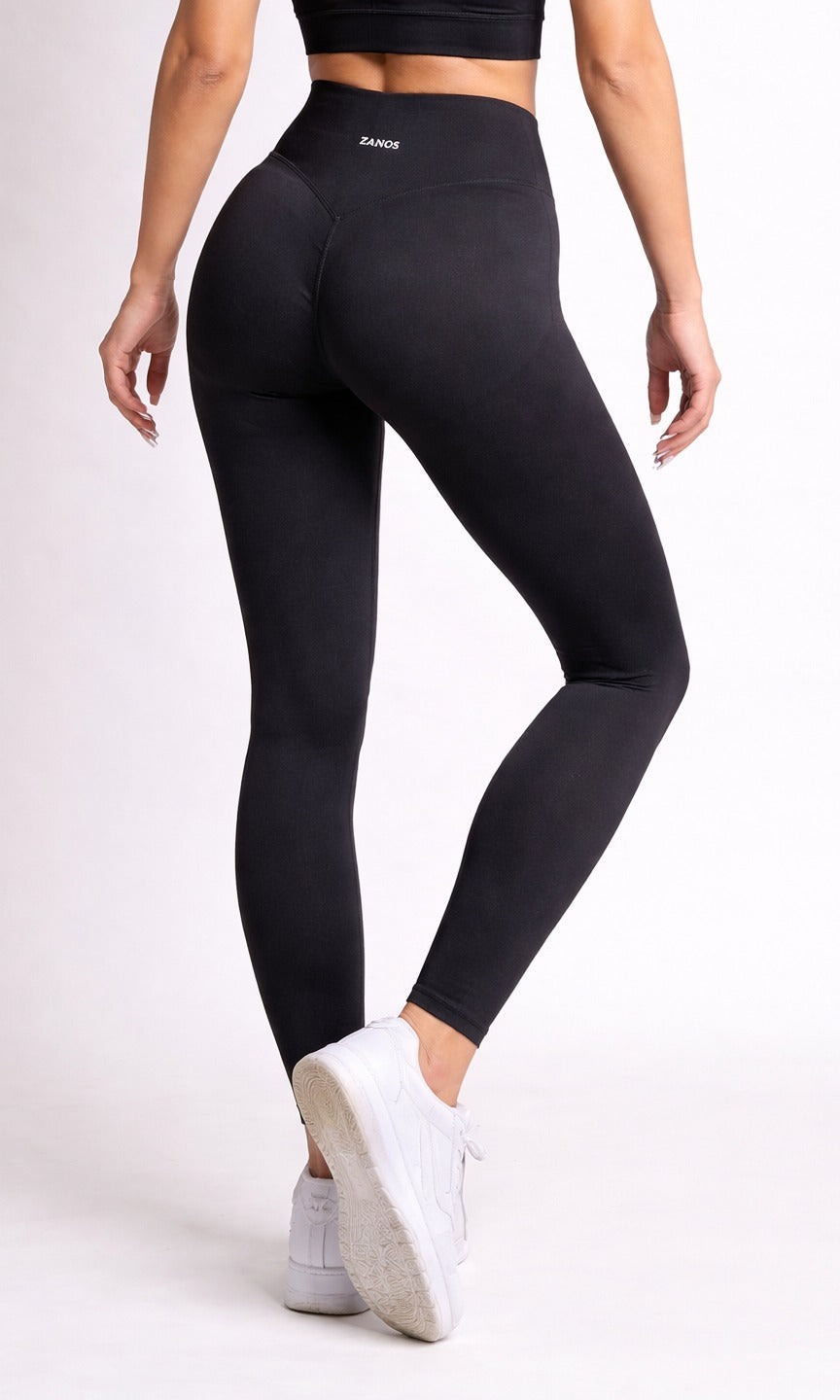
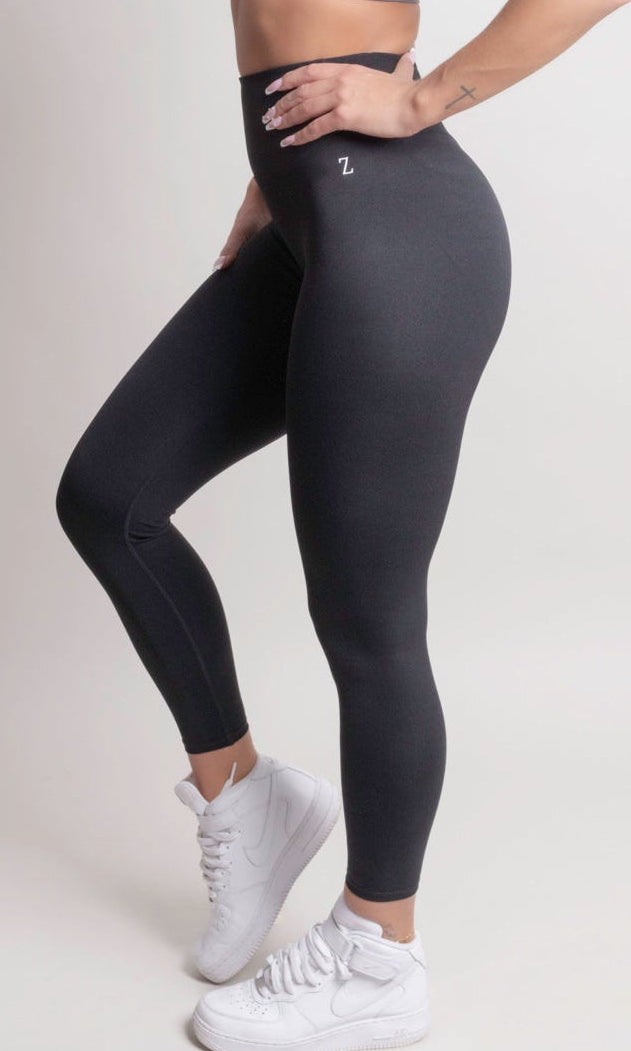
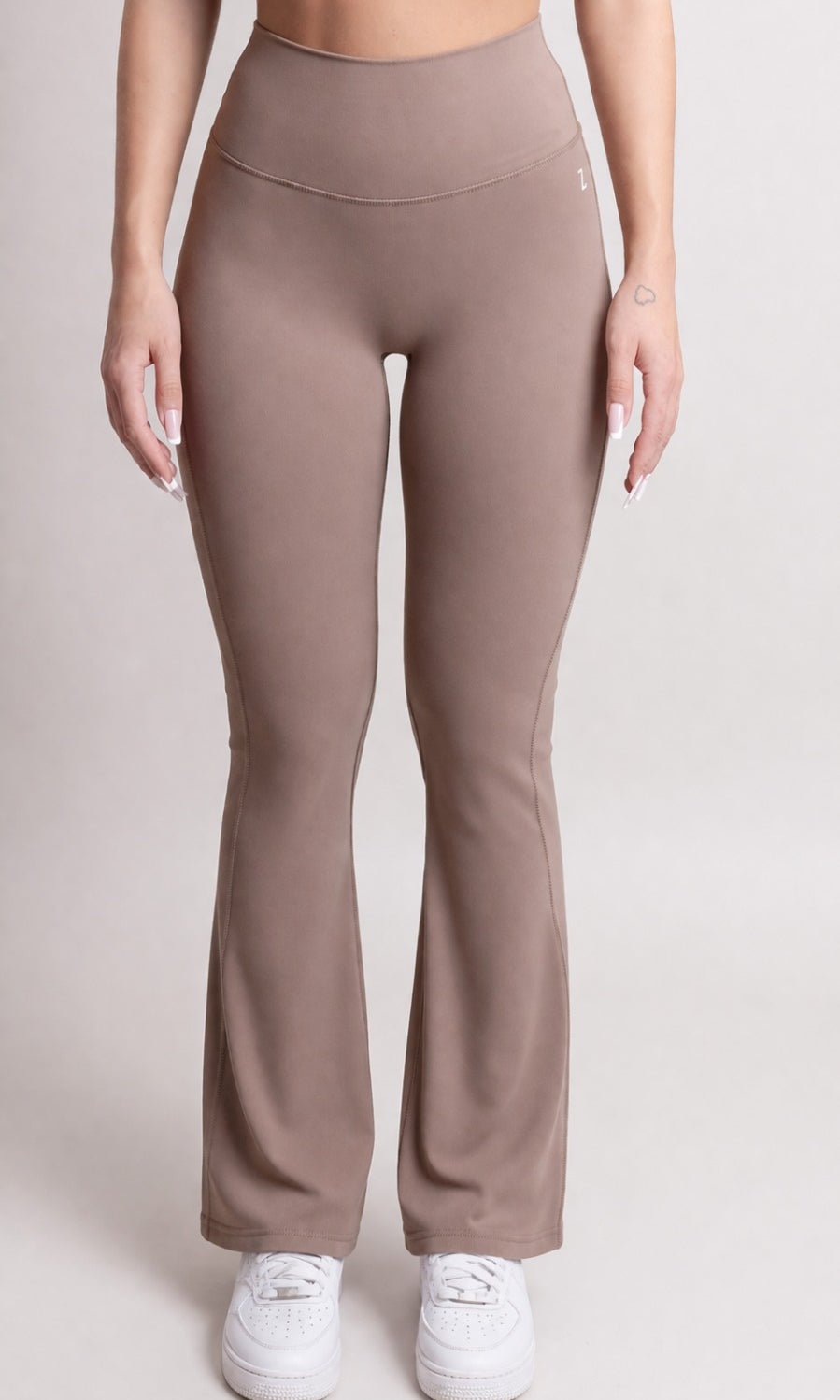
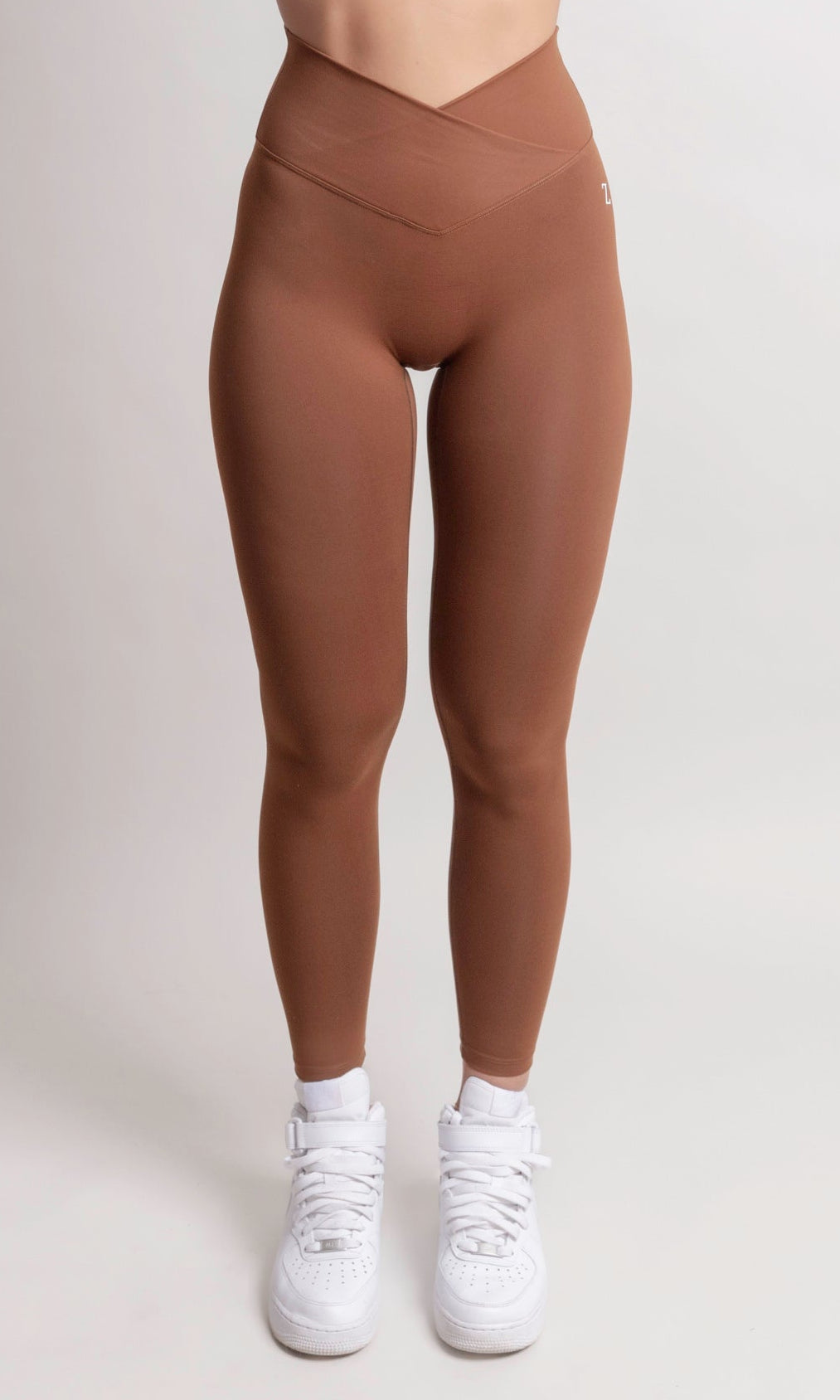
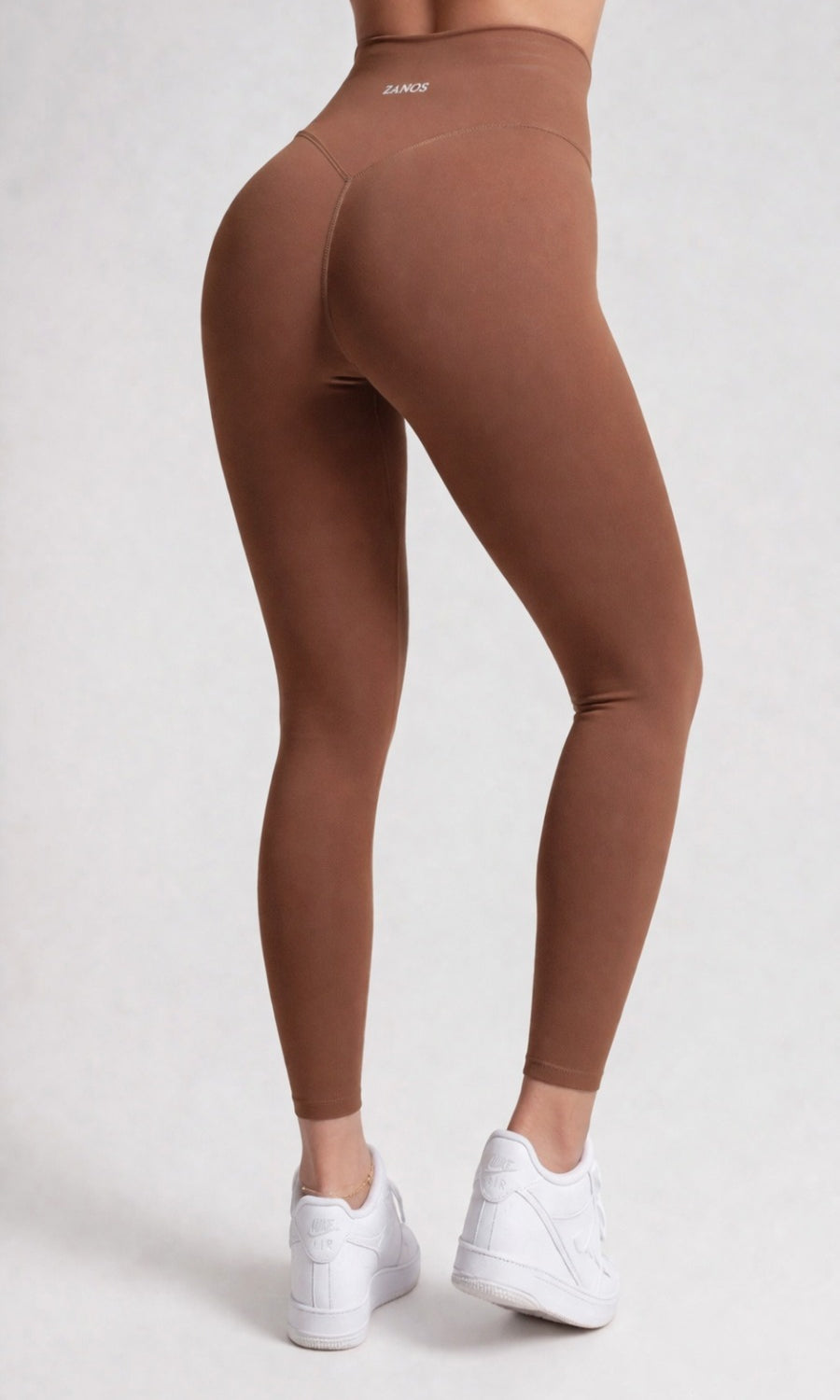
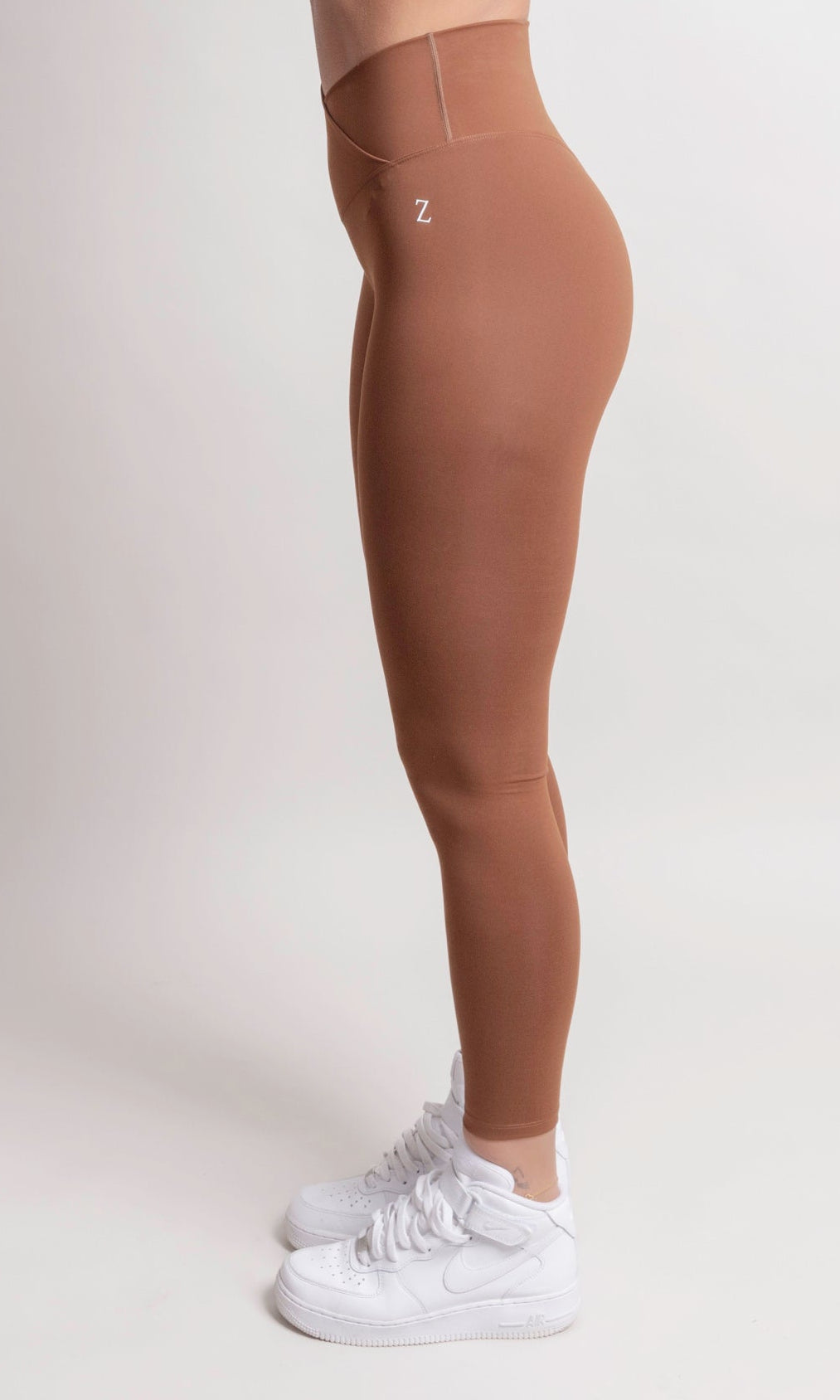
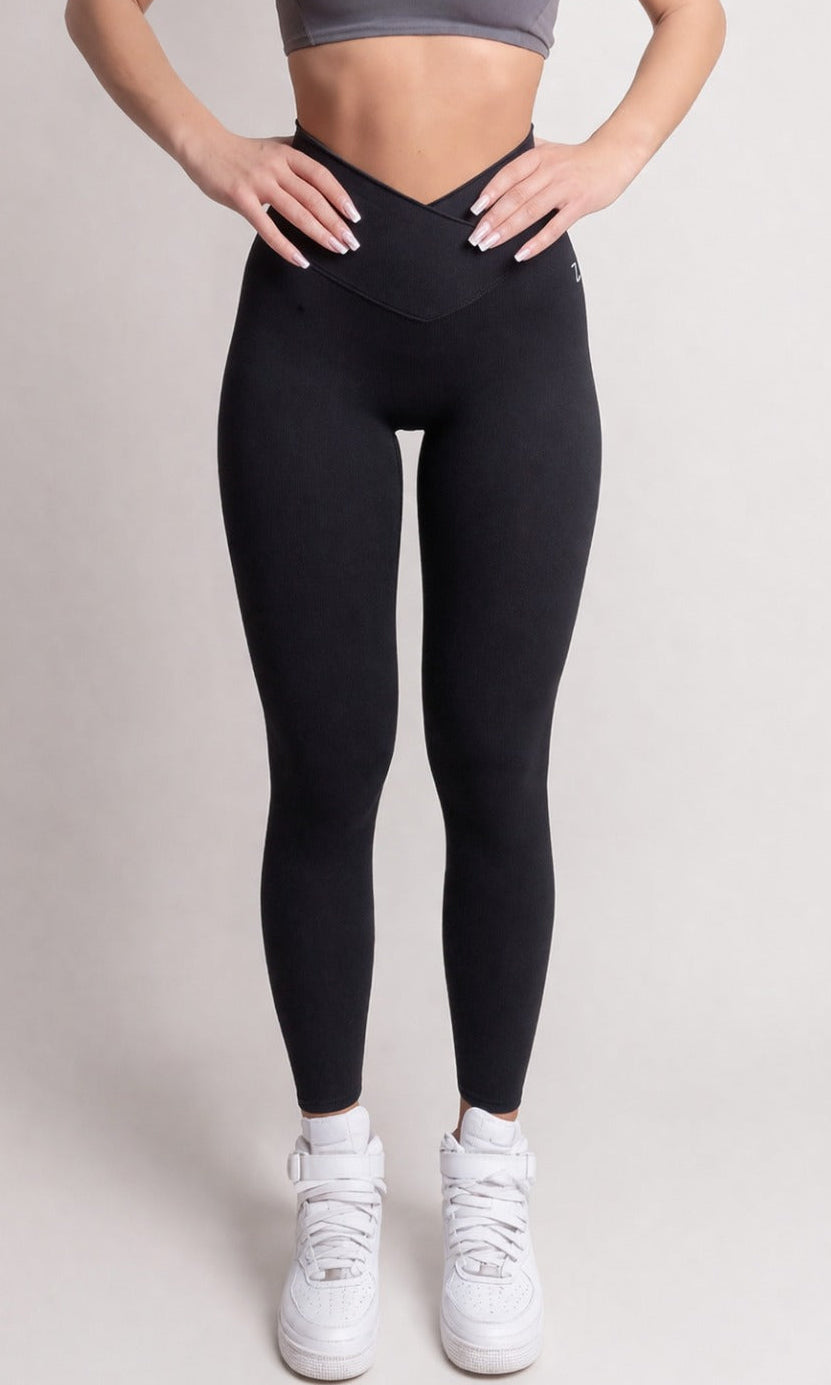
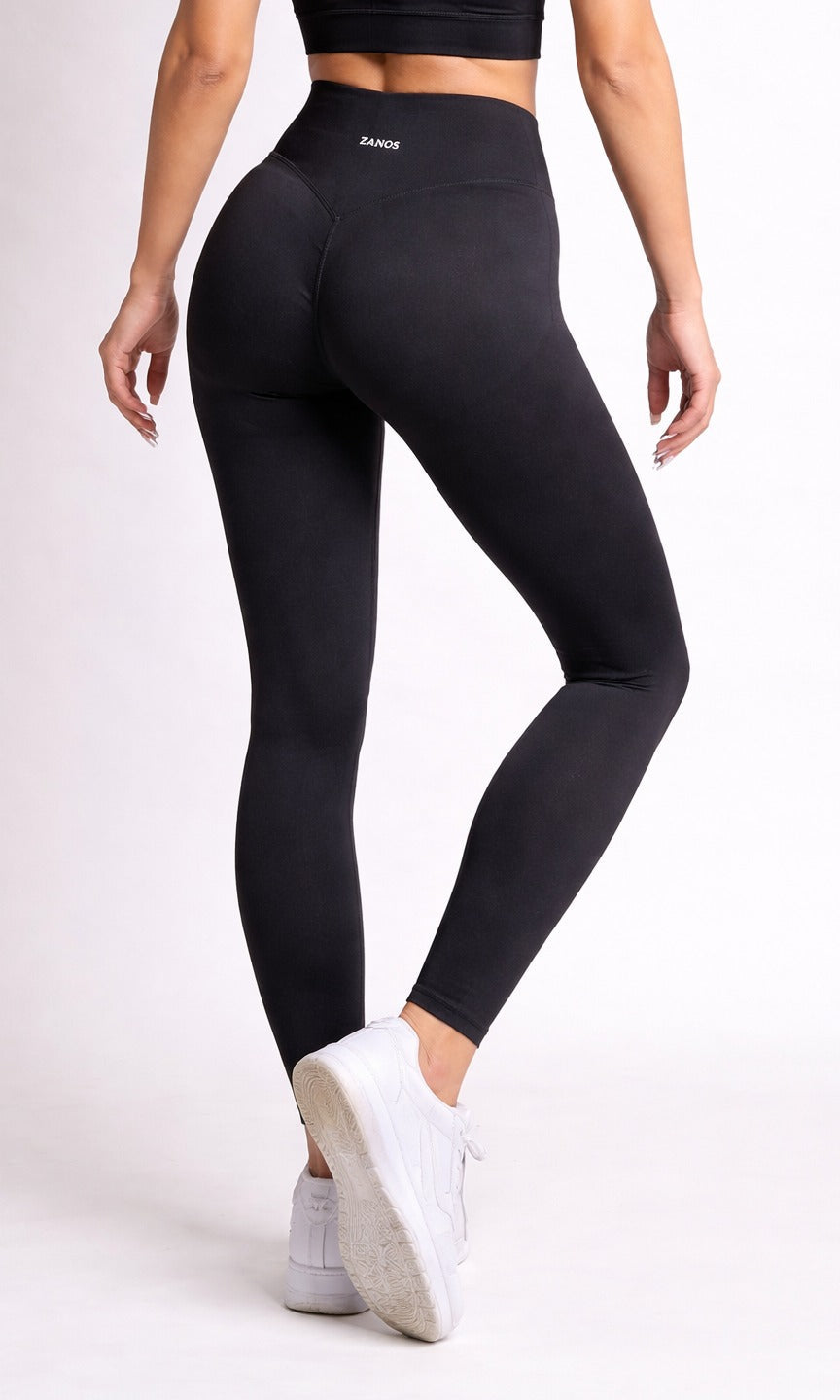
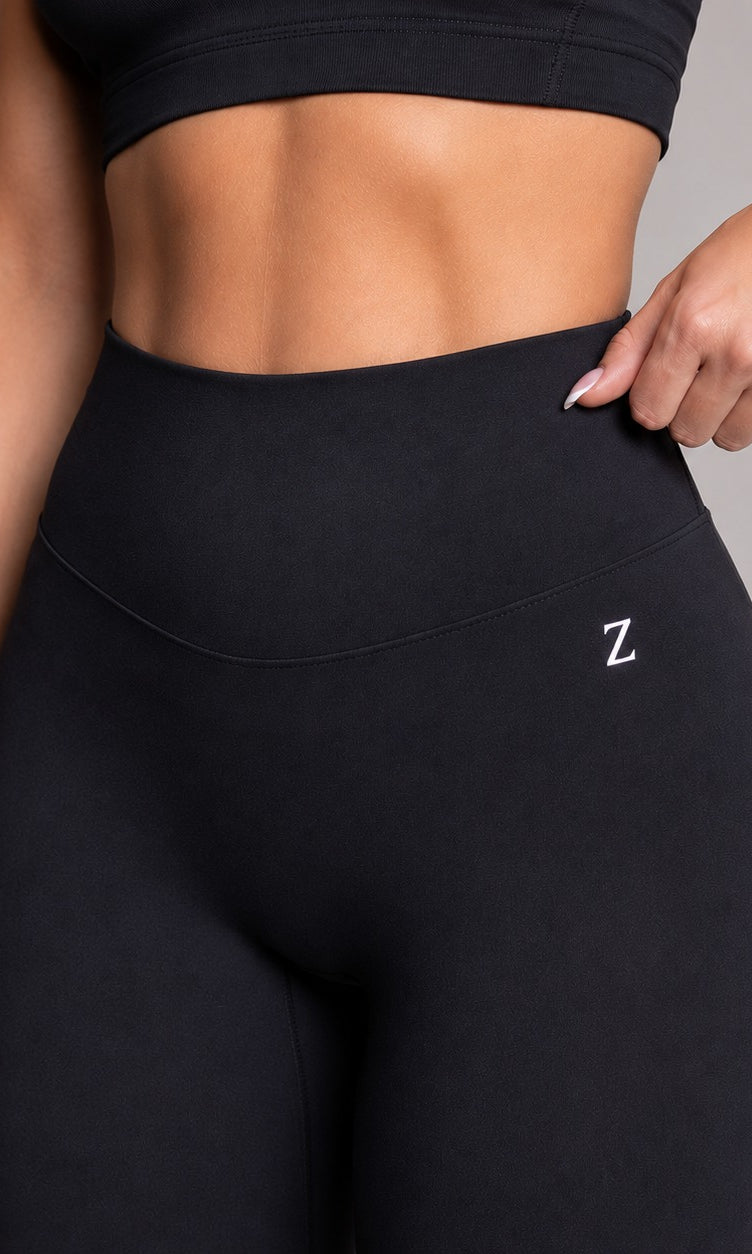
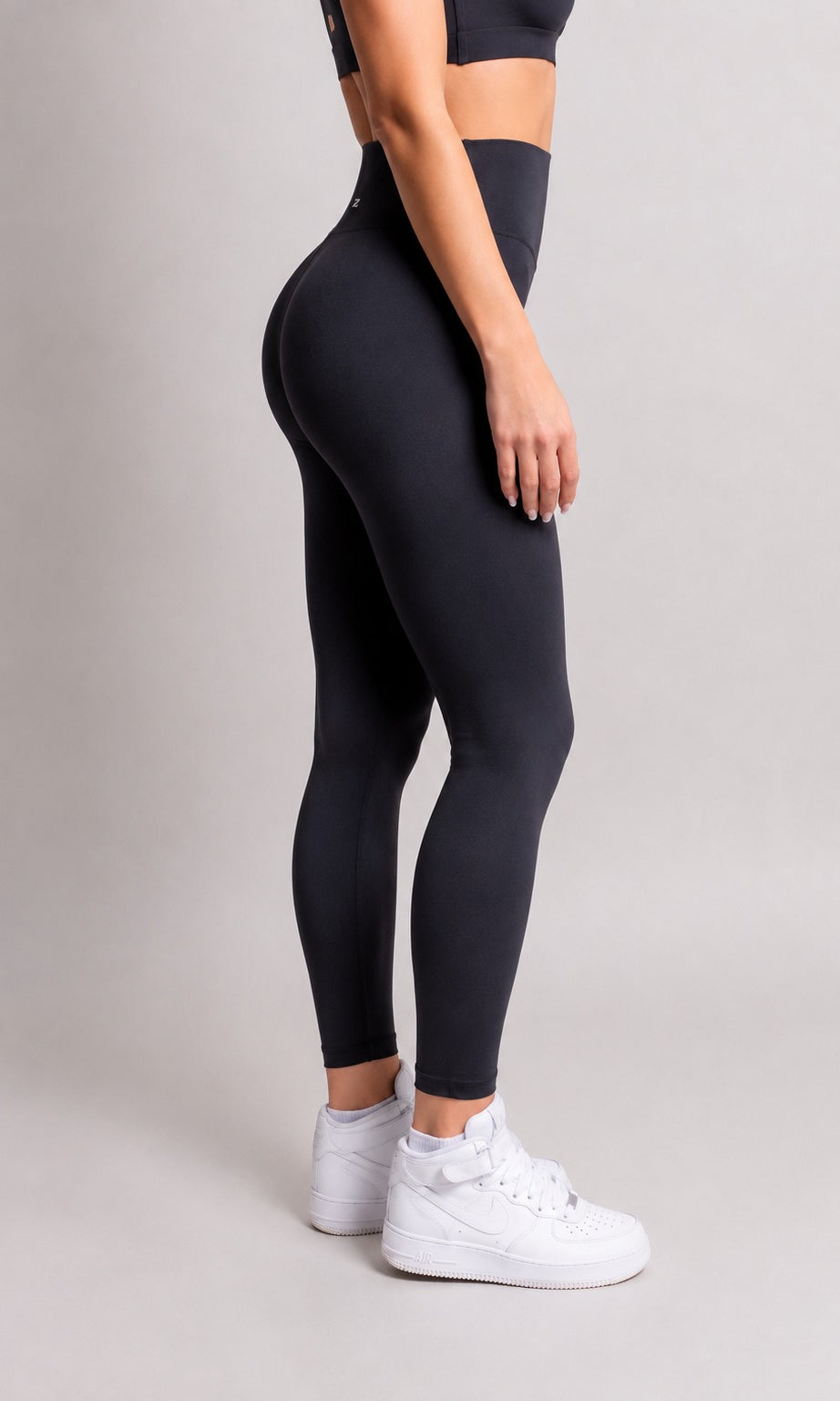
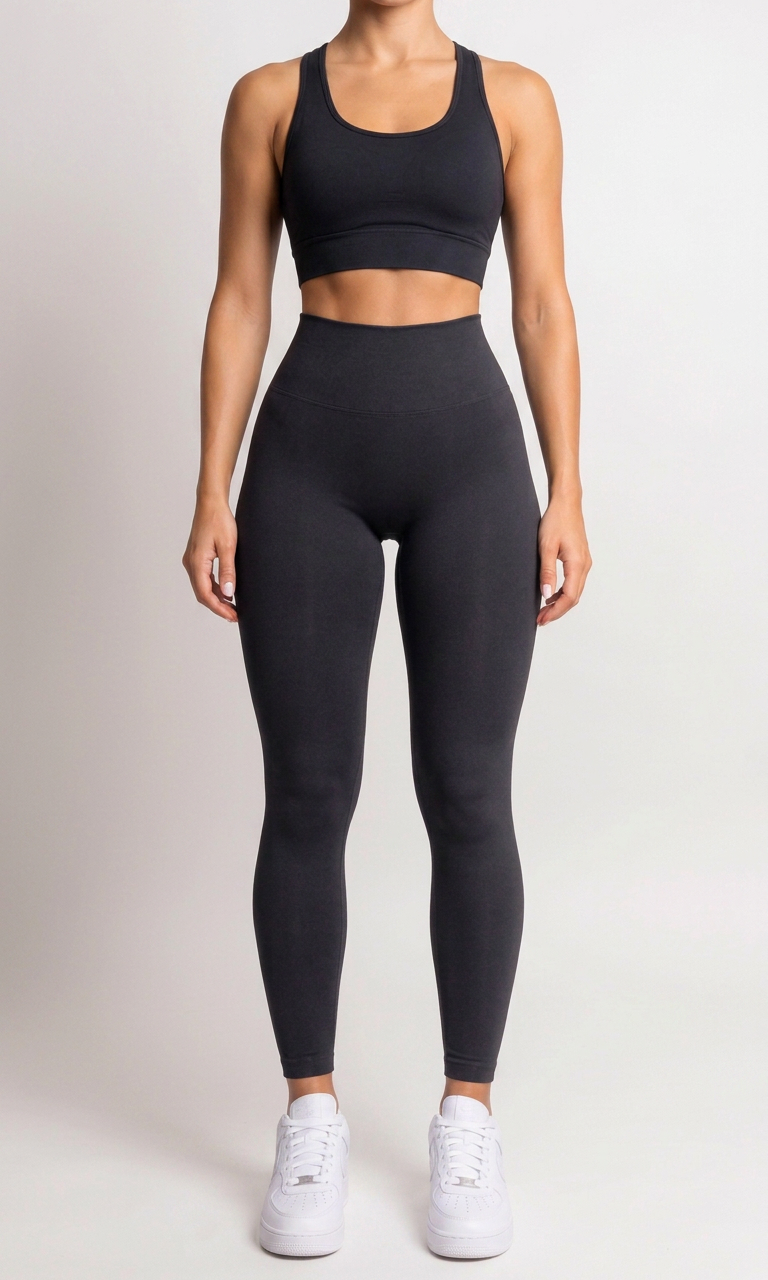
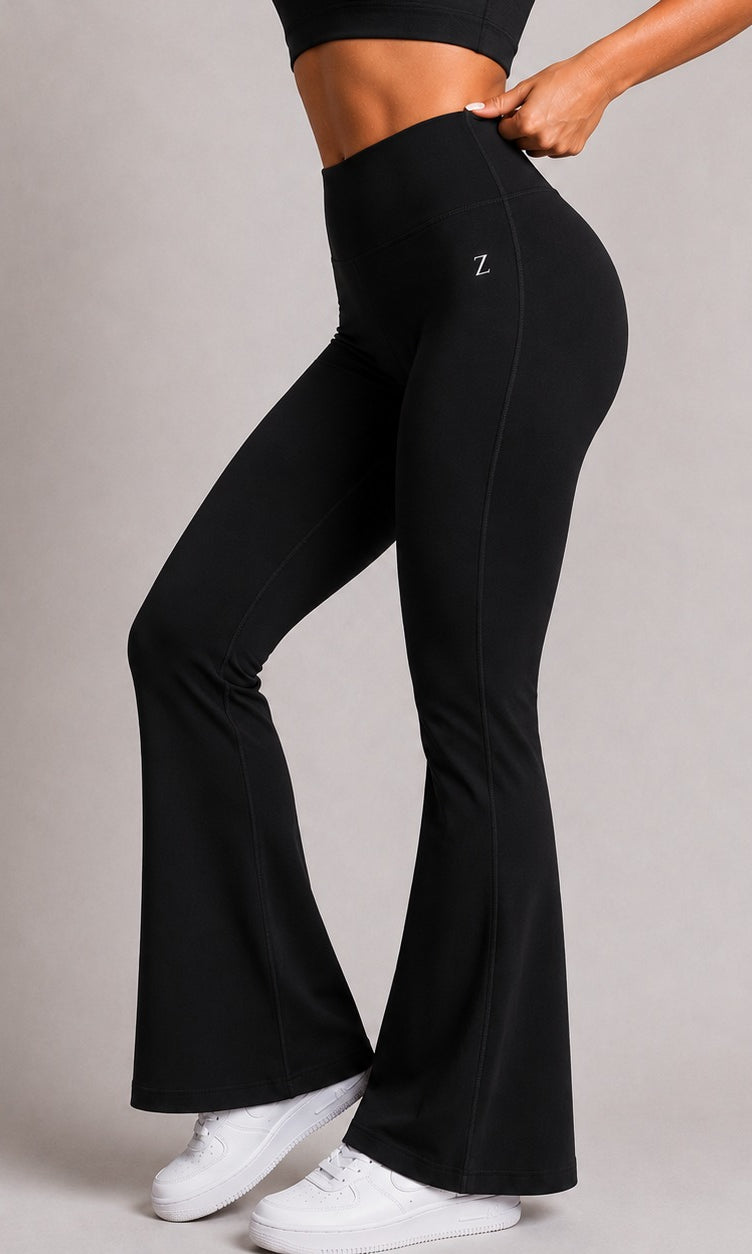
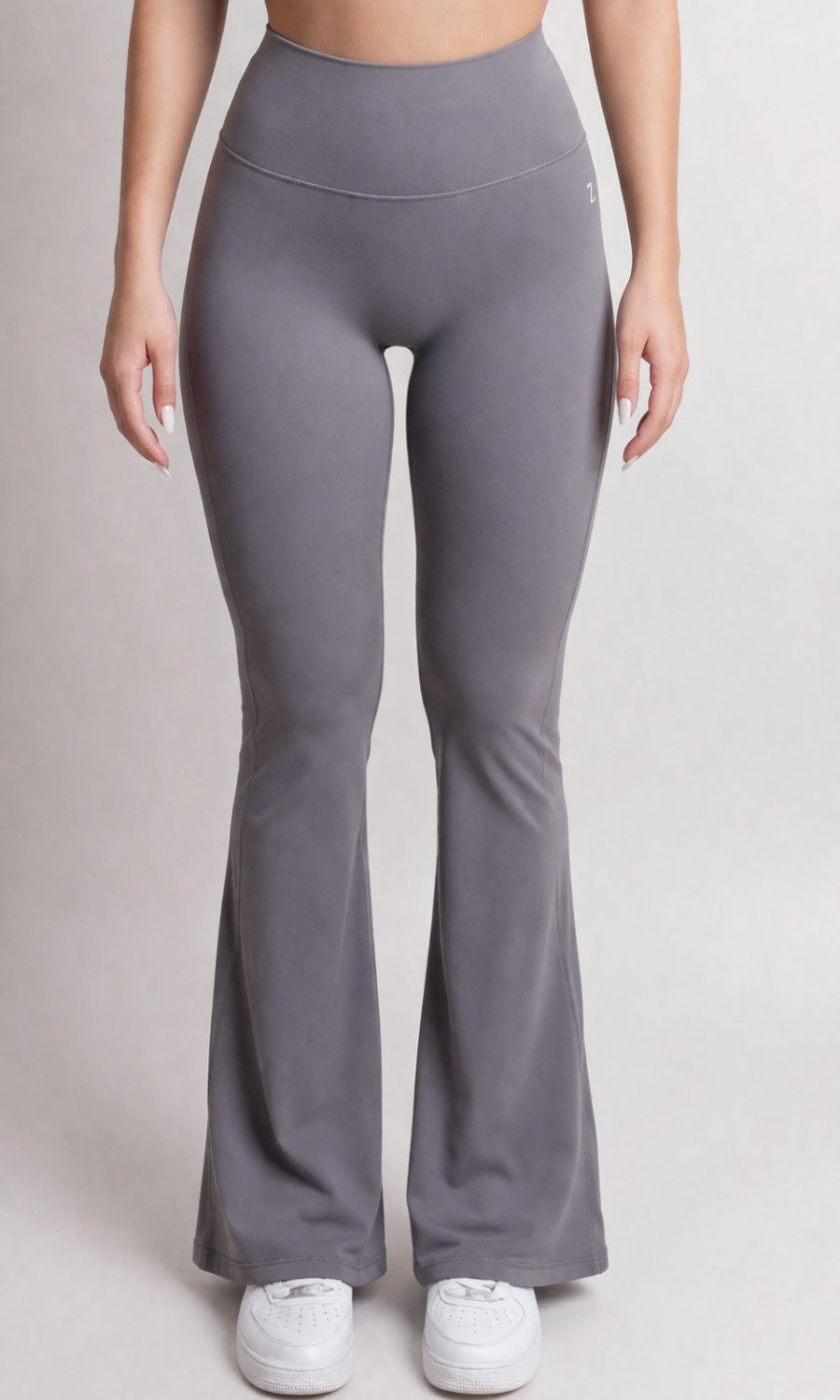
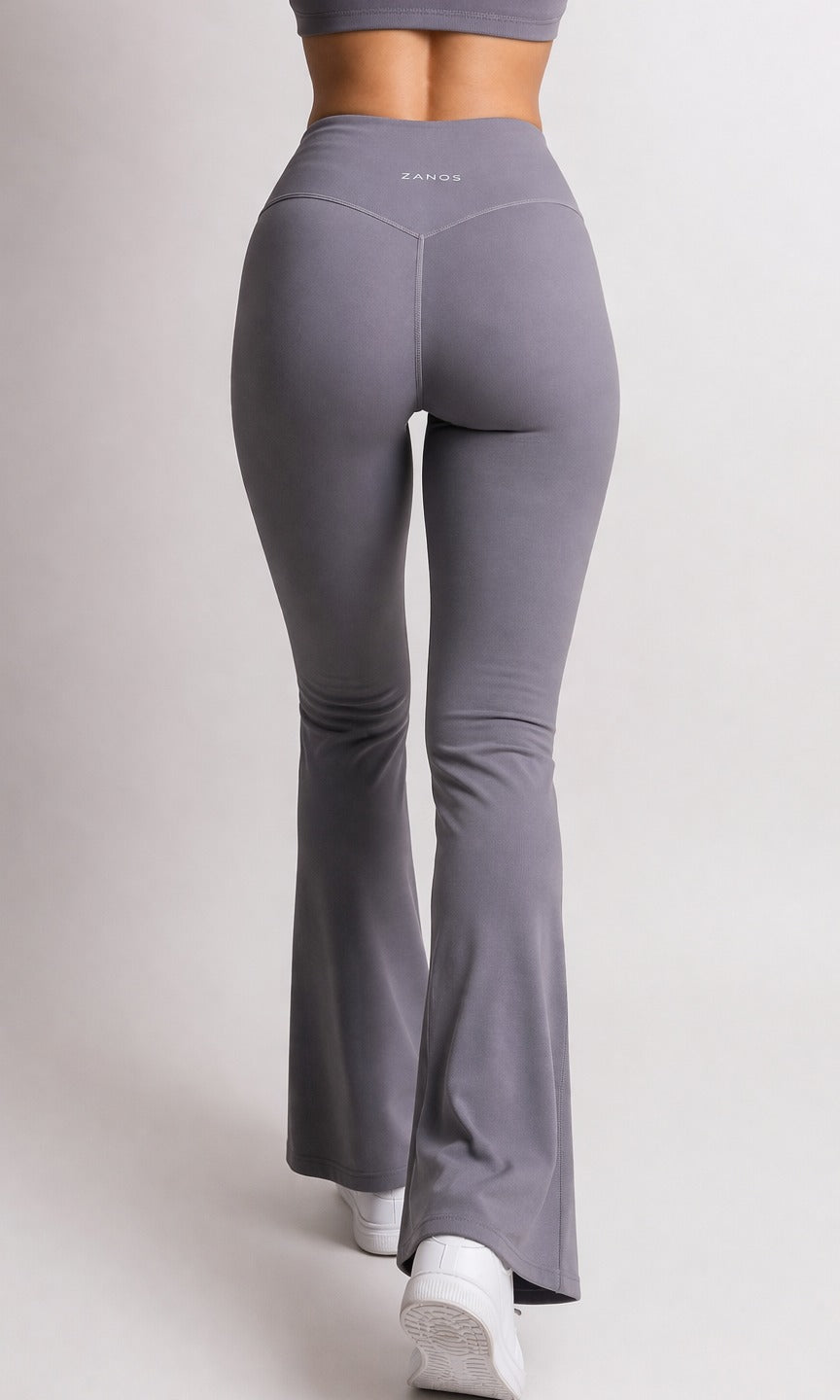
Explore our yoga tights for women for styles developed to support movement without a front seam.
For a wider comparison of fabric blends, stretch and performance, read our complete guide to the best materials for yoga tights.

Polyamide for Yin Yoga and Pilates
Slower training does not place lower demands on comfort. Holding a position for several minutes can make a rigid waistband, rough seam or stiff fabric considerably more noticeable.
Polyamide is often well suited to yin yoga and Pilates because its smooth surface feels comfortable during controlled, floor-based movement. Its resistance to abrasion is also valuable when the same areas of the garment repeatedly touch a mat.
The fibre cannot solve every comfort problem. Waistband construction, seam placement and fit remain just as important. Soft fabric combined with poor construction will still create a poor experience.
Polyester for Hot Yoga and Intense Training
Hot yoga changes what the garment needs to do.
As perspiration increases, a fabric that felt comfortable at the beginning of a session can become heavy and cling to the skin. Polyester's low moisture absorption gives it an advantage in these conditions.
The best hot-yoga tights must still provide reliable stretch, coverage and recovery. Fast drying is useful, but not if the waistband moves or the material becomes transparent in deep positions.
A lightweight polyamide construction can also work in heat. Polyester simply begins with a natural advantage when drying speed is the leading priority.
Why the Material Label Does Not Tell the Whole Story
Imagine two pairs of tights with the same composition: 80% polyamide and 20% elastane. One feels smooth, supportive and secure. The other feels thin, loses its shape and becomes transparent when stretched.
The label is identical. The garments are not.
Yarn quality affects how even and durable the surface becomes. Knit density influences support and coverage. Fabric weight changes warmth and opacity. Elastane quality determines how well the tights recover after movement.
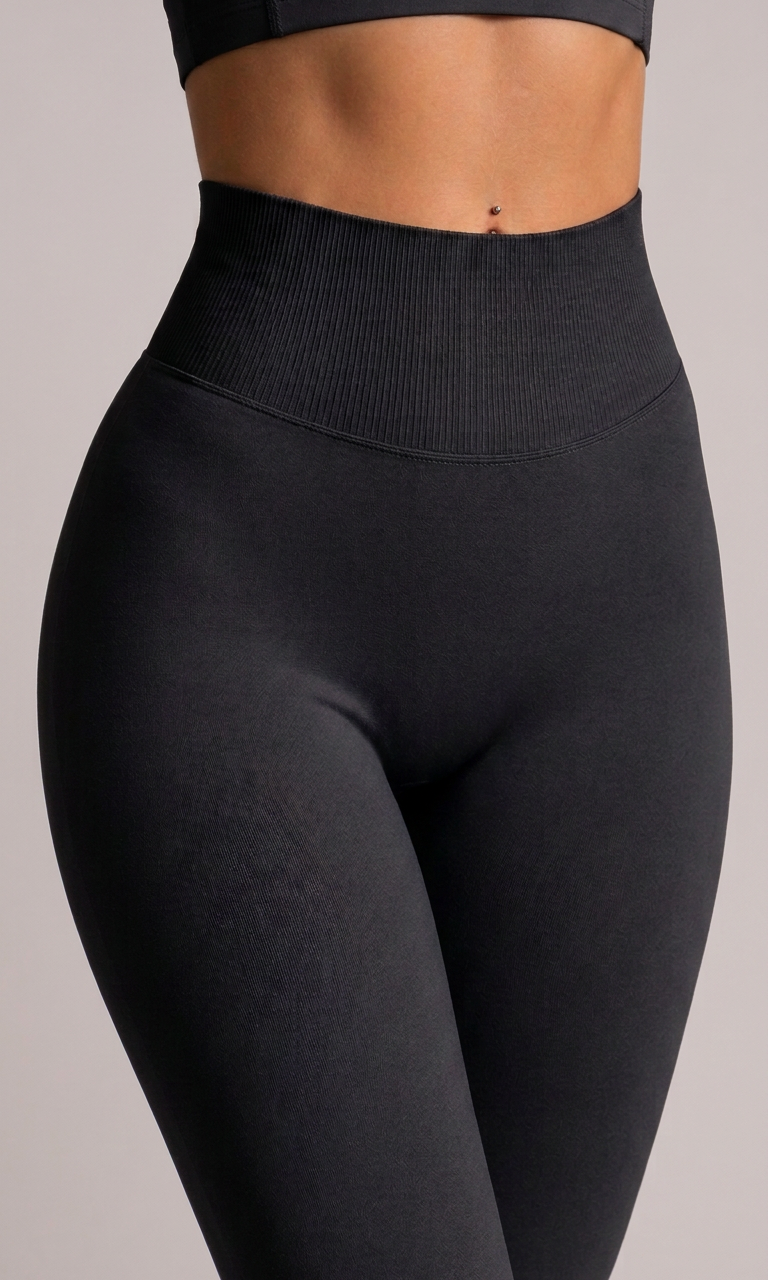
The waistband must then be built to remain secure without rolling or restricting the body. Seams need to support the garment without creating unnecessary pressure. For many women, removing the front seam can also provide a cleaner and more comfortable fit.
This is why activewear must be evaluated as a complete garment. Fibre composition can help you understand its likely characteristics, but it cannot tell you whether the design actually works.
How to Wash Polyamide and Polyester Activewear
Polyamide and polyester are both easy to care for, but activewear blends require gentler treatment than the fibres might suggest.
Wash the garment inside out at a low temperature with similar soft fabrics. Use a mild amount of detergent and leave fabric softener out of the machine. Softener can coat synthetic fibres, trap residue and interfere with moisture management.
Avoid washing tights with rough towels, open zippers or abrasive garments. These surfaces can create unnecessary friction and increase the risk of pilling.
Air drying is normally the safest option. High dryer heat may weaken the elastane even when the base fibre itself appears unaffected.
Read our activewear wash guide and activewear care guide for complete care instructions.
Are Polyamide and Polyester Sustainable?
Conventional polyamide and polyester are usually fossil based. Neither material biodegrades naturally, and both can release synthetic microfibres during washing.
Recycled versions can reduce demand for newly produced fossil-based raw materials. Recycled polyester is often made from existing PET waste, while recycled polyamide may use industrial waste, fabric remnants or discarded fishing nets.
Recycled does not automatically mean impact free. The garment still requires energy, dyeing, production and transport, and it may continue to release microfibres.
Longevity belongs in the sustainability discussion too. Clothing that keeps its shape and is used regularly for several years creates less replacement waste than a garment discarded after a short period.
Choosing well-made activewear, washing it carefully and keeping it in use are decisions the wearer can influence directly.
Why Are Some People Avoiding Polyester?
Environmental concerns are one reason. Conventional polyester comes from fossil-based resources, does not biodegrade and may release microfibres during washing.
Some people also avoid it because certain polyester garments retain body odour or feel less soft against the skin.
These concerns should not be used to judge every polyester garment in the same way. Recycled content, construction quality, durability and intended use can create very different results.
A polyester garment worn for years may be a more considered choice than a softer alternative that quickly loses its fit and needs replacing.
Is Polyamide or Polyester Unhealthy to Wear?
Neither material is automatically unhealthy.
Skin comfort can be affected by dyes, finishing treatments, breathability, moisture, fit and individual sensitivity. A person may react to a particular finish or experience irritation from remaining in damp, tight clothing after exercise. That does not make an entire fibre category toxic.
People with sensitive skin may prefer softer fabrics and minimal seam pressure. Changing out of sweaty activewear and washing it according to the care instructions can also reduce irritation.
Claims that one common fibre is simply "the unhealthiest fabric" remove too much context to be useful.
How to Choose the Right Fabric
Think about the moment when your activewear usually becomes uncomfortable.
Does the fabric feel rough during stretches or long holds? Polyamide's smoother surface may suit you better.
Do your tights remain damp after training? Polyester's faster drying performance may be more useful.
Do you practise several activities in the same outfit? Look closely at the entire garment instead of judging it by one fibre. A balanced blend with reliable four-way stretch, good recovery and suitable fabric weight may handle mixed training better than either material chosen for a single characteristic.
The best choice is the one that solves a real need in the way you move.
The Final Verdict
Polyamide and polyester are not two versions of the same fabric.
Polyamide usually offers the softer and smoother experience. Its resistance to friction and comfortable skin feel make it particularly suitable for yoga tights, Pilates leggings and other close-fitting garments.
Polyester usually offers the faster-drying experience. Its low moisture absorption and strong colour retention make it a practical choice for hot yoga, running and sweat-intensive workouts.
Neither fibre guarantees high-quality activewear. The result depends on how the yarn has been knitted, how the fabric recovers, how the waistband is constructed and whether the garment has been tested during real movement.
Choose polyamide when softness and smooth flexibility matter most. Choose polyester when drying speed and sweat management come first.
Then look beyond the label.
The best activewear is not defined by a single fibre. It is defined by how every part of the garment works together once you start moving.